Knowledge for Its Own Sake

Sometimes students need a boost, as they can get pulled down into the routine of trying to balance school and life, studying and making ends meet. Sometimes I’m right there with them. I’m keenly aware that they have different motives for being in school. To some, university is just what’s been expected of them since they were children. It’s just the next step. For others it was a more deliberate decision. And of course for nearly all of them, a diploma is seen as a ticket to a better future. However, that doesn’t automatically translate into curiosity or enthusiasm.
 
 
On those days when I need to remind myself to look up and remember what it’s all about, I’ll turn to a few key ideas to get me back down to bedrock. What’s the point? It’s got to be more than trying to memorize keywords and jumping through all the right hoops in order to graduate. I think it’s pretty simple: trying to use our very short time here to better understand the world while we have the opportunity. Knowledge for its own sake.
 
 
To get that across to one of my classes, I recently shared this passage from Frank McCourt’s autobiography Angela’s Ashes. In this part of the book, McCourt is a young boy in school in gritty, western Ireland in the 1930s. Most of the boys in his class face some level of hardship, with many struggling for necessities, including food and shoes. The teacher tries to inspire them:
 
 
“Mr. O’Halloran (the teacher) says, You have to study and learn so that you can make up your own mind about history and everything else but you can’t make up an empty mind. Stock your mind, stock your mind.  It is your house of treasure and no one in the world can interfere with it… You might be poor, your shoes might be broken, but your mind is a palace.” (p. 208)
 
 
Our students are pretty diverse, with many first-generation college students (as was I). Depending on the conditions in which someone grew up, this passage might come across as sappy or inspirational. I prefer the latter. 
 

Flexible Love, at Any Age

The New York Times runs a series of short videos titled “Modern Love” (does David Bowie know about this?). The latest installation is narrated by a 71 year-old woman who describes the experience of falling in love at her age, comparing it to her younger days. She talks about differences in preparing for dates, perceptions of the concept of ‘soulmates,’ the sense of urgency, jealousy, ephemerality of life and relationships, and the pain of loss. Pretty thorough for a 2 minute video.   

To me, the most interesting part is that love really can strike at any age, illustrating the gap between proximate and evolutionary levels. Evolutionary hypotheses for the origin of pair-bonding (and love) often highlight some function related to reproduction. Robin Dunbar  summarized four possibilities: 

Continue reading

Part 13: Humans are (Blank)-ogamous: Is Monogamy ‘Natural?’

This is part of a series on the evolution of human mating behavior, comparing evidence for promiscuity and pair-bonding in our species. Please see the Introduction here.

___________________________________________________________________________

(Left) My paternal grandparents with my father as a toddler. (Right) Their 50th anniversary.

Left: My paternal grandparents with my father as a toddler. Right: their 50th wedding anniversary (it’s the best picture I could find).

Are humans naturally monogamous? Oprah Winfrey says ‘no.’That settles it, then. Maybe.

Oprah (she needs no last name) was a guest on a morning talk show, and the topic of discussion was two recent articles on the origins of monogamy in mammals (Lukas & Clutton-Brock, 2013) and another specifically on primates (Opie et al, 2013). Both articles are impressive for their large databases and attention to detail. The first looked at 2545 species of mammals while the Opie article examined 230 primate species.[1]

Both studies focused specifically on social, rather than sexual, monogamy. This distinction is important because sexual exclusivity was not what was being measured here. Rather, social monogamy was defined by both studies as simply living in breeding pairs. The Lukas & Clutton-Brock paper added that in social monogamy the pair shared a common territory, and “associate with each other for more than one breeding season” (p. 526).

Continue reading

Thought Experiment on Sex, Food, & Privacy

From Matt Ridley’s book The Origins of Virtue”  (1997: 87-88):

Imagine if sex were an activity normally carried out communally and publicly, but eating was something done secretly and privately. There is no particular reason why the world could not be organized that way, so that it seemed positively odd to want to have sex alone and rather shameful to be caught eating in public. No reason except human nature. It is simply part of our make-up that food is communal and sex is private. It is so deeply ingrained in the human mind that the reverse is unthinkably weird. The bizarre notion, beloved of various historians, that sexual privacy was a cultural invention of medieval Christendom, has long been exploded. All over the world, whatever god people worship, and however many or few clothes they wear in public, sex is a secret act to be done quietly when everybody else is asleep or out in the fields in the daytime where nobody can see. It is a universal human characteristic. Eating food, on the other hand, is just as universally a communal activity.”

Continue reading

Kindness and Regrets

Be excellent to each other.” – Bill and Ted (20th century philosophers)


From a commencement speech by George Saunders: 

“What I regret most in my life are failures of kindnessThose moments when another human being was there, in front of me, suffering, and I responded…sensibly.  Reservedly.  Mildly.”

Saunders then describes a memory from the seventh grade, when he did not defend the new girl in school who was teased for being different. Forty-two years later, he still thinks of her occasionally, and even though he was not personally cruel toward her, he regrets not going out of his way to extend her kindness. He then questions why kindness is often lacking, and he looks for prescriptions to make it more common.

The speech is a good one, and it stirred up some personal memories of instances when I could have used some kindness from someone. Sometimes it came; others it didn’t. There were also situations that called for me to be the one to extend kindness to someone else who needed it. Sometimes I stepped up, although probably not as consistently as I should have. Fear can be a powerful deterrent. Like Saunders, I regret those missed opportunities.

Of course, the opposite of kindness is cruelty, and I’m often distressed by the latest story of human callousness, where someone is belittled for not conforming to another’s standards. For those of us who are not Rhodes Scholar Olympians (which is to say, nearly everyone), we all fall short of socially constructed ideals in some way. Either we’re not attractive enough, or not stylish, athletic, or smart enough (or too smart). Too red. Too blue. Too promiscuous or too chaste. Too tall. Too short. Too neurally atypical. Or, we’re the ‘wrong’ weight, gender, race, sexuality, ethnicity, social class, or speak the wrong dialect. We can be incredibly creative at finding the holes in the armor to bring someone down.

For such an intensely social species, we often seem to go out of our way to make each other want to leave the group.

Continue reading

The Zen Master and the Infanticidal Primates

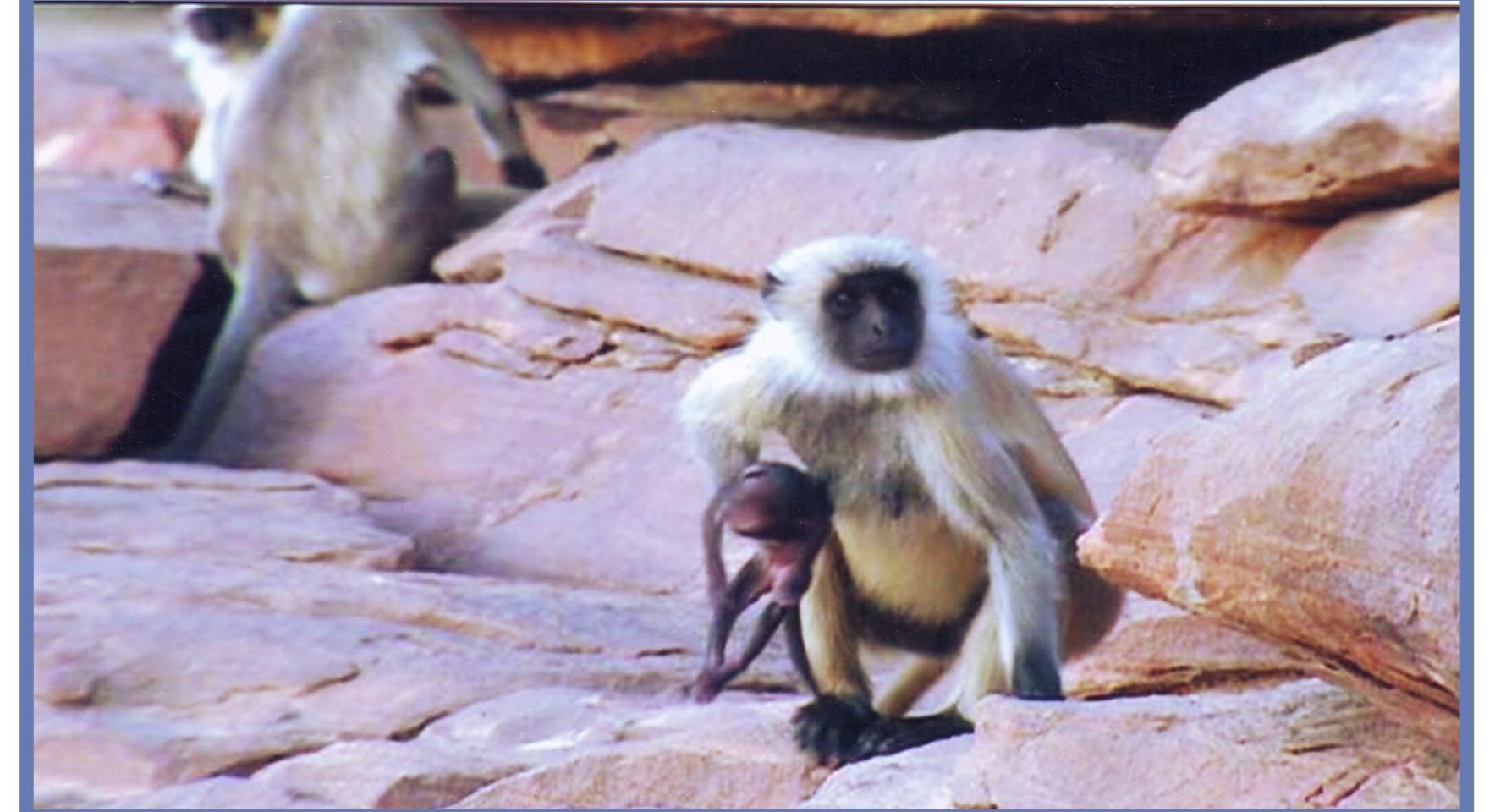
A recent paper has concluded that prevention of infanticide was the most likely precursor to monogamous mating systems in some primate species. Another paper suggested a different possibility in mammals more generally, namely that under certain ecological conditions females are so dispersed that the best strategy for a male is to remain close to a rare female when he finds her. This prevents other males from mating with her, and increases the chances of successfully passing on his genes. 

langur

Langur mother with dead infant. (From http://www.brown.edu/Research/Primate/LPN50-1.html)

I’m still sorting through what all this means, and wonder if the search for broad patterns oversimplifies things too much. As Peter Gray put it: “It’s all so confusing, if lead researchers can’t seem to find similar evolutionary grounds behind social monogamy.” Anyway, if prevention of infanticide really was the key to jump-starting monogamy (at least in some primate species), it makes me think of its downstream consequences. This reminds me of the parable of the Zen Master and the Little Boy.

Continue reading

Empathy in Flux, Part 2

Jason De Caro recently shared this video from the Cleveland Clinic. For those who can’t watch it, the video shows various individuals in a hospital setting , with captions describing the most recent, pertinent events in that person’s life (a woman visiting her terminally ill husband, someone learns they’re about to become a parent, etc.)


I thought it was a nice reminder that external appearances are often superficial. All people have a complex history behind them, beyond just the snippets and cross-sections that we observe, particularly when meeting someone for the first time. In another post, titled “Empathy in Flux,” I wrote that single slices of a person’s life are never enough to fully understand the complexity of a person:

as Forrest Gump famously put it: “stupid is as stupid does.” I think this is an often misunderstood piece of folk wisdom. My interpretation of this is that one can evaluate actions without leaping to evaluations of states of being. Certainly one can do stupid things without “being” stupid. To believe another person “is” stupid (or any personality trait you can imagine) is to claim one has found the signal among the noise, while ignoring a LOT of complexity, the deviation around the mean. In short, we have just a cross-section in the totality of that person’s life. Even Hitler laughed. Even Gandhi had periods of depression. Certainly, we have more than a snapshot of these particular individuals’ lives, but we don’t have that for everyone we meet. How different would our impression of others be if we had that longitudinal data in front of us? Of course, for most people the amplitude of one’s personality does not fluctuate that widely. Most people are consistent in either being kind, or funny, or complete assholes. But context and variation are essential. 

Like all reminders to be mindful, the video is welcome (and necessary).

.


Bombing of Laos, Animated

The organization Legacies of War shared this animated video on the impacts of U.S. bombing of Laos during the Vietnam War. I thought the filmmaker, Corey Sheldon, put together a very attractive and informative video, although the history is perhaps understandably simplified. Today, the remnants of unexploded bombs are still a problem in Laos, decades after the war has ended, so I think projects like this one are helpful in raising awareness, particularly in the United States.  <div style=”text-align:center”>

</div>

Related posts

The Lingering Effects of the War in Laos 

Laos: The Not So Secret War 

.

On Finding Optimism

(Dec 31: Here’s to an optimistic New Year, and that as individuals and societies we can learn from, and possibly even get the chance to rectify, our mistakes).

Some days, it’s harder to find optimism than others. But it’s always there. “In any event, it is the only way we can live.” 

From Bobby Kennedy:

“There is discrimination in this world and slavery and slaughter and starvation. Governments repress their people; millions are trapped in poverty while the nation grows rich and wealth is lavished on armaments everywhere. These are differing evils, but they are the common works of man. They reflect the imperfection of human justice, the inadequacy of human compassion, our lack of sensibility towards the suffering of our fellows. But we can perhaps remember—even if only for a time—that those who live with us are our brothers; that they share with us the same short moment of life; that they seek—as we do—nothing but the chance to live out their lives in purpose and happiness, winning what satisfaction and fulfillment they can.

Continue reading

Children of the Stars

From: http://www.nasa.gov/mission_pages/hubble/science/milky-way-collide.html

Earth’s night sky in 3.8 billion years (NASA images).

“He was bitter at the universe for all the things it didn’t give him, for how it shortchanged him, for how it sometimes made him feel lesser. “Why couldn’t he just be normal?” he thought. He felt like this too often.

But he always, without fail, waded through the dark clouds and returned to the same thoughts that helped dissipate the bitterness – that we all have our baggage and insecurities that weigh on us. Some carry heavier weights than others, some that look to be almost unbearable, some that seemed to be (from the outside) trivial. But no one was without burden. His burdens were not as great as some, but they were still his.

Continue reading