The Zen Master and the Infanticidal Primates

A recent paper has concluded that prevention of infanticide was the most likely precursor to monogamous mating systems in some primate species. Another paper suggested a different possibility in mammals more generally, namely that under certain ecological conditions females are so dispersed that the best strategy for a male is to remain close to a rare female when he finds her. This prevents other males from mating with her, and increases the chances of successfully passing on his genes. 

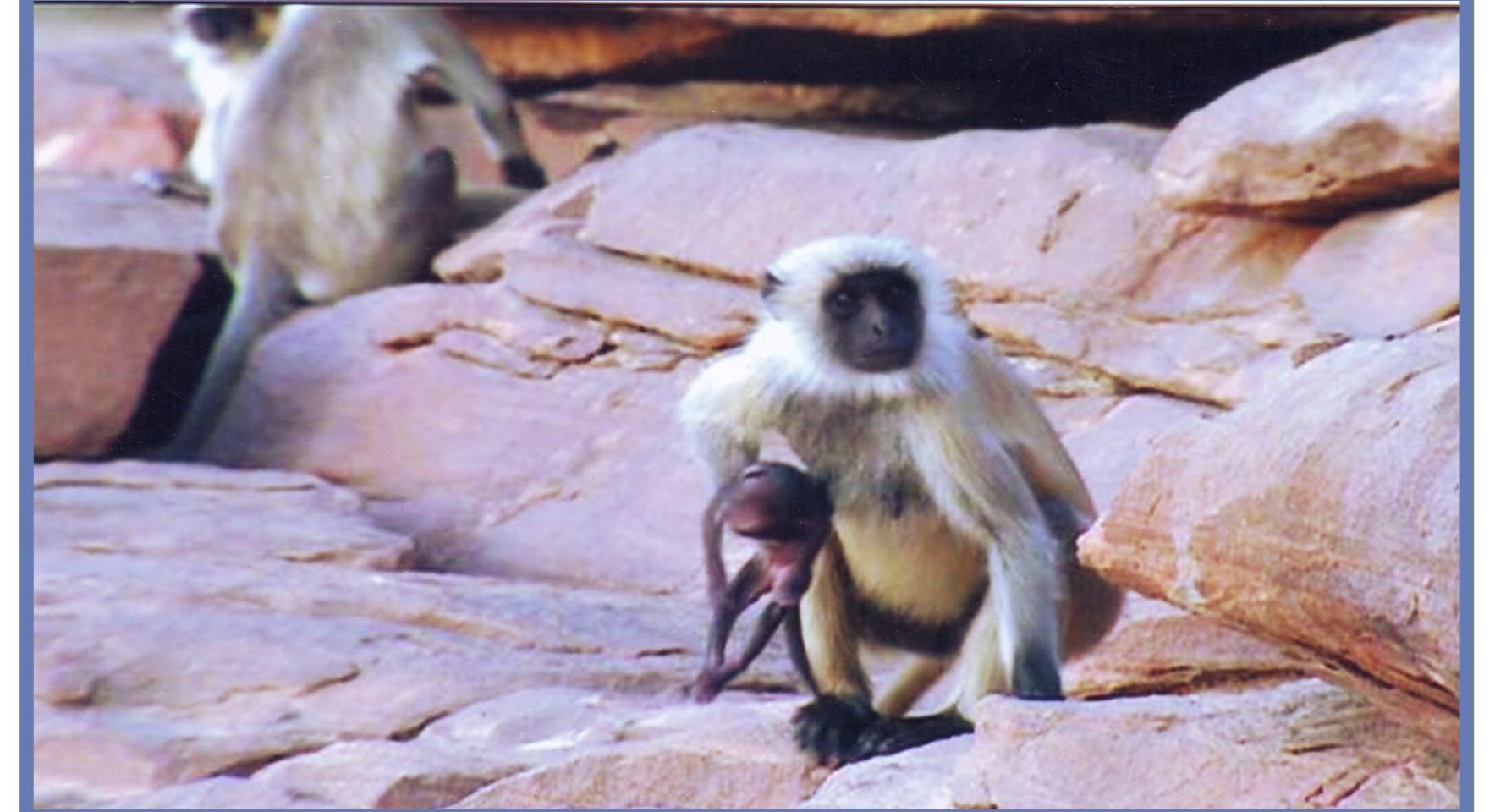
langur

Langur mother with dead infant. (From http://www.brown.edu/Research/Primate/LPN50-1.html)

I’m still sorting through what all this means, and wonder if the search for broad patterns oversimplifies things too much. As Peter Gray put it: “It’s all so confusing, if lead researchers can’t seem to find similar evolutionary grounds behind social monogamy.” Anyway, if prevention of infanticide really was the key to jump-starting monogamy (at least in some primate species), it makes me think of its downstream consequences. This reminds me of the parable of the Zen Master and the Little Boy.

Continue reading

Erotic Laundry Lists

As I continue to read up on the evolution of human mating, a theme that keeps recurring is how complex people are in what they want from their erotic pursuits. Many books, journal articles, and even popular magazines compile lists about the physical features we consider attractive, the traits we look for in a mate, etc. In those lists, we can find patterns, but none can ever be perfect because we are complex, individually and culturally variable, and always in flux, trying to balance an array of wants and needs that shift over time along with our circumstances. No single variable will ever be sufficient to explain what people want. Sometimes it’s Arthur Miller; sometimes it’s Joe DiMaggio.

Marilyn Monroe

Here is a sample of the complexity, in list form:

Continue reading

Evelyn’s Story

Recently, we attended a going-away party for some friends who are moving to Europe. One of the guests arrived a bit late, along with her husband and daughter. She also brought her 83-year old mother, Evelyn [1], who was the chronological outlier among the crowd of 30 to 50 year-olds and their kids. As the children played and the younger adults socialized I made eye contact with Evelyn, who was standing alone. She smiled back in that kindly, typical grandmotherly way, so I introduced myself. We made small talk and she mentioned how she had recently sold the house that she had lived in for more than thirty years, and how much she loved her new apartment and her granddaughter, and other things grandmothers like to talk about.

From her slight accent, it was obvious that she was born elsewhere. Eventually she revealed that she grew up on a farm in eastern Canada, in one of the maritime provinces, and that’s where our conversation took off.

Continue reading

Part 12. Humans Are Blank-ogamous. Jankowiak’s Tripartite Conundrum

This is part 12 of a series on the evolution of human mating behavior. Please see the introduction here.

This video is a lecture by the cultural anthropologist William Jankowiak speaking at my alma mater, Binghamton University, on what he calls the “tripartite conundrum” between romantic love, companion love, and sexual desire. I think he has several insights, but realize that the lecture is lengthy.  If you can’t listen to it in its entirety, here is the heart of the matter:

Continue reading

Part 10: Humans are (Blank)-ogamous: Wondrously Complex Paleo-Sex

This is the tenth(!) part on the evolution of human mating behavior, comparing evidence for promiscuity and pair-bonding in our species. Please see the Introduction here.

_______________________________________________________________


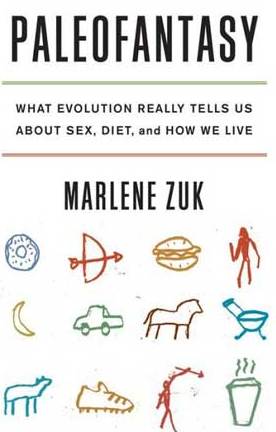
In her new book “Paleofantasy,” Marlene Zuk (2013) takes on the notion that our diet, exercise, and mating Zuk Paleofantasypatterns are out of synch with our evolutionary biology. Some have argued that we have modified our environments too quickly for our own good, leading to the position that we would be better off if we could return to the days of old, before the modern world messed things up. There is probably some truth to this argument (an example I use in classes is that in only a few seconds, inserting $1.00 into a vending machine could return you over 400 empty calories bereft of other nutrients, a scenario our ancestors never encountered). But Zuk counters that the idea that we are stuck with hunter-gatherer bodies and minds in a modern world is overly simplistic.

Zuk notes that attempts to find health and happiness by returning to our idyllic, ancestral past (i.e., paleofantasies) face a few challenges. Among these are:

1. The methodological difficulties in determining exactly how our ancestors lived.
2. The variation among human groups across time and geography.
3. The idea that we were ever fully (perfectly?) adapted to our environment.
4. The fact that evolution does not stop; we are not ‘stuck’ evolutionarily in time.


 In sum, she writes:

Continue reading

Part 9. Humans are (Blank)-ogamous: Love Is an Evolutionary Compromise

This is part 9 of a series on the evolution of human mating behavior, comparing evidence for promiscuity and pair-bonding in our species. Please see the introduction here.

____________________________________________________________________

I want love to roll me over slowly,
Stick a knife inside me, and twist it all around.
I want love to grab my fingers gently,
Slam them in a doorway, put my face into the ground. – Jack White (Love Interruption[1]  

“Everything is a double-edged sword… Even single-edged swords are a double-edged sword. Because you can cut something with it, but the other edge is kind of flat and it doesn’t cut very well.” – Louis CK (comedian)

.

.

Yesterday’s post looked at the neurobiology of romantic love, asking whether evolutionary perspectives are sufficient to explain this highly significant part of what it means to be human. It also raised the question as to why love seems to be a painful experience for so many people.

Before going further, it’s important to remember that while humans are undoubtedly evolved, biological organisms, we are also animals with complex behavior, language, and culture. Others have said this better than I can. To Jon Marks (2010), we are “biocultural ex-apes,” while Agustin Fuentes wrote that “human behavior is almost always ‘naturenurtural’ ” (2012:16). Just as human modification of the environment can affect natural selection (Hawks et al 2007; Laland et al. 2010), so can culture profoundly influence the way we interpret powerful emotional impulses, including those related to desire and love.

Continue reading

Part 8. Humans are (Blank)-ogamous: Evolution, Love, & Suffering

This is part 8 of a series on the evolution of human mating behavior, comparing evidence for promiscuity and pair-bonding in our species. Please see the introduction here.


____________________________________________________________________

we are never so defenceless against suffering as when we love, never so helplessly unhappy as when we have lost our loved object or our love.” – Sigmund Freud (Civilization and Its Discontents)

.

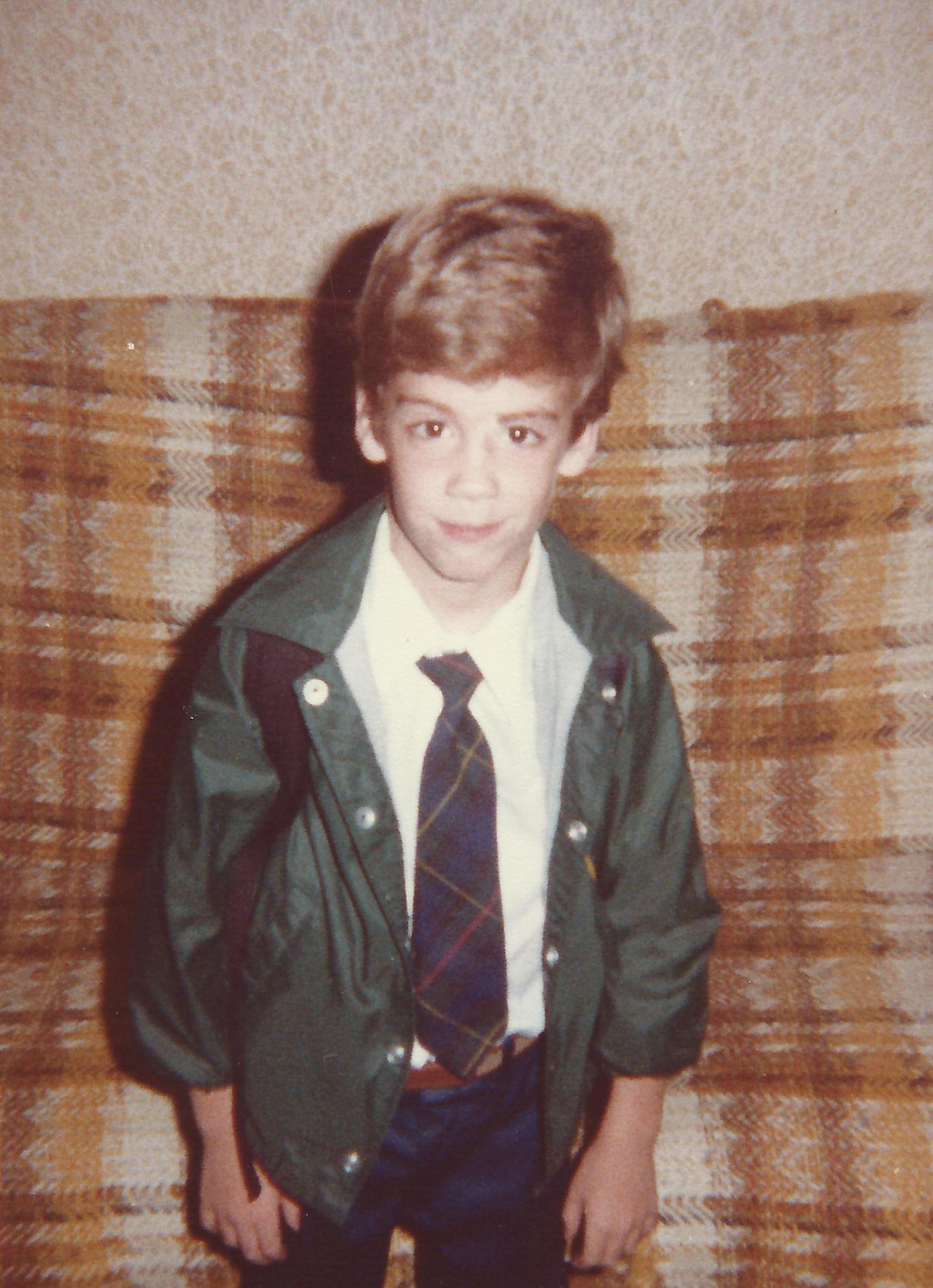
One of my more vivid memories from early childhood is of Tammy and her two friends. I was about 6 years old, and in the first grade. They were third graders, a couple of years older. By coincidence, our two classes had arrived simultaneously at the hallway outside the girls’ lavatory. In those days, teachers took their entire class to ‘the lav’ for efficiency’s sake, and every day the boys finished our business promptly then lined up in front of the teacher as we waited for the girls to finish theirs. On that day, our schedule happened to align with grade three.
1st grade

1st grade

I can still remember Tammy looking at the note I had written her, passed along by a friend earlier in the day, with her friends on either side. Exactly what I wrote is lost to time, but I recall the romantic sentiment behind it and drawing a picture of a boy and a girl kissing. Today, such behavior (or going even further) could actually get a young child suspended from school.

What compelled me to write the note, I don’t know. I do remember that Tammy seemed kind and pleasant to look at, and that it felt right – even at that age – to try to express it. However, that feeling quickly turned to embarrassment, when she and her friends waved, laughed in unison, and –in sing-song fashion – said “Hi, Patrick.” We were all just kids and no harm was intended, but at that point, I wanted to hide. And, though I can’t remember this part very well, I probably wondered why the third grade teacher was so slow in taking her students back to class.

It wasn’t clear where I went wrong, but my interpretation of Tammy’s behavior was that my private feelings of attraction, which came pretty easily, somehow violated the rules. Early experiences carry a lot of weight, and that incident taught me that revealing private emotions was a risky endeavor. It’s tempting to want to hide them away[1]

With Valentine’s Day just behind us, I wanted to develop on some of the elements in this innocent story in a couple of posts (update: part 9 here), such as where attraction and its hypertrophic cousin, romantic love, originate, and even why they might show up in early childhood.

The other element is the more negative aspects of romantic pursuits, which extend well beyond the embarrassment of childhood puppy love and into profound despair and suffering. Perhaps the cynics have good reasons to feel that it is somewhat myopic to give love its own day to be celebrated while glossing over the countless people it has wounded over the millennia. Homer Simpson, in his toast to inebriation, once referred to alcohol as “the cause of, and solution to, all of life’s problems.” I don’t think too many people would object if we replaced the word ‘alcohol’ with love.

So, what is this thing that nature has given us?

Continue reading

Review 2012

Below is a quick look at the most-read posts that were written in 2012, with a brief summary, in case you’re interested.* Thanks very much to everyone for visiting, and to those who have shared these writings and commented on them.

..

1) Part 6. Humans are (Blank)- ogamous: Many Intimate Relationships. May 17

This was the most viewed post written this year. It looked at the variety of intimate romantic relationships that humans have negotiated into various socially recognized structures. I tried to go beyond looking at humans as naturally monogamous or promiscuous, which I think are overly simplistic arguments, taking a look at how this complexity may have arisen. There’s also a nice graphic, borrowed from David McCandless.

We obviously have a lot of cultural diversity in humanity with substantive differences in worldviews and which behaviors are deemed acceptable, but cultures – and individuals – are tasked with how to balance sex, love, intimacy, and commitment, as well as reproduction and parenting. I think this interplay between individual drives and cultures provides an alternate model of looking at things rather than trying to discern what humans ‘are’ in terms of our sexuality.”   

2) Human Nature, Humility, & Homosexuality. Feb 10

A pointed response to one conservative’s argument about homosexuality being against human nature, and the need for tolerance and the need to avoid making overly confident claims about human behavior. “I would recommend that if we have a choice, then choose humility. Choose tolerance. Choose love.”

Continue reading

Part 7. Humans are (Blank) -ogamous: Is It Possible to Love More than One Person? (Poll)

A love triangle is better than a hate rhombus.” – paraphrase of comedian Demetri Martin

..

..

I wanted to continue the “Humans are (Blank)-ogamous” series by writing about polyamory, but think this will take some work before its ready. In the mean-time, I wonder what the consensus is out there on whether people feel that it is possible to love more than one person simultaneously (romantically, rather than parent-child or platonic love).

..

If you’ve followed this series (see the intro here), you may recall that there is a good deal of biological evidence for our species being able to love our partners deeply, but also having multiple sexual partners across the lifespan, if not simultaneously. I wonder if it’s possible to combine the two, and to be able to have deep affection for more than one person at the same time, how this might work in a biological sense, and the role of culture here. I have some thoughts on this, but don’t want to bias opinions ahead of time. Instead, I’ll leave things open-ended.

..

Please feel free to comment below.

..


Part 8: Evolution, Love, and Suffering (Feb 2013)

.

.


Adversity, Resilience, & Adaptation

Note: this post was inspired by the recent conversation I had with Soo Na Pak about grief and resilience.

_______________________________________________________________ 

..

Now the music’s gone, but they carry on
For their spirit’s been bruised, never broken.
They will not forget, but their hearts are set
on tomorrow and peace once again.

Phil Coulter, The Town I Loved So Well1

..

..

When I was a boy and got hurt – falling off my bike, getting hit by a baseball in the ribs, a bruised ego – my father would say to me “you’ll have a lot more of those in your life, kid.” It really wasn’t the response I was looking for at the time, which I suppose was for sympathy. My guess is that he thought a bit of cold, hard reality would do me some good. I don’t know which parental approach is the correct one, but he was undoubtedly right that adversity and getting hurt never really stop, no matter how old we are. But after being knocked down, we do our best to get up again.

My dad and I, during the great scissors shortage of 1977.

Unfortunately, we sometimes face challenging circumstances which greatly exceed falling off a bicycle – the death or loss of our loved ones, poverty, discrimination, debilitating disease or psychological trauma, famine, slavery, war, etc. Sometimes these things are chronic or even fatal, and should we be lucky enough to make it through to the other side of the tunnel, the pain can feel almost unbearable in the interim.

Continue reading