Myanmar’s Killing Fields

We watched the documentary below in a class I teach on anthropology and war.  It was one of the hardest things I’ve ever shown in a class. Before the period began, I warned students that it contained graphic violence and that they had the option not to watch. They could choose not to stay,  without it counting against the attendance portion of their grade. A handful of students chose to leave. 

For those who stayed, we were pretty emotionally exhausted by the end of the period. However, I think most people agreed that it was worth watching to see the extent of the violence against the Rohingya in Myanmar, which many people did not know much about. I thought I’d share it here, for anyone interested.

It’s Not Too Late

With the news that Alexandre Bissonnette was sentenced to 40 years in prison, I wanted to go back to one of the more moving speeches I’ve heard in a while, which I don’t think should be forgotten. Bissonnette pleaded guilty to the crime of murdering six Muslim people and wounding nineteen others in a Quebec City mosque in January 2017. Shortly after the shooting, Imam Hassan Guillet tried to salvage something good from the horrific act, by describing the lives of the deceased and the loved ones they left behind, as well as Bissonnette himself:

“Khaled, Aboubaker, Abdelkrim, Azzedine, Mamadou and Ibrahima chose the place they wanted to live in. They chose the society they wanted to be theirs. They chose with whom they wanted their children to grow. And it was Canada. It was Quebec.… It is up to the society to choose them the same way they have chosen this society. They had their dream to send their kids to school, to buy a house, to have a business and we have to continue their dreams. We have to continue their dreams the same way they extended their hands to the others. It is up to others to extend their hands toward them.

Now unfortunately, it is a little bit late. But not too late. The society that could not protect them, the society that could not benefit from their generosity still has a chance….


The hands that didn’t shake the hands of Khaled or Aboubaker or Abdelkrim or Azzedine or Mamadou or Ibrahima, that society can shake the hands of their kids. We have 17 orphans. We have six widows. We have five wounded. We ask Allah for them to get them out of the hospital as soon as possible.


Did I go through the complete list of victims? No. There is one victim. None of us want talk about him. But given my age, I have the courage to say it. This victim, his name is Alexandre Bissonnette. Alexandre, before being a killer he was a victim himself. Before planting his bullets in the heads of his victims, somebody planted ideas more dangerous than the bullets in his head. This little kid didn’t wake up in the morning and say ‘Hey guys instead of going to have a picnic or watching the Canadiens, I will go kill some people in the mosque.’ It doesn’t happen that way.


Day after day, week after week, month after month, certain politicians unfortunately, and certain reporters unfortunately, and certain media were poisoning our atmosphere. We did not want to see it. We didn’t want to see it because we love this country, we love this society. We wanted our to society to be perfect. We were like parents, their kids [are] smoking or taking drugs and your neighbor says that your kid was taking drugs, I don’t believe it, my son is perfect.

We don’t want to see it. And we didn’t see it, and it happened.

Actually here my friends in Quebec, you know a couple of months ago, a certain period of time ago, someone came and put a head of a pig in front of the mosque. The [person] responsible for the mosque they said ‘No, it was an isolated act.’ Nobody is against us and we aren’t against anybody. They acted very generously and I am proud of them and this is what it should be.

But there was a certain malaise. Let us face it. Alexandre Bissonnette didn’t start from a vacuum. For political reasons, and what is happening the Middle East and unfortunately, for ignorance, a lot of things happened.

This guy was empoisoned. But we want Alexandre to be the last one to have a criminal act like that. We want to stop it. One of the definitions of madness is to do exactly the same thing and expect a different result.
If we do exactly the same thing, my friends, we will have exactly the same result. Are we happy with the result? Are we happy with six dead, five wounded, 17 orphans, 6 widows and a destroyed family which is the family of Alexandre Bissonnette and maybe his friends too?
We don’t want that. So let us change. I am getting encouraged with what we have heard from our Prime Minister and Premier, from our mayor yesterday, from a lot of our leaders, I am very proud and I thank them, and I am not surprised.

But all I am saying, we should start changing words into actions. We should build on this tragedy. God gave us a lemon, let’s make lemonade out of that. Let’s make lemonade. Let’s build on this negative and have a positive.

Let’s go from today to be a real society, united. The same way we are united today in our sorrow and in our pain, let us start today to be united in our dreams, our hopes and our plans for the future.


Let the future that our friends planned for their kids, let us build this future ourselves too. In this way we will respect their memory. Revenge will do nothing.”  
 

Neuro-feedback and Love

This is an interesting video on neuroscience and one individual’s story of getting over a relationship. A while back, I did a series titled “Humans are (Blank)-ogamous,” including romantic love. What I find intriguing about the video is the idea that someone could possibly look at their own brain in operation and use that as a way to intervene and improve someone’s mental state. 

It reminds me of a fortune cookie I once read: “Love is like war; easy to begin but hard to stop.”

By the way, Skunk Bear is the best. 


Anthro Meeting in San Jose

I just got notice from the American Anthropological Association about my session for the annual meeting, to be held this November at the San Jose Convention Center.

Mark Toussaint organized the session (“Knowledge Production and Framing in Biological Anthropology: Perspectives and Case Studies”) and invited me to talk about research on war-affected populations. We’re scheduled for Friday, Nov 16, 2018 from 10:15 AM – noon.

Continue reading

Most Americans Disagree with the Policy of Parent-Child Separation (But Not All)

This is a brief follow-up from the last post I wrote about the cruelty of separating children from their parentsAccording to a poll by The Economist and YouGov, a substantial number of Americans approve of the Trump administration’s recent policy to separate children from their parents who cross the border without documentation. The good news is that a plurality of people responded that they strongly disapproved of the policy, but about a third of those polled approved of it at least somewhat, while roughly one-fifth strongly approved. The results of Question # 31 were as follows:

Do you approve or disapprove of separating families from each other, including minor children, when the adults are arrested for crossing the border into the United States without proper documentation?

•Strongly approve … 18%
•Somewhat approve … 14%
•Somewhat disapprove … 15%
•Strongly disapprove … 38%
•Not sure … 15%


This is disappointing.

Continue reading

Mistakes are the greatest teacher

Yesterday, I was at my son’s baseball game. It didn’t go very well for his team, and in the car ride home we talked about how things went. I reminded him of the expression that mistakes are the greatest teacher.

Later in the evening, I found out that I didn’t get the distinguished teaching award at my university.

When I told my family, without hesitating my son replied: “Was the winner named ‘Mistakes?’ “

Perfect.

Our Species’ Perilous Infancy

“I’ll meet you further on up the road.” 

socotra-dragon-tree-yemen-660x440

Dragon’s blood tree on the island of Socotra, Yemen. Source.


I sometimes wish we could fast-forward through this messy period of human history. I imagine that our descendants will be embarrassed by how sectarian and insular we were. It will probably take generations, but it seems almost inevitable that the world will keep shrinking until it becomes the prevailing wisdom that all people share a common ancestry and that our commonalities outweigh our differences.  

Yet, here we are. Ethno-nationalism is on the rise in Europe, with many people increasingly angered by the influx of Muslim refugees. In the United States, I.C.E. is rounding up and deporting people who have lived here for decades and who pose a threat to no one, including military veterans, a doctor, a mother of four children, and a college professor. President Trump infamously referred to several countries — including El Salvador, Haiti, and all of Africa —  as “shitholes, and implied that people from those places should not be allowed to immigrate to the U.S. Left unspoken, this presumes that a country’s political or economic struggles are a reflection of the character of all of the people who live there.

A common refrain in these stories is the perception that outsiders are a threat, either in the form of direct violence or indirectly to “our way of life.” Again, in 2016 when Trump was still a candidate, he visited my home state of Rhode Island for a fund raiser and suggested that thousands of Syrian refugees were being resettled there without any screening and that they were akin to a Trojan horse:

“We can’t let this happen. But you have a lot of them resettling in Rhode Island. Just enjoy your — lock your doors, folks.”

At the time, there was one resettled family from Syria — a young couple and their three beautiful young children. The calculated wielding of fear as a weapon against five harmless human beings struck many people, including me, as cynical and reprehensible.

As for the threat to “our way of life,” a state senator from New Jersey named Mike Doherty epitomized this sentiment when he said that the U.S. should limit immigration from “non-European” nations that are not part of a “Judeo-Christian culture” because: 

Continue reading

The Dreams of Refugees

Do yourself a favor and watch this 6 minute short film on refugee children. You won’t regret it. 

The Fog of Warnings

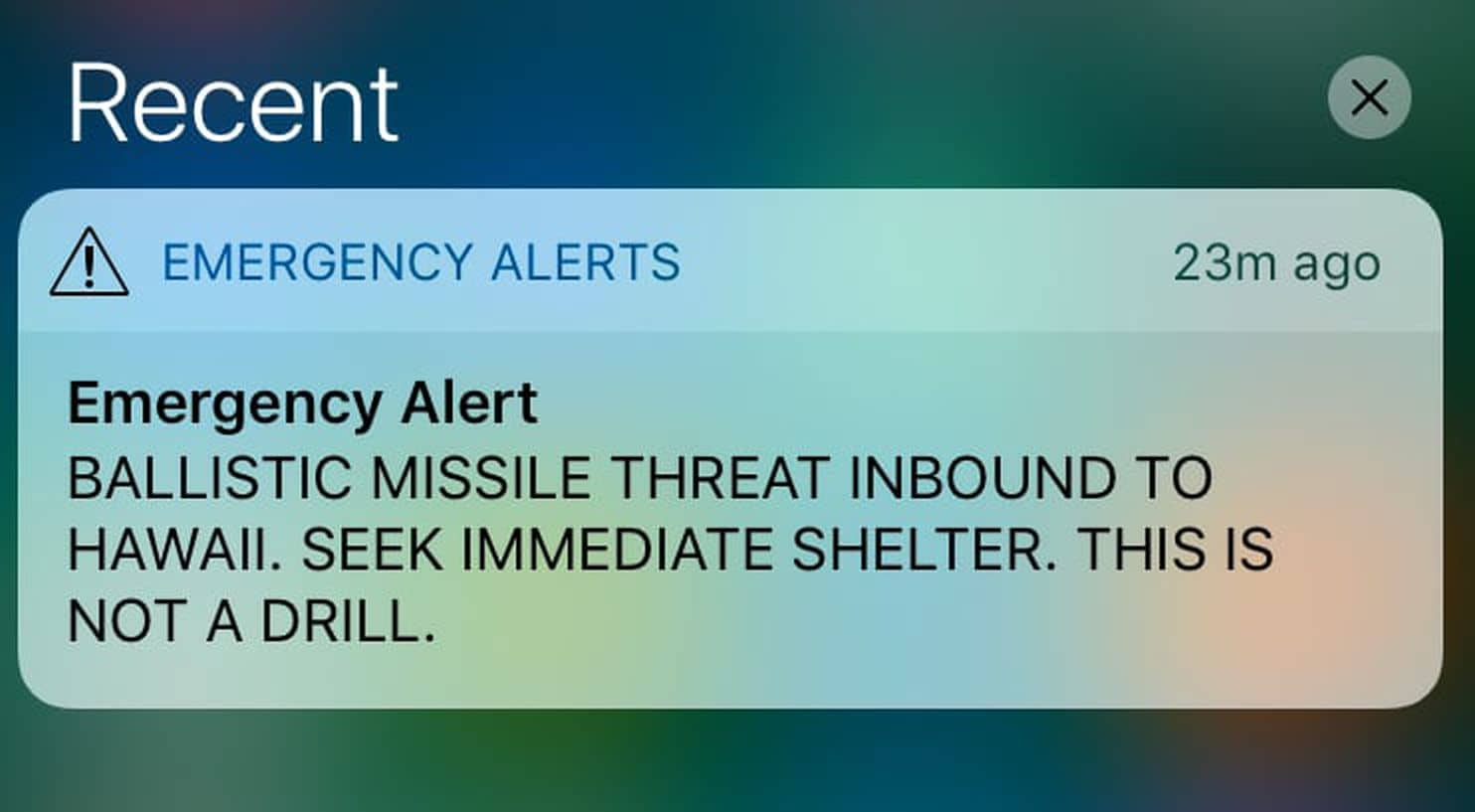
Earlier today there was a report that people in Hawaii received a warning that a missile was incoming. This turned out to be a false alarm, but for approximately twenty minutes many people believed a missile attack, possibly a nuclear one from North Korea, was imminent. 

6ebwf2ejdm6kpat5dqv3uwo6ai

As with everything these days, the discussion online seemed to revolve around who was to blame. It appears that someone pushed the wrong button, causing anxiety and fear for many people. It could have been worse, had the wrong people panicked.

I immediately thought of Robert McNamara’s recollection of the Cuban Missile Crisis from the documentary “The Fog of War,” and the lessons he learned from that episode. 

Continue reading

The Suffering of the Rohingya

Smoke and flames in Myanmar are seen from the Bangladeshi side of the border near Cox’s Bazar, Sept. 3, 2017. (AP Photo/Bernat Armangue)

Two recent videos caught my eye, one from Al Jazeera, the other via the New York Times. They both pertain to the massive number of Rohingya refugees forcibly displaced from Myanmar into Bangladesh, in what the United Nations is calling “ethnic cleansing.” There are many reports of deliberate targeting of Rohingya Muslims by the largely Buddhist Myanmar military, police, and militias.


However, only a few voices have been willing to call this a “genocide,” in part because the charge is so serious and the burden of proof is onerous. According to Dr. Azeem Ibrahim, a senior fellow at the Center for Global Policy, this reluctance may stem in part from a mental image that a genocide requires “one huge act of frenzied violence,” rather than a steady, slow drip of purging. Another factor may be because of legal obligations required to counteract such atrocities once genocide is declared. For example, the U.S. was hesitant to declare the events in Rwanda and Darfur a genocide partly because a finding of genocide might have required the Clinton and Bush administrations “to actually ‘do something.'”

Images from satellites and on the ground confirm that hundreds of Rohingya villages have been burned to the ground in a scorched earth campaign, as a deliberate strategy to deny the Rohingya a home to return to after they are expelled. Refugees have reported that soldiers have killed villagers, gang-raped women, even thrown babies into fires, burning them alive. Despite denials from the Myanmar government, the refugees’ reports seem consistent, corroborating each other. In the video below from the New York Times, the reporter says that “It seems like everyone in the camp has a horror story to tell.


Among the survivors, the suffering is not likely to go away any time soon. The distribution of food seems inadequate, overwhelmed by the numbers of refugees. As a form of therapy, children in camps are drawing some of their traumatic experiences in order to cope with them. Several depict soldiers killing civilians and burning houses. 

In a 2009 study of 1,500+ elderly Germans, Philip Kuwert and colleagues found that even after 60 years had passed, people who were forcibly displaced as children during WWII were significantly more likely to suffer from current anxiety, lower life satisfaction, and lower resilience (Kuwert et al 2009). Whether this pattern will recur in the Rohingya is to be seen. There is also a possibility for post-traumatic growth, where individuals can experience positive changes “as a result of the struggle with a major life crisis or a traumatic event.”

But it seems clear that the Rohingya at least face the potential for a multi-generational trauma. If a high-income nation like Germany, with all of its resources, can be still be affected six decades later, then how much higher are the odds for that same effect in the Rohingya now living in Bangladesh, as well as those who stayed behind in Myanmar. This suggests the need for the world to pay more attention to the plight of the Rohingya to prevent more suffering from occurring.


Reference

Kuwert P, Brähler E, Glaesmer H, Freyberger HJ, Decker O. (2009) Impact of forced displacement during World War II on the present-day mental health of the elderly: a population-based study. Int Psychogeriatr. 2009 21(4):748-53. Link