Adversity, Resilience, & Adaptation

Note: this post was inspired by the recent conversation I had with Soo Na Pak about grief and resilience.

_______________________________________________________________ 

..

Now the music’s gone, but they carry on
For their spirit’s been bruised, never broken.
They will not forget, but their hearts are set
on tomorrow and peace once again.

Phil Coulter, The Town I Loved So Well1

..

..

When I was a boy and got hurt – falling off my bike, getting hit by a baseball in the ribs, a bruised ego – my father would say to me “you’ll have a lot more of those in your life, kid.” It really wasn’t the response I was looking for at the time, which I suppose was for sympathy. My guess is that he thought a bit of cold, hard reality would do me some good. I don’t know which parental approach is the correct one, but he was undoubtedly right that adversity and getting hurt never really stop, no matter how old we are. But after being knocked down, we do our best to get up again.

My dad and I, during the great scissors shortage of 1977.

Unfortunately, we sometimes face challenging circumstances which greatly exceed falling off a bicycle – the death or loss of our loved ones, poverty, discrimination, debilitating disease or psychological trauma, famine, slavery, war, etc. Sometimes these things are chronic or even fatal, and should we be lucky enough to make it through to the other side of the tunnel, the pain can feel almost unbearable in the interim.

Continue reading

A Conversation with Soo Na Pak

Earlier this week, the writer/ documentary filmmaker Soo Na Pak and I had a conversation about anthropology, which she transcribed and posted on her blog. She emailed me after finding the post I wrote on the loss of my brother titled “Life is Beautiful,” and asked if we could talk about some of these things more in depth on the phone. The discussion was a lengthy one that spanned a variety of topics, but I think the main themes were about how we can find some anchors in science which provide optimism, resilience, and hope under difficult circumstances. We also talked about the evolution of humans as a biocultural species, plasticity, and whether some of our more powerful emotions – like grief and love – can be considered adaptive. There’s also some personal stuff in there too. It was a fun experience. Thank you, Soo Na.

..

Link: http://soonapak.wordpress.com/2012/06/23/were-all-cousins/

.

.

Part 6. Humans are (Blank) -ogamous: Many Intimate Relationships

This is the sixth part on the evolution of human mating behavior, comparing evidence for promiscuity and pair-bonding in our species. Please see the Introduction here.

_______________________________________________________________

So be sure when you step, Step with care and great tact. And remember that life’s A Great Balancing Act.” Dr. Seuss

…………………………………………………………………………………………………………………………………………………………………. Varieties of Intimate Relationships. Click for larger image. (from Informationisbeautiful.net)

David McCandless at “Information Is Beautiful” gave me permission to reproduce the above image. I though it fit well with the series I started months ago titled Humans are (blank)-ogamous, which looked at the evidence for pair-bonding and promiscuity in human evolution. In the first post of the series, I wrote:

To begin, let me say that I side with Sapolsky. Individuals may figure out what works best for themselves in terms of balancing sex, love, intimacy, and commitment, but collectively we are a tragically confused species. …

Across the spectrum of human cultures, we can find examples of heterogamy, endogamy, polyandry, polygyny, monogamy, non-monogamy, polyamory, and so on. However, these do not all occur in equal frequencies, so I don’t think we are truly “blank-ogamous.” There is also lots of room for variation within each culture. Being good Popperians committed to the principle of falsifiability, it is probably easier to say what we are not than what we are. One thing is clear: we are not simple.”

Continue reading

Anthropology: Reflections on the Field

Several great pieces on the nature of anthropology appeared this weekend on the  Anthropologies Project website, reflecting on the purpose of anthropology, its strengths and weaknesses, and its future. I recommend the whole series of essays, but two in particular caught my eye early, in part because they are written by biological/biocultural anthropologists with whom I’ve had at least some interaction in the past.

Continue reading

Part 3. Humans are (Blank) -ogamous: More on Promiscuity, & Genetics

This is the third part on the evolution of human mating behavior, comparing evidence for promiscuity and pair-bonding in our species. Please see the introduction here.

____________________________________________________________________

Part 2 pertained to human behaviors that suggested a human propensity for promiscuity (primate sexuality, the excessive sexual capacity of humans, infidelity rates, cultural variation in marriage practices, number of lifetime sex partners, etc.). This post and the next are concerned more with clues from our genes, anatomy, and physiology suggesting promiscuity. I realize these things are not clearly demarcated. My advisor at Binghamton, Mike Little, liked to say that “biology is behavior, and behavior is biology.” But I think in general most people would agree that while behavior has a genetic component, it is more plastic than are anatomical structures.

We left off with a list of six traits hinting at promiscuity. I don’t want to simply rehash what Ryan and Jethá address, so this post addresses some additional points on genetics before returning to their book in the next submission. Continuing with that list…

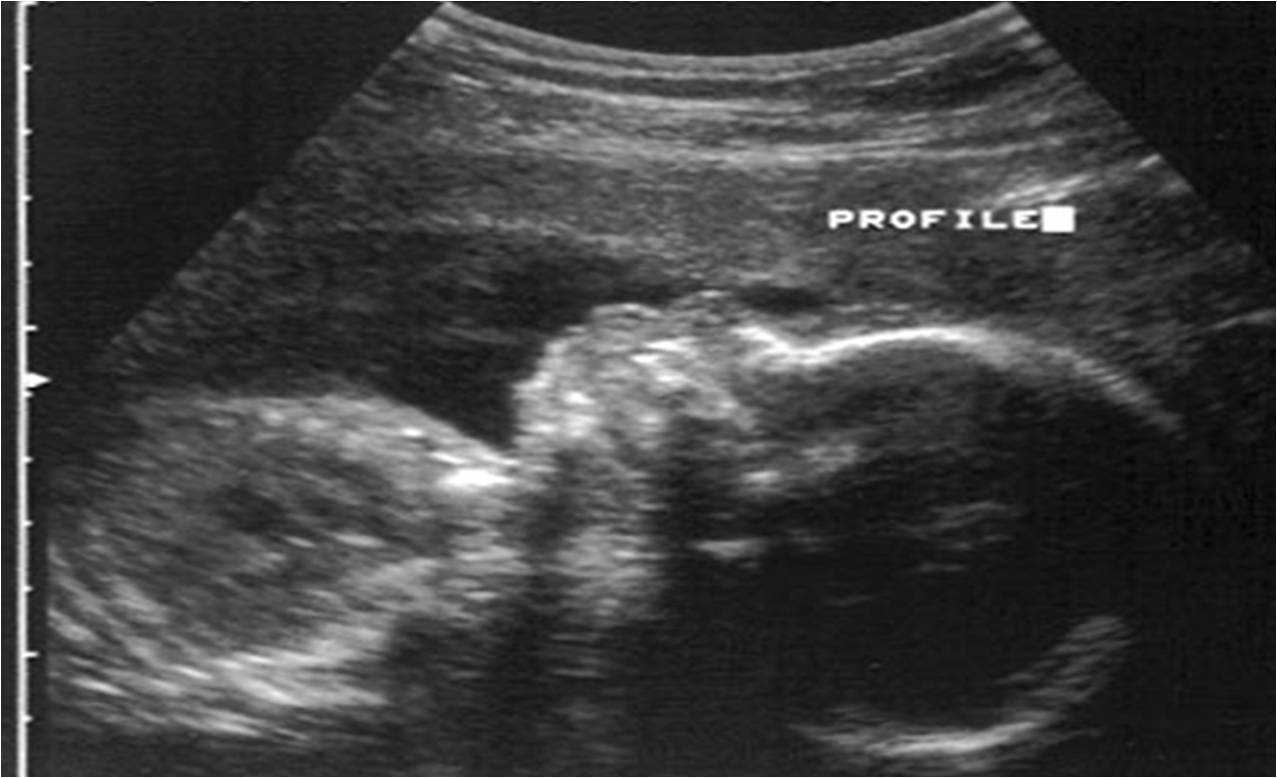
Fetal ultrasound at 4.5 months, profile view

Continue reading

Part 1. Humans are (Blank) -ogamous

(A)s our forebears adopted life on the dangerous ground, pair-bonding became imperative for females and practical for males. And monogamy – the human habit of forming a pair-bond with one individual at a time – evolved.” (Helen Fisher 2004: 131)

Several types of evidence suggest our pre-agricultural (prehistoric) ancestors lived in groups where most mature individuals would have had several ongoing sexual relationships at any given time. Though often casual, these relationships were not random or meaningless. Quite the opposite: they reinforced crucial social ties holding these highly interdependent communities together.” (Chris Ryan & Cacilda Jethá 2010: 9-10)

 “We are not a classic pair-bonded species. We are not a polygamous, tournament species either…. What we are, officially, … is a tragically confused species.” (Robert Sapolsky)

….

.

The above three quotations were selected to illustrate the range of views that exist on the evolution of human sexual and mating behavior. This is not a trivial matter. To primatologist Bernard Chapais: “The central puzzle of human social evolution… is to explain how promiscuity was replaced by the pair bond” (that is, assuming the pair-bond has gained complete ascendancy). But it’s about more than our ancestors’ mating behaviors. Lurking in the background is the notion that our ancestral behavioral patterns impact current ones, via phylogenetic inertia. Additionally, how we view the past is important because, rightly or wrongly, we have a tendency to associate what is natural with what is good (but note well the naturalistic fallacy). For both of these reasons, the past matters.

Continue reading

On Optimism and ‘Human Nature’

In the last few days, I came across a couple of unrelated quotations on human nature and our internal tug-of-war between cooperation and conflict.

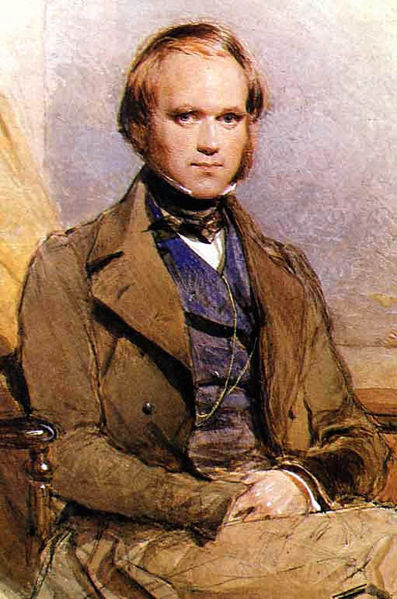
A 20 year-old Charles Darwin in an 1830 letter to his cousin, W.D. Fox:

It is quite curious, when thrown into contact with any set of men, how much they continue improving in ones good opinion, as one gets ackquainted (sic) with them. This was an argument used, in a religious point of view, by a very clever Clergyman in Shrews. to encourage sociability (he himself being very fond of society), for he said that the good always preponderates over the bad in every persons character, & he thought, the most social men were generally the most benevolent, & had the best opinion of human nature. I have heard my father mention this as a remarkably good observation, & I quite agree with him.

In “East of Eden,” John Steinbeck wrote:

Continue reading

Reconciliation, Biology, and the Second Indochina War

Of all the things I’ve written on this site, this remains one of the most meaningful to me. (May 29, 2017)

The weak can never forgive. Forgiveness is the attribute of the strong.” …………………………………………………………………………– Mohandas K. Gandhi

On my desk sits a spoon I bought in a restaurant in northern Laos. It’s lightweight, bigger than a tablespoon, and full of tiny dents that some unknown metalsmith hammered into it. The owner was bemused that in addition to the bowl of pho noodle soup, I also wanted to buy one of her utensils. But I had my reasons.

Earlier on my trip, my guide1 informed me that people in the town of Phonsavanh half-jokingly called these ‘B-52 spoons,’ as they were made of metal recovered from bombs dropped decades ago by U.S. planes during  ‘the Secret War. To me, the spoon was more than a quirky souvenir. Instead, it represented an attempt by Laotians to take the physical remnants of a tragic period in history and forge them into something more positive, in effect turning swords into plowshares (or bombs into spoons). Continue reading

One Planet. One Species. Homo sapiens.

“One planet, one experiment.”
………………..— Edward O. Wilson. 1992. The Diversity of Life.

Hadzabe men (wikimedia commons)

The BBC has compiled what looks to be an absolutely visually stunning television series, titled ‘Human Planet.’  The footage is said to contain video from 80 different locations, highlighting the relationship of humans to various ecological conditions.1 The description from the website:

Uniquely in the animal kingdom, humans have managed to adapt and thrive in every environment on Earth. Each episode takes you to the extremes of our planet: the arctic, mountains, oceans, jungles, grasslands, deserts, rivers and even the urban jungle. Here you will meet people who survive by building complex, exciting and often mutually beneficial relationships with their animal neighbours and the hostile elements of the natural world.”

Have a look for yourself at the preview:

Continue reading

The God of Growth (James M. Tanner, 1920-2010)

The journal Economics and Human Biology has an obituary (in press) describing the life of James M. Tanner, and his singular contributions to the development of the study of human growth.  In his memorial, Roderick Floud quotes David Barker as saying “Jim was the God” of growth studies.

I had missed news of Tanner’s passing, which occurred in August, and was sad to learn of it. His work has been invaluable to many people, including my own teaching and research, from formulating growth charts to a comparative look at how people grow in different parts of the world. But it’s important to reflect not just on his contributions to science, but also the person behind them. One gets a sense of his compassion from the way he referred to childhood growth as a mirror for “the material and moral condition” of a society (1986: 3). Floud quotes an oft-cited passage by Tanner:


A child’s growth rate reflects, better than any other single index, his state of health and nutrition, and often indeed his psychological situation also. Similarly, the average value of children’s heights and weights reflect accurately the state of a nation’s public health and the average nutritional status of its citizens. . . . Thus a well- designed growth study is a powerful tool with which to monitor the health of a population, or to pinpoint subgroups of a population whose share in economic or social benefits is less than it might be.”

Select Works

Eveleth, Phyllis B. and Tanner, James M. 1990. Worldwide Variation in Human Growth (second edition). Cambridge: Cambridge University Press.

Tanner, James M. 1986. Growth as a mirror for the conditions of society: secular trends and class distinctions. In Human Growth: A Multidisciplinary Review. Arto Demirjian and Micheline Brault Dubuc, eds. Pp. 3-34. London: Taylor and Francis.

Tanner, James M. 1990. Fetus into Man: Physical Growth from Conception to Maturity. Cambridge, MA: Harvard University Press.