Kindness and Regrets

Be excellent to each other.” – Bill and Ted (20th century philosophers)


From a commencement speech by George Saunders: 

“What I regret most in my life are failures of kindnessThose moments when another human being was there, in front of me, suffering, and I responded…sensibly.  Reservedly.  Mildly.”

Saunders then describes a memory from the seventh grade, when he did not defend the new girl in school who was teased for being different. Forty-two years later, he still thinks of her occasionally, and even though he was not personally cruel toward her, he regrets not going out of his way to extend her kindness. He then questions why kindness is often lacking, and he looks for prescriptions to make it more common.

The speech is a good one, and it stirred up some personal memories of instances when I could have used some kindness from someone. Sometimes it came; others it didn’t. There were also situations that called for me to be the one to extend kindness to someone else who needed it. Sometimes I stepped up, although probably not as consistently as I should have. Fear can be a powerful deterrent. Like Saunders, I regret those missed opportunities.

Of course, the opposite of kindness is cruelty, and I’m often distressed by the latest story of human callousness, where someone is belittled for not conforming to another’s standards. For those of us who are not Rhodes Scholar Olympians (which is to say, nearly everyone), we all fall short of socially constructed ideals in some way. Either we’re not attractive enough, or not stylish, athletic, or smart enough (or too smart). Too red. Too blue. Too promiscuous or too chaste. Too tall. Too short. Too neurally atypical. Or, we’re the ‘wrong’ weight, gender, race, sexuality, ethnicity, social class, or speak the wrong dialect. We can be incredibly creative at finding the holes in the armor to bring someone down.

For such an intensely social species, we often seem to go out of our way to make each other want to leave the group.
Continue reading

The Zen Master and the Infanticidal Primates

A recent paper has concluded that prevention of infanticide was the most likely precursor to monogamous mating systems in some primate species. Another paper suggested a different possibility in mammals more generally, namely that under certain ecological conditions females are so dispersed that the best strategy for a male is to remain close to a rare female when he finds her. This prevents other males from mating with her, and increases the chances of successfully passing on his genes. 

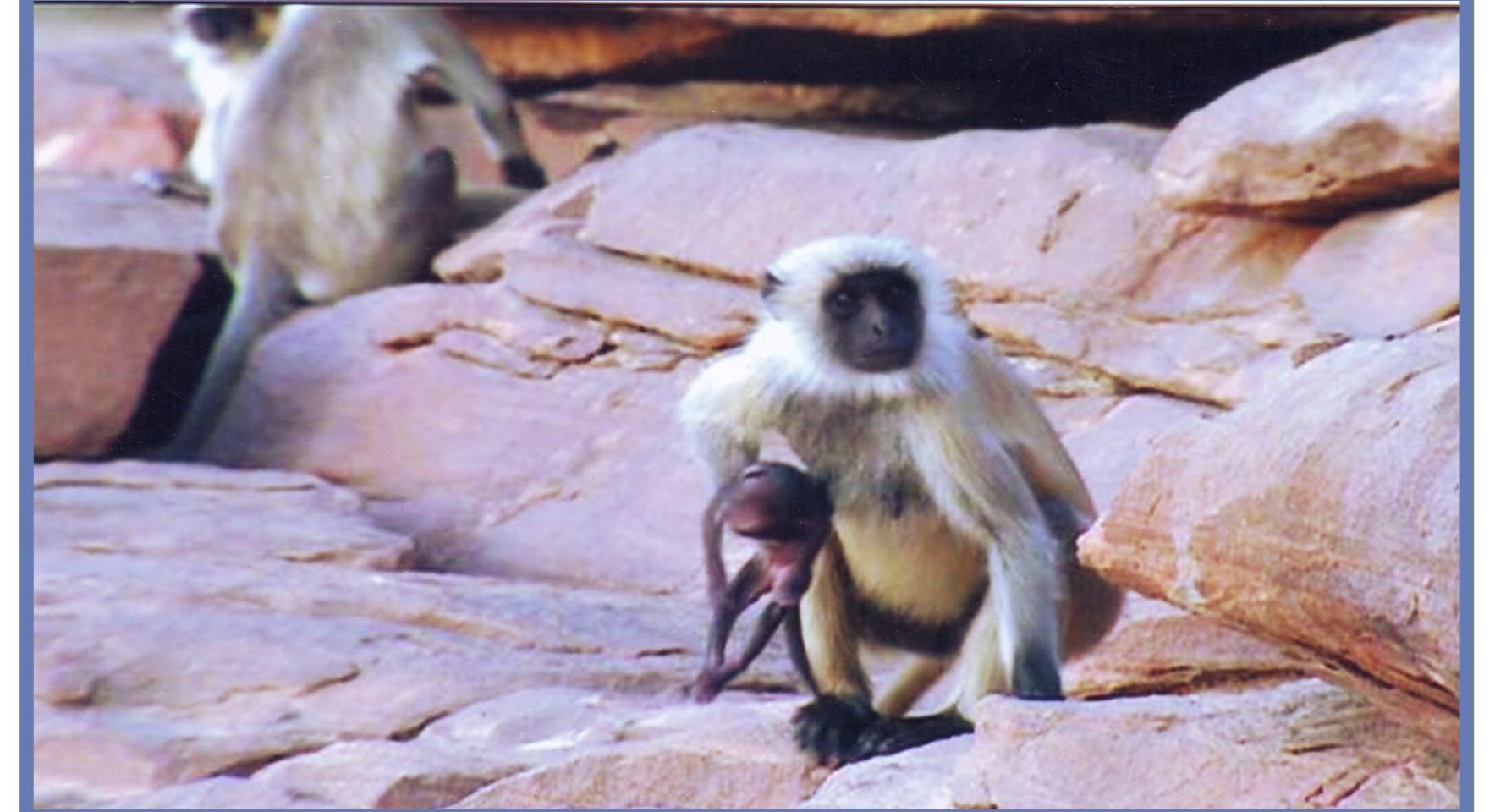
langur

Langur mother with dead infant. (From http://www.brown.edu/Research/Primate/LPN50-1.html)

I’m still sorting through what all this means, and wonder if the search for broad patterns oversimplifies things too much. As Peter Gray put it: “It’s all so confusing, if lead researchers can’t seem to find similar evolutionary grounds behind social monogamy.” Anyway, if prevention of infanticide really was the key to jump-starting monogamy (at least in some primate species), it makes me think of its downstream consequences. This reminds me of the parable of the Zen Master and the Little Boy.

Continue reading

Empathy in Flux, Part 2

Jason De Caro recently shared this video from the Cleveland Clinic. For those who can’t watch it, the video shows various individuals in a hospital setting , with captions describing the most recent, pertinent events in that person’s life (a woman visiting her terminally ill husband, someone learns they’re about to become a parent, etc.)


I thought it was a nice reminder that external appearances are often superficial. All people have a complex history behind them, beyond just the snippets and cross-sections that we observe, particularly when meeting someone for the first time. In another post, titled “Empathy in Flux,” I wrote that single slices of a person’s life are never enough to fully understand the complexity of a person:

as Forrest Gump famously put it: “stupid is as stupid does.” I think this is an often misunderstood piece of folk wisdom. My interpretation of this is that one can evaluate actions without leaping to evaluations of states of being. Certainly one can do stupid things without “being” stupid. To believe another person “is” stupid (or any personality trait you can imagine) is to claim one has found the signal among the noise, while ignoring a LOT of complexity, the deviation around the mean. In short, we have just a cross-section in the totality of that person’s life. Even Hitler laughed. Even Gandhi had periods of depression. Certainly, we have more than a snapshot of these particular individuals’ lives, but we don’t have that for everyone we meet. How different would our impression of others be if we had that longitudinal data in front of us? Of course, for most people the amplitude of one’s personality does not fluctuate that widely. Most people are consistent in either being kind, or funny, or complete assholes. But context and variation are essential. 

Like all reminders to be mindful, the video is welcome (and necessary).

.


Bombing of Laos, Animated

The organization Legacies of War shared this animated video on the impacts of U.S. bombing of Laos during the Vietnam War. I thought the filmmaker, Corey Sheldon, put together a very attractive and informative video, although the history is perhaps understandably simplified. Today, the remnants of unexploded bombs are still a problem in Laos, decades after the war has ended, so I think projects like this one are helpful in raising awareness, particularly in the United States.  <div style=”text-align:center”>

</div>

Related posts

The Lingering Effects of the War in Laos 

Laos: The Not So Secret War 

.

On Finding Optimism

(Dec 31: Here’s to an optimistic New Year, and that as individuals and societies we can learn from, and possibly even get the chance to rectify, our mistakes).

Some days, it’s harder to find optimism than others. But it’s always there. “In any event, it is the only way we can live.” 

From Bobby Kennedy:

“There is discrimination in this world and slavery and slaughter and starvation. Governments repress their people; millions are trapped in poverty while the nation grows rich and wealth is lavished on armaments everywhere. These are differing evils, but they are the common works of man. They reflect the imperfection of human justice, the inadequacy of human compassion, our lack of sensibility towards the suffering of our fellows. But we can perhaps remember—even if only for a time—that those who live with us are our brothers; that they share with us the same short moment of life; that they seek—as we do—nothing but the chance to live out their lives in purpose and happiness, winning what satisfaction and fulfillment they can.

Continue reading

Children of the Stars

From: http://www.nasa.gov/mission_pages/hubble/science/milky-way-collide.html

Earth’s night sky in 3.8 billion years (NASA images).

“He was bitter at the universe for all the things it didn’t give him, for how it shortchanged him, for how it sometimes made him feel lesser. “Why couldn’t he just be normal?” he thought. He felt like this too often.

But he always, without fail, waded through the dark clouds and returned to the same thoughts that helped dissipate the bitterness – that we all have our baggage and insecurities that weigh on us. Some carry heavier weights than others, some that look to be almost unbearable, some that seemed to be (from the outside) trivial. But no one was without burden. His burdens were not as great as some, but they were still his.

Continue reading

“The Single Most Important Function of Marriage”

It might not be what you think. From Stephanie Coontz’ book Marriage, a History: How Love Conquered Marriage (p. 31): 

“Probably the single most important function of marriage through most of history, although it is almost completely eclipsed today, was its role in establishing cooperative relationships between families and communities.” 

A few pages later, she adds that marriage has historically fulfilled a variety of functions in different societies, so much so that it’s hard to pin down exactly what marriage is. These functions also occur in different combinations, which could alternatively be performed by other institutions. The exception, according to Coontz, is not reproduction or even love, but the extended ties created through in-laws. Here is the whole quote:

Continue reading

Erotic Laundry Lists

As I continue to read up on the evolution of human mating, a theme that keeps recurring is how complex people are in what they want from their erotic pursuits. Many books, journal articles, and even popular magazines compile lists about the physical features we consider attractive, the traits we look for in a mate, etc. In those lists, we can find patterns, but none can ever be perfect because we are complex, individually and culturally variable, and always in flux, trying to balance an array of wants and needs that shift over time along with our circumstances. No single variable will ever be sufficient to explain what people want. Sometimes it’s Arthur Miller; sometimes it’s Joe DiMaggio.

Marilyn Monroe

Here is a sample of the complexity, in list form:

Continue reading

Evelyn’s Story

Recently, we attended a going-away party for some friends who are moving to Europe. One of the guests arrived a bit late, along with her husband and daughter. She also brought her 83-year old mother, Evelyn [1], who was the chronological outlier among the crowd of 30 to 50 year-olds and their kids. As the children played and the younger adults socialized I made eye contact with Evelyn, who was standing alone. She smiled back in that kindly, typical grandmotherly way, so I introduced myself. We made small talk and she mentioned how she had recently sold the house that she had lived in for more than thirty years, and how much she loved her new apartment and her granddaughter, and other things grandmothers like to talk about.

From her slight accent, it was obvious that she was born elsewhere. Eventually she revealed that she grew up on a farm in eastern Canada, in one of the maritime provinces, and that’s where our conversation took off.

Continue reading

Mythic War

From Chris Hedges:

“Lawrence LeShan in The Psychology of War differentiates between “mythic reality” and “sensory reality” in wartime. In sensory reality we see events for what they are. Most of those who are thrust into combat soon find it impossible to maintain the mythic perception of war. They would not survive if they did. Wars that lose their mythic stature for the public, such as Korea or Vietnam, are doomed to failure, for war is exposed for what it is– organized murder.

But in mythic war we imbue events with meanings they do not have. We see defeats as signposts on the road to ultimate victory. We demonize the enemy so that our opponent is no longer human. We view ourselves, our people, as the embodiment of absolute goodness. Our enemies invert our view of the world to justify their own cruelty. In most mythic wars this is the case. Each side reduces the other to objects – eventually in the form of corpses.

for the lie in war is almost always the lie of omission. The blunders and senseless slaughter by our generals, the execution of prisoners and innocents, and the horror of wounds are rarely disclosed, at least during a mythic war, to the public. Only when the myth is punctured, as it eventually was in Vietnam, does the press begin to report in a sensory rather than a mythic manner. But even then it is it reacting to a public that has changed its perception of war.” 


― Chris Hedges (2002) War Is a Force That Gives Us Meaning (p. 21-22)

.