Hope from Northern Ireland

Bono in the NY Times on British Prime Minister David Cameron’s apology for Bloody Sunday:

If there are any lessons for the world from this piece of Irish history … for Baghdad … for Kandahar … it’s this: things are quick to change for the worse and slow to change for the better, but they can. They really can. It takes years of false starts, heartbreaks and backslides and, most tragically, more killings. But visionaries and risk-takers and, let’s just say it, heroes on all sides can bring us back to the point where change becomes not only possible again, but inevitable.


Let’s hope that visionaries and risk-takers can help defuse tensions in the many other ongoing conflicts in the world.


War and child growth: Iraq & WWII Germany

At the population level, childhood growth is often seen as a marker of health and the quality of the environment. When populations get taller in a few generations, this is likely due to some improvement in local conditions (better nutrition, less infection, cleaner water supply, etc.). Conversely, when linear growth declines, it is usually because local conditions (ecological, economic, political) have deteriorated. Two recent working papers illustrate how this pattern applies to war conditions.

Destruction of Dresden, 1945

Continue reading

Life Is Beautiful

I debated for weeks whether to write about something as personal as the death of my brother Kevin on my (semi)professional blog and to try to explain how this event affected my view of life. Ultimately, I gave myself permission after deciding that it’s a fallacy to think that anyone can seal their personal and professional selves into watertight compartments. The personal side of me draws meaning from what I know of anthropology and evolutionary biology. I agree with the physicist Brian Greene, who once wrote that science isn’t merely about facts and theories; it’s also about the perspective those facts and theories provide. Science widens our horizons. Likewise, my academic side draws inspiration from my personal history, including the people who have been part of my life. I can say unequivocally that I was drawn into anthropology because of the many friends of different ethnicities I’ve had, which made me curious about the biological and cultural diversity of humanity. All of these things are significant events in my life, as is the death of my brother, after whom this website is named.

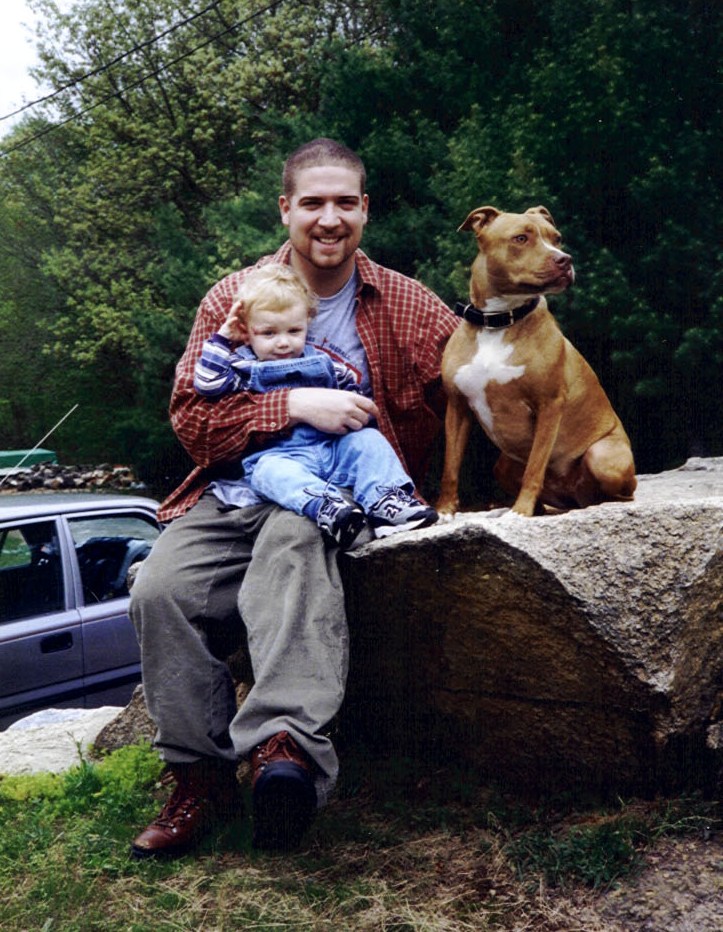
Kevin (Feb 26, 1977- May 14, 2000) with his son, Daniel

Kevin (Feb 26, 1977- May 14, 2000) with his son, Daniel

Yesterday marked the tenth anniversary of the passing of my younger brother Kevin, who died after his SUV swerved off the side of a small highway and hit a tree. He was only 23 years old, and left behind a young wife and an infant son. I was 25 and in graduate school at the time, three hundred miles away, and didn’t learn what happened until my father called me at 6 AM the following morning. To this day, any time the phone rings in the early morning or late at night, I am automatically filled with a sense of dread. As my father repeatedly asked me if I was sitting down before telling me what had happened, I immediately knew that someone close to me had died. I didn’t care if I was seated, standing, or on my head; I just wanted to know what happened. After what seemed like an eternity, I relented and told my father that I was in fact sitting down. For the rest of my life, his words will be tattooed in my mind: “Your brother Kevin was in a car accident last night, and he’s no longer with us.”

Continue reading

Breaking through barriers

Hmong children playing on a tractor in Javouhey

The Hmong in French Guiana are a interesting population – refugees from Laos who earn a living by farming and selling their produce in the urban centers of what is essentially a French colony in Amazonia (technically, it’s an ‘overseas department’). I’ve not been back there for a while, but miss it and think about it often. One memory has been on my mind lately: a young couple  (Étienne and Marie*) that my research assistant, KaLy Yang, and I met in the village of Javouhey.

Continue reading

Funding the removal of UXO in Laos


War leftovers, decorating a hotel lobby in Phonsavan, northern Laos (July, 2009)


I was impressed by the conviction shown by Congressman Mike Honda (D-CA), when he wrote in today’s Washington Times that “we have a moral obligation to fix this problem” (leftover unexploded ordnance in Laos).  He also called for an increase in funds and a sustained commitment to removing leftover cluster bombs dropped by U.S. planes in the 1960s and 70s.

Incidentally,  the organization Legacies of War testified before Congress last week, including Rep.  Honda, about the extent of the problem of UXO in Laos, and the need for greater funding. As I wrote previously, the scope of the problem is massive and deserves much more attention than it has gotten thus far.

Conference April 23-25

I’ll be in Seattle April 22-25 at a conference on War and Global Health at the University of Washington.

My session is Saturday, April 24 at 11AM (War and Children). I’m really looking forward to it.

Making Peace with the Past

“The past is never dead. It is not even past.”  –William Faulkner

Bosnian Muslims in Trnopolje camp, 1992

The dividing line between past and present is almost never clear cut. We constantly carry our pasts around with us: personal, cultural, historical, and evolutionary. Often, those pasts are burdened with regrettable or undesirable incidents and other phenomena, be they tragedies, atrocities, accidents, bad memories, poor decisions, crimes, natural disasters, or even as part of our evolutionary baggage (e.g., oncogenes, a ruptured appendix, or impacted wisdom teeth). At different times we may find ourselves as the aggrieved or the aggrieving party. To the extent that we can, we make extraordinary efforts to get past our pasts via redemption, reparation, and reconciliation.

Continue reading

The Sin of Certainty

Screen capture from wikileaks video, Iraq

Lane Wallace wrote a recent article in The Atlantic about bias in journalism, and how it influences the questions that one asks. As journalists are human beings, I think we can reasonably assume that they, like everyone else, have biases. What resonated with me was Wallace’s use of the phrase ‘the sin of certainty,’ coined by the science writer Jonah Lehrer. I think this phrase has great utility and should humble us when we consider how much we don’t know. As an example, chemists have just observed for the first time a new yet-to-be-named element (#117). It took until the late 1990s for physicists to recognize that perhaps up to 95% of the universe is actually comprised of dark matter and dark energy. These are far from trivial matters, yet they have eluded us until now.


Continue reading

The Power of Love

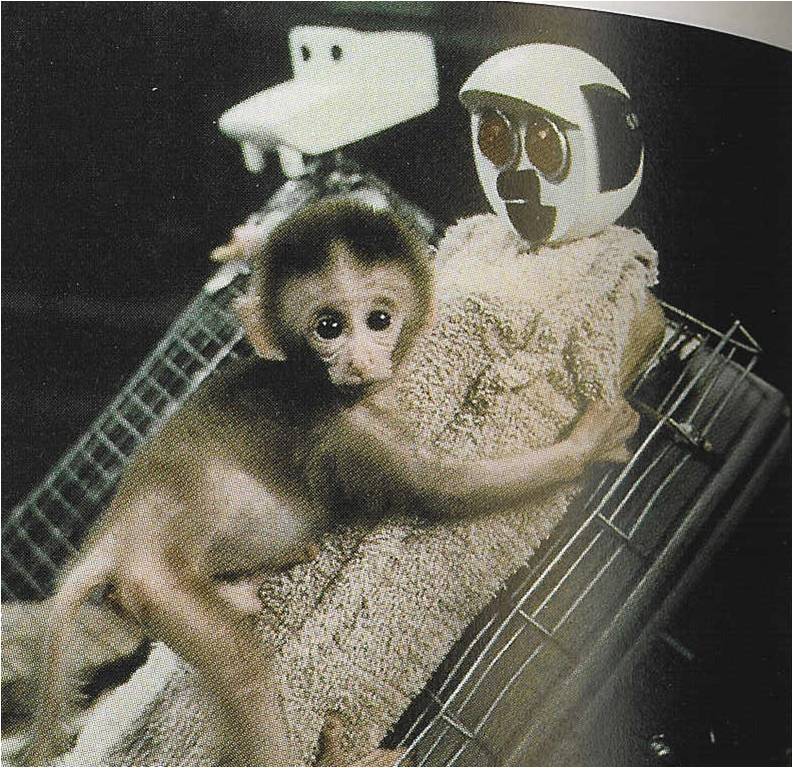
Infant rhesus monkey with terrycloth ‘mother’

As social animals, we need to be around others. Virtually everything we do is social – trade, eating meals, watching sports in stadiums or movies in theaters, religious services, education, the internet, etc. Even war is a social activity. No human being on the planet is completely self-sufficient. Being social is more than utilitarian, however; it is also biologically and psychologically necessary. For example, one of the most severe forms of punishment in prisons is solitary confinement.

Continue reading

Inequality, Evolution & Obesity

A recent study on child obesity by researchers at Harvard has received a good deal of media attention lately. In the NY Times, a synopsis of the study was one of the most emailed articles in the country (“Baby Fat May Not Be So Cute After All,” March 22). The key sentence from that article:

“More and more evidence points to pivotal events very early in life — during the toddler years, infancy and even before birth, in the womb — that can set young children on an obesity trajectory that is hard to alter by the time they’re in kindergarten.”


Continue reading