
 In my weaker moments, I always found it somewhat comforting to know that nobody is perfect. Even historical figures that are often conflated with human perfection had serious flaws. Isaac Newton is considered by many to be the most brilliant person in history, but was aloof, suffered from nervous breakdowns, and as a teenager may have threatened to kill his mother and step-father. Gandhi wrote frequently about his own imperfections and struggles with selfish desires. Einstein deserted his wife and two children for another woman (his cousin). Mother Teresa wrote about her own doubts and struggles with faith. Jesus had his fit of rage in the temple.
One Big Family

Evolutionary tree, Darwin’s notebook
Whether you like it or not, you are, in fact, my cousin. We can verify this through a couple of complementary lines of argument, one working forward in time, the other working backward. First, we know that all human beings comprise a single species, Homo sapiens. In 2005, Ian McDougall and colleagues reported in the journal ‘Nature’ that the oldest fossils belonging to our species were dated at 195,000 years old, and were discovered in Omo, Ethiopia. We all share this common point of origin as our lineages have intertwined and diverged over the last 8,000 to 9,000 generations or so.
War REALLY is Bad for Children (& Other Living Things)
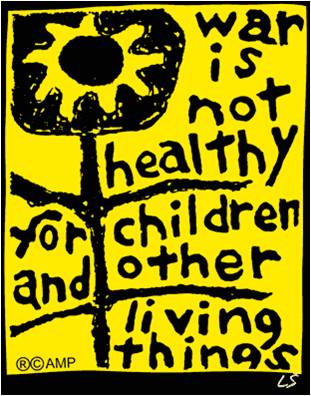 A recent report by the group Physicians for Human Rights described the plight of Rohingya refugees from Myanmar who resettled in Bangladesh. Starvation conditions were said to be widespread among the estimated 200,000 to 400,000 refugees, with 18.2% of children aged 5 years or younger showing signs of acute malnutrition. For comparison, a rate of 10% is considered by humanitarian agencies to be a serious situation, while 15% is considered critical.
Lingering Effects of the War in Laos

Destroyed temple in Moang Khoune (Xieng Khouangville)
The Lao National Regulatory Authority (LNRA) recently released an impressive, 106-page report on the victims of unexploded ordnance (UXO) over the last few decades. The authors, Mike Boddington and Bountao Chanthavongsa, and all of the associated researchers should be commended for this invaluable contribution, which documents in a systematic fashion the damage done by the war. Researchers covered more than 9,000 villages in Laos (95%), collecting retrospective data from interviews with residents about injuries or deaths caused by mines, large bombs, mortars, bombies, etc. from 1964 to 2008. In all, the report found that more than 50,000 people were injured or killed by UXO in Laos, though the authors acknowledge that this is likely an underestimate, perhaps by as much as 20%. Results revealed that Savannakhet and Xieng Khouang provinces were the two most affected in terms of the number of casualties, which makes sense, given their strategic and geographic importance in the southern and northern parts of the country, respectively.
The Costs of War
There’s a bit of controversy surrounding “The Human Security Report,” (HSR) published a couple of weeks ago by Andrew Mack and colleagues at Simon Fraser University. It suggests that improvements in public health over the last few decades have continued to lower mortality rates in many African nations, even during times of war. Looking at Figure 2.1, it just seems counter-intuitive that Under-5 mortality would not increase in more countries during periods of conflict.
Epidemiologist Les Roberts (Columbia Univ.) argues forcefully that the report is not very good scholarship (to put it kindly). In his words, “this report draws unjustified conclusions and will leave the world more ignorant and misguided for its release.” Ouch. Roberts makes a strong case to back up his statement, including points like this:
Shrinking babies
Harvard researchers are reporting in the journal Obstetrics & Gynecology that the average birth weight in the U.S. has actually dropped over the past 15 years. The study looked at more than 36 million full-term births between 1990 and 2005. After controlling for confounding variables, it was found that birth weight had decreased by 52 grams. This trend ran counter to that found previously, which was that birth weights had been steadily increasing over the last century. A secondary analysis suggested that the drop was not due to a change in maternal demographics, as the trend was also found in a subset of white, well-educated non-smoking women as well.
On our (in)humanity
Two recent stories in the news caught my eye on the two sides of human beings. The first is a shocking episode of two young boys in England, brothers aged 10 and 11, who brutally beat two other boys of roughly the same age. The details of the case are horrific, as the brothers robbed the boys, threatened to kill them, forced one of them to engage in a sex act, and then for over an hour stomped and beat them with broken glass, bricks, sticks, and pieces of a ceramic sink. Both victims survived, but barely.
Contrast that story with the outpouring of support for Haitians suffering from the recent earthquake. According to the Chronicle of Philanthropy, as of January 20 private citizens and companies had donated $305 million to support relief efforts there. The wide chasm between these two stories encapsulates the tremendous pliability of human behavior. On the one hand, we have an enormous capacity for brutality toward each other, as seen in the many examples of interpersonal violence, the number of wars on the planet, or even through the more subtle, systematic violence of extreme poverty and exploitation.

