Living in New England, we have older cemeteries than most other areas of the country (though Eastern hemisphere readers might scoff at what Americans consider ‘old’). I frequently walk with my sons and nephew through a cemetery near my home, as it is a tranquil place away from traffic, where we can go through the woods and throw rocks in the pond. We do this so often that the headstones sometimes become little more than a forgotten backdrop.
…
However, I do make an effort to remind myself that these headstones are markers of actual human lives. One recently caught my attention, the story of Henry and Susan Battey. I have no knowledge who these individuals were — what they looked like, where they lived — other than their names, vital statistics, and the names of their children. It is their children on the backside of the headstone that struck me. The Batteys had three children, losing all of them as infants. That occurs to me as nature (or poverty, or whatever the cause) at its most cruel and indifferent.
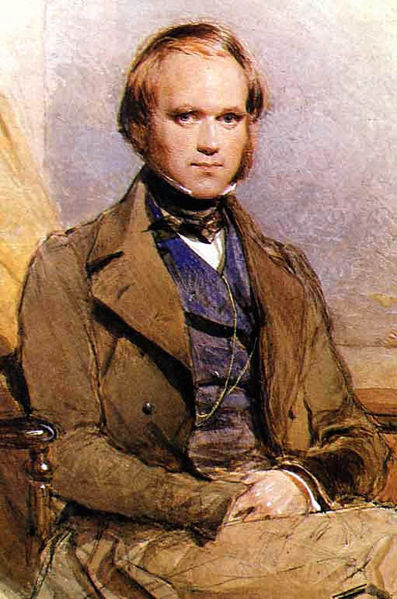
It is quite curious, when thrown into contact with any set of men, how much they continue improving in ones good opinion, as one gets ackquainted (sic) with them. This was an argument used, in a religious point of view, by a very clever Clergyman in Shrews. to encourage sociability (he himself being very fond of society), for he said that the good always preponderates over the bad in every persons character, & he thought, the most social men were generally the most benevolent, & had the best opinion of human nature. I have heard my father mention this as a remarkably good observation, & I quite agree with him.”
Of all the things I’ve written on this site, this remains one of the most meaningful to me. (May 29, 2017)
“The weak can never forgive. Forgiveness is the attribute of the strong.” …………………………………………………………………………– Mohandas K. Gandhi
On my desk sits a spoon I bought in a restaurant in northern Laos. It’s lightweight, bigger than a tablespoon, and full of tiny dents that some unknown metalsmith hammered into it. The owner was bemused that in addition to the bowl of pho noodle soup, I also wanted to buy one of her utensils. But I had my reasons.
Earlier on my trip, my guide1 informed me that people in the town of Phonsavanh half-jokingly called these ‘B-52 spoons,’ as they were made of metal recovered from bombs dropped decades ago by U.S. planes during ‘the Secret War.’ To me, the spoon was more than a quirky souvenir. Instead, it represented an attempt by Laotians to take the physical remnants of a tragic period in history and forge them into something more positive, in effect turning swords into plowshares (or bombs into spoons).Continue reading →
“Evolutionary theory should be taught in public schools because it is one of the most important scientific theories ever generated, and because it is the accepted scientific explanation for the diversity of life.”
An article published this week in Sciencerevealed the results of a survey of 926 U.S. high school biology teachers. The authors, Michael Berkman and Eric Plutzer of Penn State, found that only 28% of teachers “unabashedly introduce evidence that evolution has occurred and craft(ed) lesson plans… that evolution is a theme that unifies disparate topics in biology” (Berkman and Plutzer, 2011).
…
Shockingly, 13% of teachers advocated creationism or intelligent design in the classroom, but most (who the authors termed “the cautious 60%”) were “neither strong advocates for evolutionary biology nor explicit endorsers of nonscientific alternatives.” The authors suggested that the ambivalence of some biology teachers could be due to a lack of confidence in their knowledge of evolution, a desire to shy away from controversy, or a conviction that students should be exposed to various ideas and then allowed to make up their own minds. These numbers should make biology teachers pause and reflect on where we are as educators, 150+ years after Darwin’s publication of On the Origin of Species.
“One planet, one experiment.” ………………..— Edward O. Wilson. 1992. The Diversity of Life.
…
Hadzabe men (wikimedia commons)
The BBC has compiled what looks to be an absolutely visually stunning television series, titled ‘Human Planet.’ The footage is said to contain video from 80 different locations, highlighting the relationship of humans to various ecological conditions.1 The description from the website:
Uniquely in the animal kingdom, humans have managed to adapt and thrive in every environment on Earth. Each episode takes you to the extremes of our planet: the arctic, mountains, oceans, jungles, grasslands, deserts, rivers and even the urban jungle. Here you will meet people who survive by building complex, exciting and often mutually beneficial relationships with their animal neighbours and the hostile elements of the natural world.”
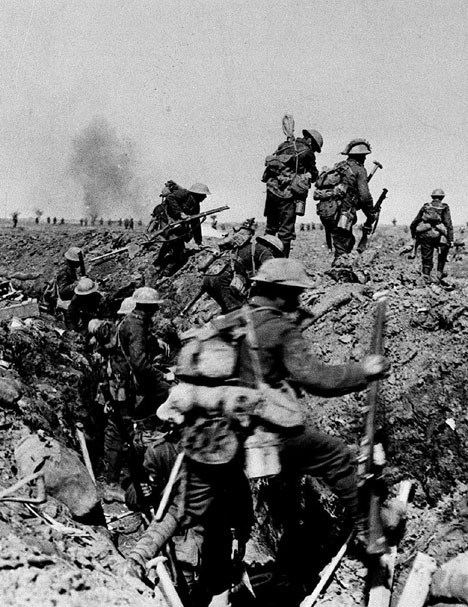
As Christmas approaches, it seems like the perfect time to reflect on an unlikely event from military history. During the First World War, a spontaneous, temporary truce was brokered between German, French, and Scottish officers on Christmas Eve, 1914. On that night and on Christmas Day along the trenches in Flanders, soldiers who recently had been shooting at each other used the ceasefire to bury their dead, then shared food and drink with their ‘enemies,’ played soccer, and even exchanged gifts and addresses in order to write each other after the war ended.
…
The details leading up to the ceasefire are a bit murky, but eyewitnesses reported that German and Scottish troops took turns festively singing carols in their own trenches. A few brave officers then seized the spirit of the moment to risk their safety, leave their trenches, and negotiate a respite from the brutality. The remaining soldiers then followed, leading to the amazing scene.
This year was the first for this website. In looking at the blog’s statistics, it’s interesting to see which posts were the most-read. I’m listing the top ten posts with a brief summary, in case you’re interested. Thanks very much to everyone for visiting.
This was the most-read post of the year, and it was a very personal one. I wrote about the tenth anniversary of the death of my brother Kevin, and how I’ve used anthropology and evolutionary biology to maintain perspective on the beauty of life.
If past injustices are not addressed, they can fester for decades or centuries. However, people seem to crave forgiveness, justice, and reconciliation. [Armenia, the Soviet Union and Poland, the former Yugoslavia, Tiger Woods, Joshua Blahyi (‘General Butt Naked’), and Gandhi.]
A couple of reminders from John F. Kennedy and Carl Sagan that we are, all of us, in this together. We are all connected, share commonalities, and come from one big family, after all.
XXX
“For in the final analysis, our most basic common link is that we all inhabit this small planet. We all breathe the same air. We all cherish our children’s future. And we are all mortal.” – John F. Kennedy (June 10, 1963)
‘Beauty is truth, truth beauty, – that is all Ye know on earth and all ye need to know.’ – John Keats
…
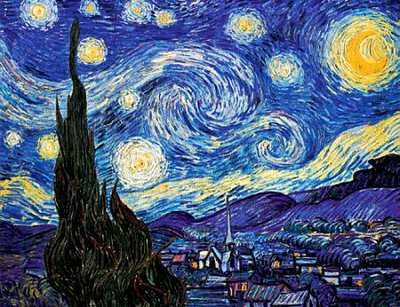
Van Gogh's Starry Night
In 2004, Kevin Kniffin (a former classmate of mine at Binghamton) and David Sloan Wilson, published an article in the journal Evolution and Human Behavior revealing their results from three different studies on perceptions of beauty. Among their findings was that, for people who knew each other, ratings of physical attractiveness were strongly influenced by the personality traits of those persons who were being rated. In other words, when rating potential mates, ‘inner beauty’ augmented perceptions of external appearance and overall attractiveness. The reason behind this likely has Darwinian roots. According to Wilson:
…
“The fitness value of potential social partners depends at least as much on non-physical traits — whether they are cooperative, dependable, brave, hardworking, intelligent and so on — as physical factors, such as smooth skin and symmetrical features.”
Today marks the beginning of the First Meeting of States Parties to the Convention on Cluster Munitions, held in Vientiane, Laos. The meeting’s purpose is to determine how to effectively implement the objectives laid out by the original Convention, which took place in Dublin in May 2008 and became binding to ratifying states in August this year. Those objectives are as follows:
…
The Convention on Cluster Munitions, CCM, prohibits all use, stockpiling, production and transfer of Cluster Munitions. Separate articles in the Convention concern assistance to victims, clearance of contaminated areas and destruction of stockpiles.
…
Thus far, 36 countries have been affected by cluster munitions (ex. Lebanon, Angola, Serbia). However, it is appropriate that Laos is hosting this meeting, as it is one of the most heavily bombed countries in history – a legacy of American bombing during the Second Indochina War. The lingering effects of cluster munitions have been particularly pernicious. Even today, almost four decades after the bombing of Laos ended, there are roughly 250 casualties annually from unexploded ordnance (UXO) leftover from the war. Many of these casualties are children.
..
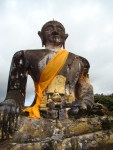
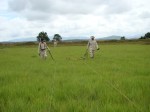
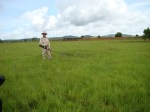
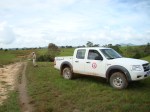
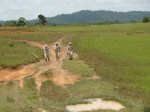
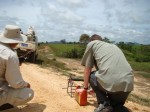
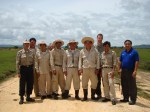
Last year, I saw some of the effects of the war in Laos first-hand in Xieng Khouang province, where craters and injured people are both abundant. My interpreter and guide, Manophet, introduced me to a bomb clearance team outside of the town of Phonsavan. They explained how the process of UXO detection and removal is painstakingly slow, given how widespread an area a single cluster bomb unit can cover and how many tons of ordnance were released over Laos (click here to see what a cluster bomb can do to your neighborhood).
…
The day I visited, the team had located ten ‘bombies,’ and they were kind enough to let me remotely detonate one, an experience far removed from my usual job. It was exciting, but also a chilling reminder of how long such munitions can last, with the potential to indiscriminately maim or kill even decades after a war has officially concluded.
…
As an American, it also struck me how we are obligated to clean up the mess we left behind. After all, the war in Laos is over. Therefore, UXO is not a military problem or a political one. Rather, it is a public health problem – killing family members, causing disability, and disrupting lives. Regardless of where one falls on the political spectrum, it should be uncontroversial to say that children should not be maimed or killed by bombs leftover from a war that ended decades before they were born. Removing the bombs in Laos is simply the right thing to do.