 One of the strengths of a biocultural perspective in anthropology is its broad approach to understanding human biology and health (Wiley and Allen 2008). Such a framework seems particularly appropriate when looking at the fascinating phenomenon of SUDS (Sudden Unexplained Death During Sleep). Though SUDS first appeared in the medical literature 1917 in the Philippines, where it is referred to as ‘bangungut’ (Guazon 1917), it was largely forgotten until the late 1970s when it regained notoriety as an important cause of mortality among Southeast Asian refugees in the United States, particularly among young men (Baron et al 1983).
Author: Patrick Clarkin
The Evolution of Childcare (& Washington, D.C.)
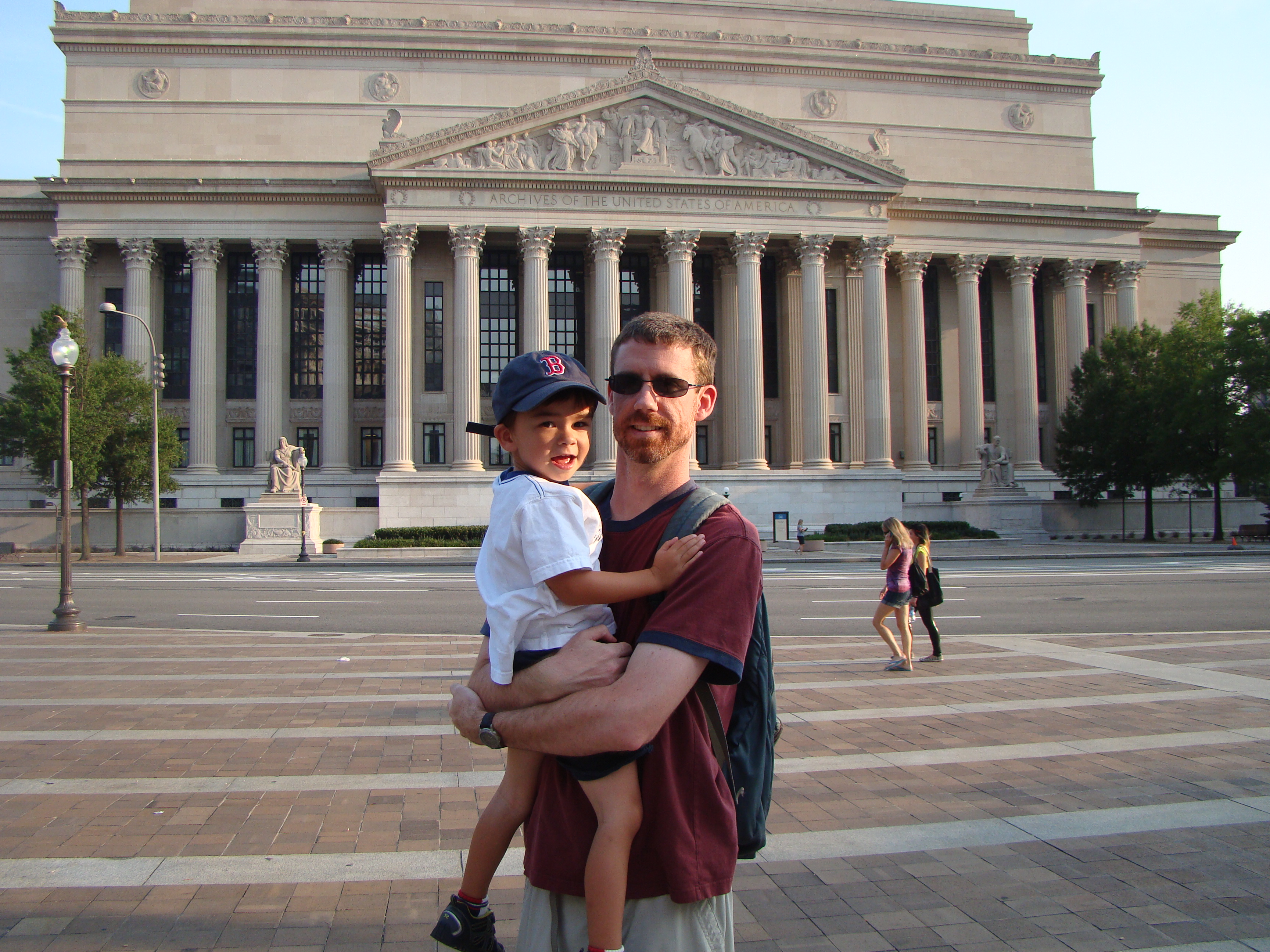
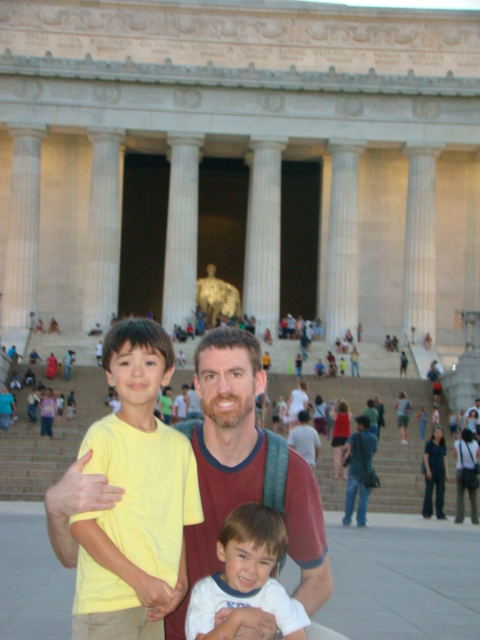
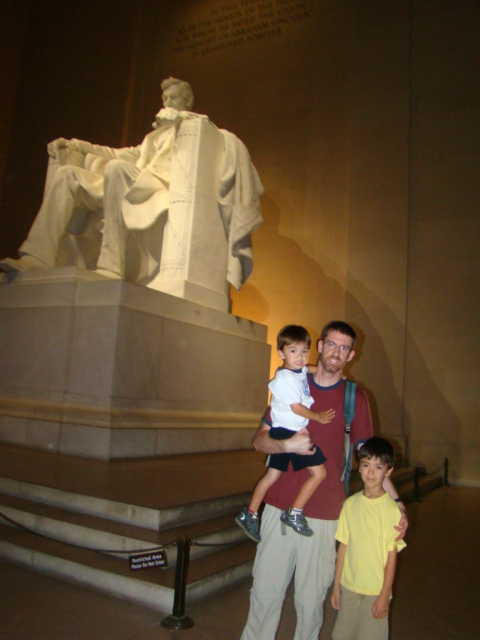
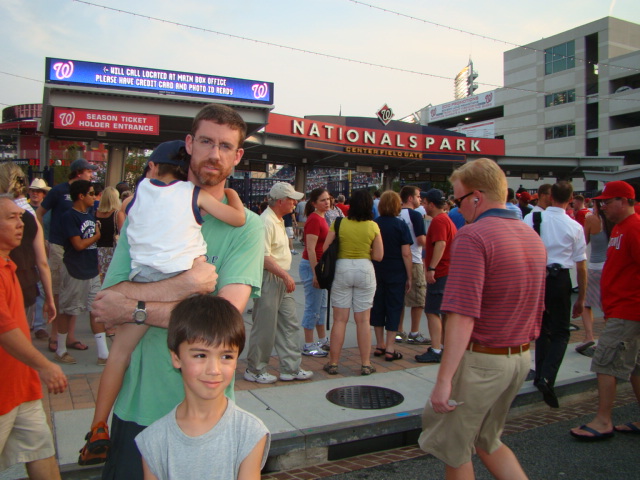
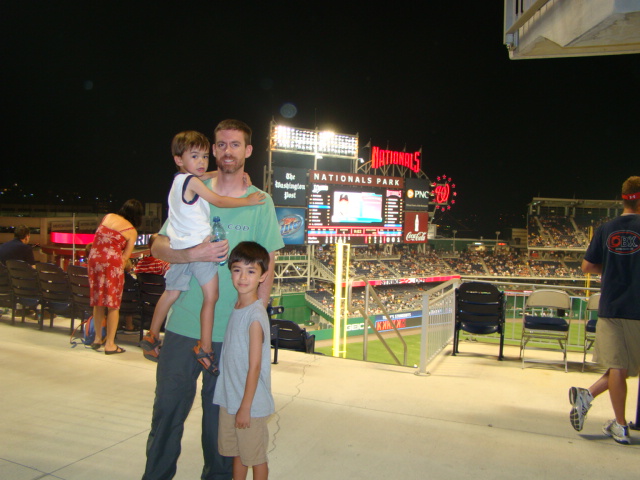
Our family took a road-trip to Washington D.C. this summer. After looking at the photos, I realized the subtitle of our stay could have been: how I carried my toddler son everywhere… in humid, 95 degree weather.
…
-

- National Archives
-

- Outside the National Museum of Natural History

-
- Lincoln Memorial
-

- 3 Clarkins and an Allosaurus


-

- Who doesn’t love fossils?

-

- Hall of Mammals

-

- With casts of our ancestors

-
- One of the megatheres

-

- At the ballgame
-

- Long day

-

- Inside the stadium
-

- The solution: a stroller

-

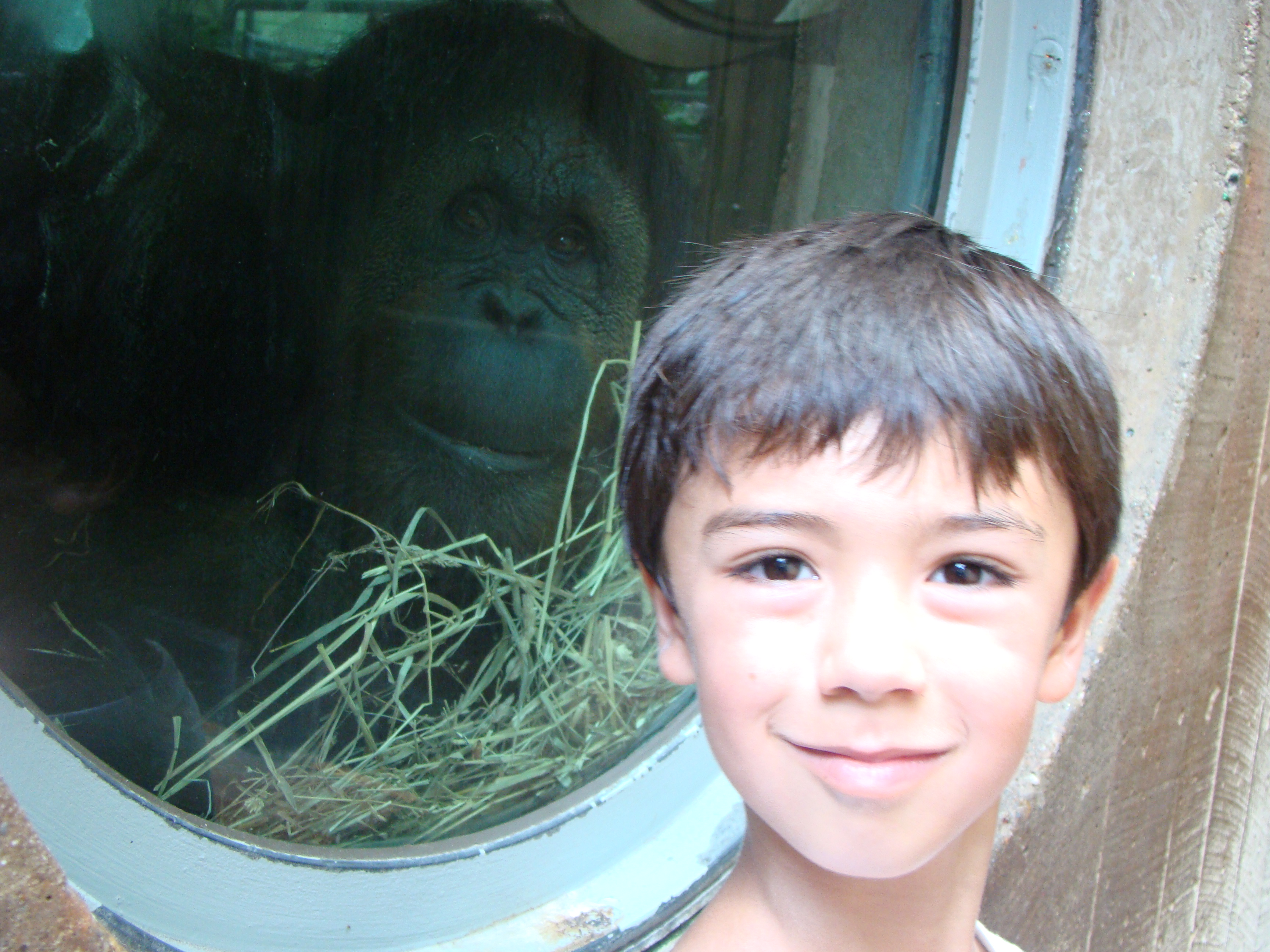
- With one of our cousins at the National Zoo
-

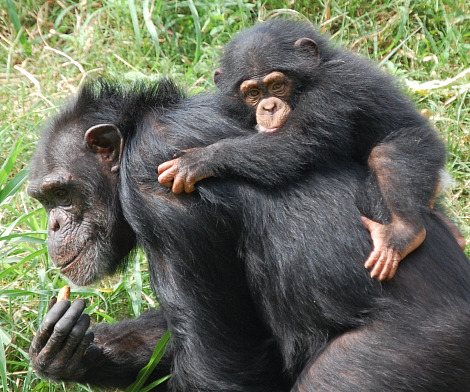
- Hmong mother and infant, 1981

A Human Biology of War: The Proximate and the Ultimate
…
On the surface, it may not be so clear where war, health, and evolution intersect. From the perspective of biological anthropology, many have called for a holistic, transdisciplinary approach to human biology and health which considers the environment as the totality of its evolutionary, ecological, and social components, including social inequality (Little and Haas 1989; Thomas et al. 1989; Wiley 2004).

Girl in Darfur refugee camp (source: Colin Finlay)
…
More than a decade ago, Leatherman and Goodman (1998) suggested that biological anthropologists put more effort toward better understanding what they termed the ‘biology of poverty.’ In this sense, poverty is an ‘environment’ that may induce consistent, but obviously varying, biological responses depending upon local circumstances. Similarly, war can be conceived as a biological environment. At least in the short term from an evolutionary point of view, wartime conditions may be as biologically challenging as some of the classic ecologically extreme environments faced by humans (circumpolar, tropical, high-altitude, desert, etc.) (Clarkin 2010).
American – Laotian Relations
 Yesterday marked the first visit of a Laotian government official to the United States since 1975. According to the Department of State website, Foreign Minister Thongloun Sisoulith and Secretary Hillary Clinton discussed many issues:
Laos: The Not So Secret War

Map of bombing record in Laos (from organization UXO Lao)
Below is a clip of a 1970 CBS exposé of the war in Laos, which had only become known to the American public shortly before it was aired.
…
I had not seen most of this footage before, and find it pretty riveting. At the time this was shown, the war in Laos really was still pretty much a ‘secret war’ because of the 1962 Geneva Accords which declared Laos to be neutral and largely off-limits to foreign interference, specifically foreign troops. Of course, that wasn’t quite the way things played out. There are some really interesting tidbits of history in there that video conveys in a way that merely reading about history cannot, such as:
…
Refugees and Health
 A recent book, “War and the Health of Nations“, by Zaryab Iqbal (Political Science, Penn State) takes a look at the associations between national health statistics and the presence and duration of war.
…
Chapter 8 explores the topic of forced migration and population health, though with a novel approach. Instead of exploring the ways that forced displacement by war is associated with health in refugees themselves, Iqbal looked at whether an influx of refugees affected overall health statistics in the host country. Utilizing aggregate health data from the World Bank and the number of refugees entering a state in a given year, she tested for associations between the two while accounting for multiple covariates (presence and duration of conflict, GDP, population size, openness to trade, and how democratic/autocratic a country is).
…
Hope from Northern Ireland
 Bono in the NY Times on British Prime Minister David Cameron’s apology for Bloody Sunday:
If there are any lessons for the world from this piece of Irish history … for Baghdad … for Kandahar … it’s this: things are quick to change for the worse and slow to change for the better, but they can. They really can. It takes years of false starts, heartbreaks and backslides and, most tragically, more killings. But visionaries and risk-takers and, let’s just say it, heroes on all sides can bring us back to the point where change becomes not only possible again, but inevitable.
Let’s hope that visionaries and risk-takers can help defuse tensions in the many other ongoing conflicts in the world.
War and child growth: Iraq & WWII Germany
At the population level, childhood growth is often seen as a marker of health and the quality of the environment. When populations get taller in a few generations, this is likely due to some improvement in local conditions (better nutrition, less infection, cleaner water supply, etc.). Conversely, when linear growth declines, it is usually because local conditions (ecological, economic, political) have deteriorated. Two recent working papers illustrate how this pattern applies to war conditions.

Destruction of Dresden, 1945
Life Is Beautiful
I debated for weeks whether to write about something as personal as the death of my brother Kevin on my (semi)professional blog and to try to explain how this event affected my view of life. Ultimately, I gave myself permission after deciding that it’s a fallacy to think that anyone can seal their personal and professional selves into watertight compartments. The personal side of me draws meaning from what I know of anthropology and evolutionary biology. I agree with the physicist Brian Greene, who once wrote that science isn’t merely about facts and theories; it’s also about the perspective those facts and theories provide. Science widens our horizons. Likewise, my academic side draws inspiration from my personal history, including the people who have been part of my life. I can say unequivocally that I was drawn into anthropology because of the many friends of different ethnicities I’ve had, which made me curious about the biological and cultural diversity of humanity. All of these things are significant events in my life, as is the death of my brother, after whom this website is named.
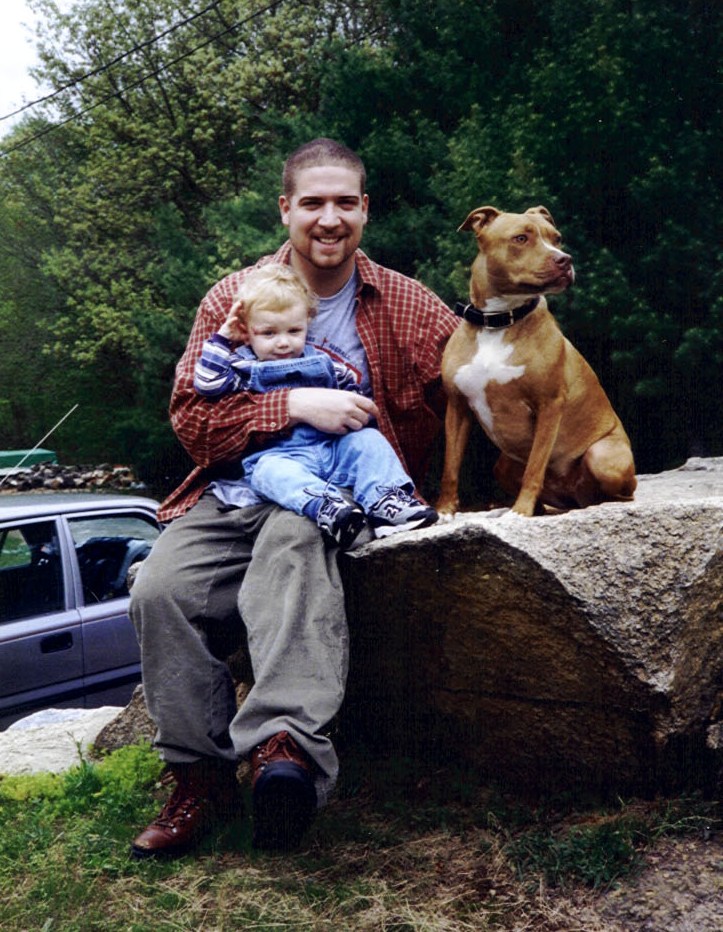
Kevin (Feb 26, 1977- May 14, 2000) with his son, Daniel
Yesterday marked the tenth anniversary of the passing of my younger brother Kevin, who died after his SUV swerved off the side of a small highway and hit a tree. He was only 23 years old, and left behind a young wife and an infant son. I was 25 and in graduate school at the time, three hundred miles away, and didn’t learn what happened until my father called me at 6 AM the following morning. To this day, any time the phone rings in the early morning or late at night, I am automatically filled with a sense of dread. As my father repeatedly asked me if I was sitting down before telling me what had happened, I immediately knew that someone close to me had died. I didn’t care if I was seated, standing, or on my head; I just wanted to know what happened. After what seemed like an eternity, I relented and told my father that I was in fact sitting down. For the rest of my life, his words will be tattooed in my mind: “Your brother Kevin was in a car accident last night, and he’s no longer with us.”
Breaking through barriers

Hmong children playing on a tractor in Javouhey
The Hmong in French Guiana are a interesting population – refugees from Laos who earn a living by farming and selling their produce in the urban centers of what is essentially a French colony in Amazonia (technically, it’s an ‘overseas department’). I’ve not been back there for a while, but miss it and think about it often. One memory has been on my mind lately: a young couple (Étienne and Marie*) that my research assistant, KaLy Yang, and I met in the village of Javouhey.
 Patrick F. Clarkin, Ph.D.