Public Outreach 2: KIPP Lynn

With classes and exams completed at UMass Boston, I finally feel like I have a little bit of breathing room.

..

Today, I visited KIPP Lynn for the second time, giving a presentation on evolution and cooperation for three 8th grade classes. It was necessarily condensed talk, but the students in all three classes were really engaged with terrific comments and questions. It’s been a while since I was in the 8th grade, and it’s hard to remember what that age was like, intellectually. Nonetheless, I thought they were really impressive kids, with bright futures ahead of them. 

..

Now to finish up some grading…

..

Related post: Public Outreach: Sharing Anthropology Outside the University (Apr 17, 2011) 

Public Outreach: Sharing Anthropology Outside the University

Work Hard. Be Nice.” – motto at the KIPP school in Lynn, Massachusetts

Over the past few months, I’ve done more voluntary outreach teaching than at any point in my past. In sum, I’ve spoken to four separate 4th grade classes in Cranston Rhode Island, three separate 8th grade classes at KIPP Lynn, and given five lectures to 50 year-old+ adults at the Osher Lifelong Learning Institute in Boston. All of these presentations/ discussions were 40 to 90 minutes each, and pertained to primate biology/behavior, human biological variation, or the human fossil record. Why now?

Continue reading

On Optimism and ‘Human Nature’

In the last few days, I came across a couple of unrelated quotations on human nature and our internal tug-of-war between cooperation and conflict.

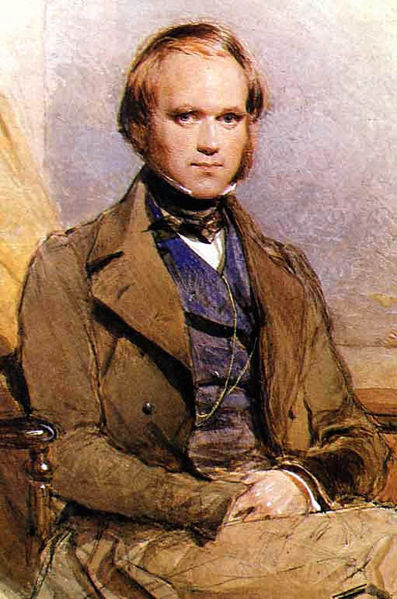
A 20 year-old Charles Darwin in an 1830 letter to his cousin, W.D. Fox:

It is quite curious, when thrown into contact with any set of men, how much they continue improving in ones good opinion, as one gets ackquainted (sic) with them. This was an argument used, in a religious point of view, by a very clever Clergyman in Shrews. to encourage sociability (he himself being very fond of society), for he said that the good always preponderates over the bad in every persons character, & he thought, the most social men were generally the most benevolent, & had the best opinion of human nature. I have heard my father mention this as a remarkably good observation, & I quite agree with him.

In “East of Eden,” John Steinbeck wrote:

Continue reading

Reconciliation, Biology, and the Second Indochina War

Of all the things I’ve written on this site, this remains one of the most meaningful to me. (May 29, 2017)

The weak can never forgive. Forgiveness is the attribute of the strong.” …………………………………………………………………………– Mohandas K. Gandhi

On my desk sits a spoon I bought in a restaurant in northern Laos. It’s lightweight, bigger than a tablespoon, and full of tiny dents that some unknown metalsmith hammered into it. The owner was bemused that in addition to the bowl of pho noodle soup, I also wanted to buy one of her utensils. But I had my reasons.

Earlier on my trip, my guide1 informed me that people in the town of Phonsavanh half-jokingly called these ‘B-52 spoons,’ as they were made of metal recovered from bombs dropped decades ago by U.S. planes during  ‘the Secret War. To me, the spoon was more than a quirky souvenir. Instead, it represented an attempt by Laotians to take the physical remnants of a tragic period in history and forge them into something more positive, in effect turning swords into plowshares (or bombs into spoons). Continue reading

Lessons from the Christmas Truce of 1914

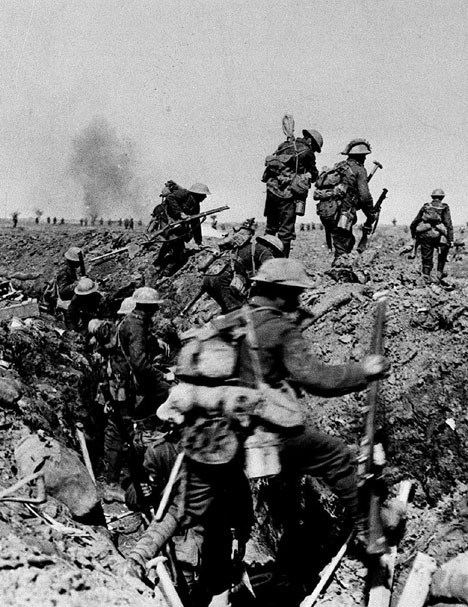
Trench warfare, WWI (dailymail.co.uk)

As Christmas approaches, it seems like the perfect time to reflect on an unlikely event from military history. During the First World War, a spontaneous, temporary truce was brokered between German, French, and Scottish officers on Christmas Eve, 1914. On that night and on Christmas Day along the trenches in Flanders, soldiers who recently had been shooting at each other used the ceasefire to bury their dead, then shared food and drink with their ‘enemies,’ played soccer, and even exchanged gifts and addresses in order to write each other after the war ended.

The details leading up to the ceasefire are a bit murky, but eyewitnesses reported that German and Scottish troops took turns festively singing carols in their own trenches. A few brave officers then seized the spirit of the moment to risk their safety, leave their trenches, and negotiate a respite from the brutality. The remaining soldiers then followed, leading to the amazing scene.

Continue reading

Us, Them, & Non-zero Sumness

I love baseball, having played from Little League through high school. The game taught me many lessons about athletics, but also about life. As a New Englander, I grew up a Red Sox fan, which was sometimes painful (the infamous Bill Buckner game of the 1986 World Series fell on my 12th birthday). However, the 2004 championship was pure elation, and made up for everything. After the Red Sox came back from a 0-3 deficit to beat the Yankees in the ALCS (the semi-finals, for you non-baseball fans), my father, brother, uncles, cousins, and I took photos in front of the television, as if we were documenting history. I even made sure my infant son was in the photos, to prove to him when he got older that he was there. Ridiculous, right?

Game 5, 2004 ALCS (gothamist.com)

Continue reading

Life Is Beautiful

I debated for weeks whether to write about something as personal as the death of my brother Kevin on my (semi)professional blog and to try to explain how this event affected my view of life. Ultimately, I gave myself permission after deciding that it’s a fallacy to think that anyone can seal their personal and professional selves into watertight compartments. The personal side of me draws meaning from what I know of anthropology and evolutionary biology. I agree with the physicist Brian Greene, who once wrote that science isn’t merely about facts and theories; it’s also about the perspective those facts and theories provide. Science widens our horizons. Likewise, my academic side draws inspiration from my personal history, including the people who have been part of my life. I can say unequivocally that I was drawn into anthropology because of the many friends of different ethnicities I’ve had, which made me curious about the biological and cultural diversity of humanity. All of these things are significant events in my life, as is the death of my brother, after whom this website is named.

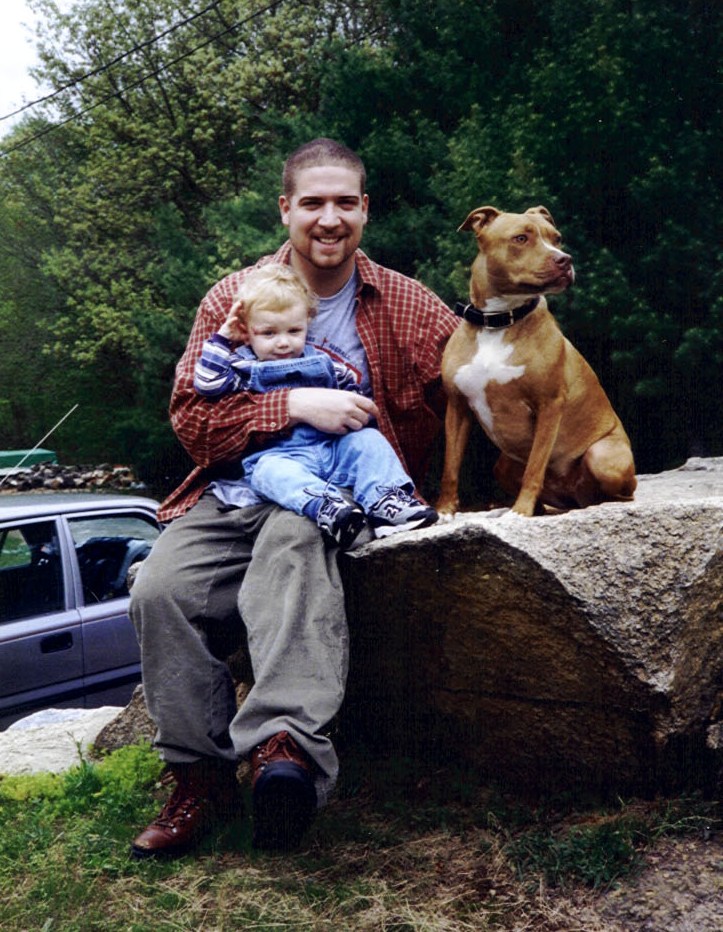
Kevin (Feb 26, 1977- May 14, 2000) with his son, Daniel

Kevin (Feb 26, 1977- May 14, 2000) with his son, Daniel

Yesterday marked the tenth anniversary of the passing of my younger brother Kevin, who died after his SUV swerved off the side of a small highway and hit a tree. He was only 23 years old, and left behind a young wife and an infant son. I was 25 and in graduate school at the time, three hundred miles away, and didn’t learn what happened until my father called me at 6 AM the following morning. To this day, any time the phone rings in the early morning or late at night, I am automatically filled with a sense of dread. As my father repeatedly asked me if I was sitting down before telling me what had happened, I immediately knew that someone close to me had died. I didn’t care if I was seated, standing, or on my head; I just wanted to know what happened. After what seemed like an eternity, I relented and told my father that I was in fact sitting down. For the rest of my life, his words will be tattooed in my mind: “Your brother Kevin was in a car accident last night, and he’s no longer with us.”

Continue reading

Breaking through barriers

Hmong children playing on a tractor in Javouhey

The Hmong in French Guiana are a interesting population – refugees from Laos who earn a living by farming and selling their produce in the urban centers of what is essentially a French colony in Amazonia (technically, it’s an ‘overseas department’). I’ve not been back there for a while, but miss it and think about it often. One memory has been on my mind lately: a young couple  (Étienne and Marie*) that my research assistant, KaLy Yang, and I met in the village of Javouhey.

Continue reading

Making Peace with the Past

“The past is never dead. It is not even past.”  –William Faulkner

Bosnian Muslims in Trnopolje camp, 1992

The dividing line between past and present is almost never clear cut. We constantly carry our pasts around with us: personal, cultural, historical, and evolutionary. Often, those pasts are burdened with regrettable or undesirable incidents and other phenomena, be they tragedies, atrocities, accidents, bad memories, poor decisions, crimes, natural disasters, or even as part of our evolutionary baggage (e.g., oncogenes, a ruptured appendix, or impacted wisdom teeth). At different times we may find ourselves as the aggrieved or the aggrieving party. To the extent that we can, we make extraordinary efforts to get past our pasts via redemption, reparation, and reconciliation.

Continue reading

Rising Apes and Fallen Angels

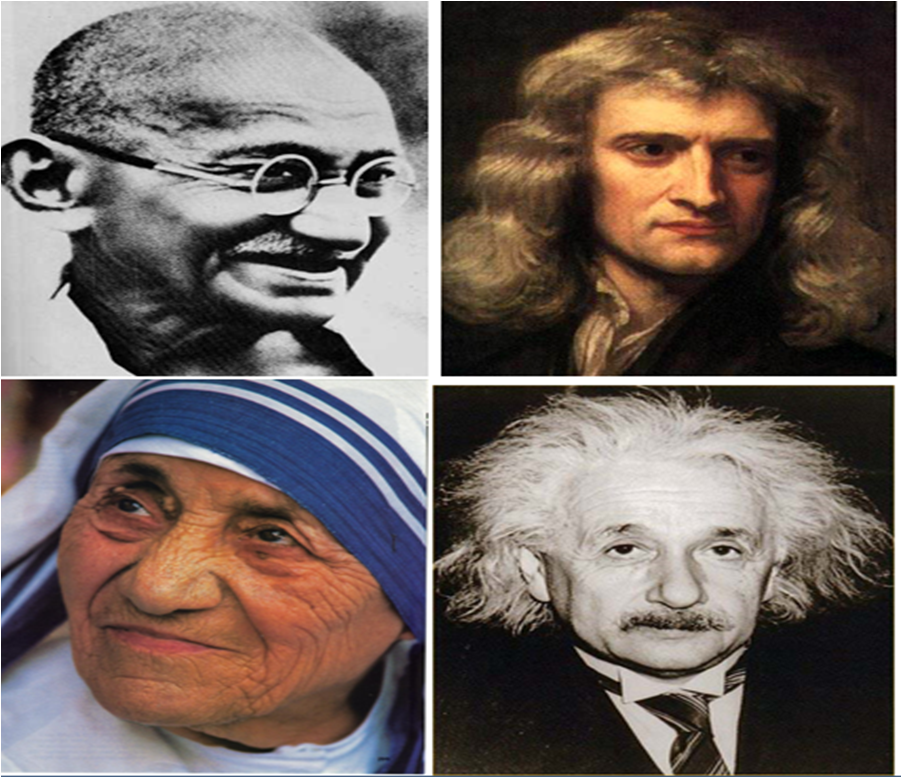
In my weaker moments, I always found it somewhat comforting to know that nobody is perfect. Even historical figures that are often conflated with human perfection had serious flaws. Isaac Newton is considered by many to be the most brilliant person in history, but was aloof, suffered from nervous breakdowns, and as a teenager may have threatened to kill his mother and step-father. Gandhi wrote frequently about his own imperfections and struggles with selfish desires. Einstein deserted his wife and two children for another woman (his cousin). Mother Teresa wrote about her own doubts and struggles with faith. Jesus had his fit of rage in the temple.

Continue reading