Civilians, Refugees, and the 2nd Indochina War in Laos

[Note (June 2020): I’m seeing an uptick in the number of views on this essay. Is there any reason? Since this site is a labor of love, I’m just curious how it is being used.]

In Houa Phanh and Xieng Khouang provinces, the war (in Laos) has reached into every home and forced every individual, down to the very youngest, to make the agonizing choice of flight or death.” (Yang 1993: 104)

Those who suffered the most from the escalating conflict were populations living in the east of the country: overwhelmingly highland minorities, Lao Thoeng and particularly Lao Sung (Mien as well as Hmong), but also upland Tai, the Phuan of Xiang Khouang and the Phu-Tai of east central Laos.” (Stuart-Fox, 1997: 139)

Military Region II (northeastern Laos) bore the brunt of the war for almost fifteen years. Nearly 80% of the refugee population in Laos originated in MR II, including the refugees on the Vientiane Plaine. Almost the entire population of Houa Phan (Sam Neua) and Xieng Khouang Provinces were gradually forced south into the Long Tieng, Ban Xon, Muang Cha crescent.” (USAID, 1976: 210)

Displaced Hmong in Laos, probably in the early 1970s. Source: Roger Warner. 1998.

Displaced Hmong in Laos, probably in the early 1970s. Source: Roger Warner. 1998.

A consistent feature of war is the harming of civilian lives. The extent of harm is not always easy to ascertain, but is sometimes quantified in the number of “excess deaths” that occur during a war. For example, Hagopian et al (2013) surveyed two thousand randomly selected households throughout Iraq, interviewing residents about their family members before and during the US-led invasion and occupation. They estimated that from March 2003-2011 approximately 405,000 deaths occurred as a result of the war, mostly from violence.

However, such studies always have limitations – recall bias, survivor bias (the dead cannot be interviewed), and logistics in surveying high violence areas – meaning that mortality estimates will never be perfect, and Hagopian et al. gave a range around their figure (a 95% uncertainty interval of 48,000 to 751,000 excess deaths). Whatever the exact number, which we will probably never know, we can still be confident that mortality rates increased during the war years.  

The same challenges apply to all wars, including one that I have been interested in for a while – the Second Indochina War in LaosThe Australian historian Martin Stuart-Fox wrote that: “loss of life can only be guessed at, but 200,000 dead and twice that number of wounded would be a conservative estimate” (1997: 144). Mortality estimates for Laos are further complicated by the fact that it was one the least developed countries in Asia at the time of the war, likely with unreliable census data and other record keeping (though, for those who are interested, see the 1961 Joel Halpern “Laos Project Papers” from UCLA, which contain demographic and health statistics).

Continue reading

“Love For My Enemies”

When we first met again, what could I say? I was petrified to see him again. As if you killed someone, and a month later you discover he’d been resurrected. But running away from him didn’t help. I needed to ask him for forgiveness. So I went to his house. We talked about normal things, just small talk. After a while I said, “Innocent?” He said, “Yes?” “I have truly offended you. I have come to ask you for forgiveness.


– A Hutu man, Wellars Uwihoreye, who asked his childhood friend, a Tutsi man named Innocent Gakwerere, to forgive him for being involved in his mutilation and near death twenty years earlier.

The above came from a very moving essay, “Love For My Enemies.” It’s well-written, interspersed with videos of a handful of Rwandans trying to come to terms with the atrocities committed two decades ago. I find accounts like these to be simultaneously tragic and inspiring. Please go read it.

.

rwanda


Desire and Celibacy

“Because of the values we place on sexuality in life, because of the terrible taboos which surround it, the endless lies, the forlorn wishes, the sad fantasies we wind around it like gauze about a wound (whether these things are due to the way we are brought up, or are the result of something graver – an unalterable quality in our nature), everyone’s likeliest area of psychological weakness is somewhere in the sexual.”       — William Gass


With the World Cup in full swing, several light-hearted stories have circulated about which countries have restrictions against sex while their teams are still in contention. Elizabeth Abbott, in her 1999 book “A History of Celibacy” noted that there are several reasons that people have engaged in celibacy over time — including for asceticism, as clergy, to preserve virginity, as a result of coercion (ex. eunuchs), etc. She spent much of the book on several interesting historical figures, including the life of Gandhi and his own views on desire and celibacy.

He wedded very young (age 13), the result of an arranged childhood marriage. At 19 he left India, alone, to study law in England for three years, and he vowed to his wife and mother to shun alcohol, women, and meat (he was a strict vegetarian) while he was away. According to Elizabeth Abbott (1999), one source of strength for Gandhi was the following passage from the ancient Bhagavad Gita.


Bhagavad Gita:

If one ponders on objects of the senses there springs
Attraction; from attraction grows desire
Desire flames to fierce passion, passion breeds 
Recklessness; then the memory – all betrayed –
Lets noble purpose go, and saps the mind,
Till purpose, mind, and man are all undone.

Continue reading

Global Refugee Trends

At the end of 2013, there were more than 50 million displaced people globally, the highest number since WW2. I’m working on another post on how these experiences may impact biology and health, particularly for children. In the meantime, this UNHCR video shows some of the places that are most affected by forced displacement.

“Displacement is brutal. Many children stumble into exile barely alive after weeks in the bush.”


Darwin, Oversimplified

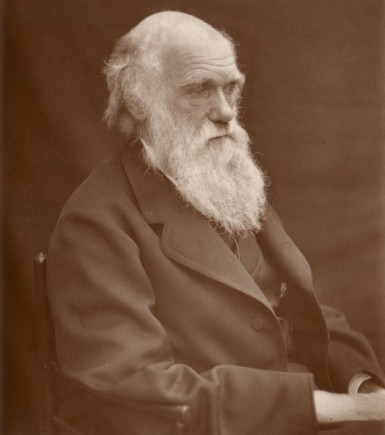
ChuckDCharles Darwin recognized early on the potential for people to oversimplify his writing. In particular, he was adamant that not everything in evolution was the result of adaptation by natural selection, though he worried that others would caricature his work in that way. In other words, Darwin was not as Darwinian as he is sometimes portrayed. The following passage comes from the sixth edition of On the Origin of Species (1872: 421):


“I have now recapitulated the facts and considerations which have thoroughly convinced me that species have been modified, during a long course of descent. This has been effected chiefly through the natural selection of numerous successive, slight, favourable variations; aided in an important manner by the inherited effects of the use and disuse of parts; and in an unimportant manner, that is in relation to adaptive structures, whether past or present, by the direct action of external conditions, and by variations which seem to us in our ignorance to arise spontaneously. It appears that I formerly underrated the frequency and value of these latter forms of variation, as leading to permanent modifications of structure independently of natural selection. But as my conclusions have lately been much misrepresented, and it has been stated that I attribute the modification of species exclusively to natural selection, I may be permitted to remark that in the first edition of this work, and subsequently, I placed in a most conspicuous position—namely, at the close of the Introduction—the following words: “I am convinced that natural selection has been the main but not the exclusive means of modification.” This has been of no avail. Great is the power of steady misrepresentation; but the history of science shows that fortunately this power does not long endure.”

Continue reading

The ‘Sapient’ Species

This Carl Sagan video “Pale Blue Dot” may not be new to many of you, but for those who haven’t seen it, I think everyone should watch it at least once. I’ve been thinking a lot lately about how frequently people conflict over personal issues, power, ideology, wealth, or for whatever rationale. What a way to use the finite time we have to exist. For a species that defines itself, taxonomically, as being sapient, we have an odd way of showing it. 


The Pale Blue Dot

“Consider again that dot. That’s here. That’s home. That’s us. On it everyone you love, everyone you know, everyone you ever heard of, every human being who ever was, lived out their lives. The aggregate of our joy and suffering, thousands of confident religions, ideologies, and economic doctrines, every hunter and forager, every hero and coward, every creator and destroyer of civilization, every king and peasant, every young couple in love, every mother and father, hopeful child, inventor and explorer, every teacher of morals, every corrupt politician, every “superstar,” every “supreme leader,” every saint and sinner in the history of our species lived there–on a mote of dust suspended in a sunbeam.

Continue reading

Developmental Plasticity and the “Hard-Wired” Problem

“Development is the missing link between genotype and phenotype, a place too often occupied by metaphors in the past … But a strong emphasis on the genome means that environmental influence is systematically ignored. If you begin with DNA and view development as “hard-wired,” you overlook the flexible phenotype and the causes of its variation that are the mainsprings of adaptive evolution.” (Mary Jane West-Eberhard, 2003: 89-90)

“Genes, unlike gods, are conditional. They are exquisitely good at simple if-then logic: if in a certain environment, then develop in a certain way… So here is the first moral of the tale: Don’t be frightened of genes. They are not gods; they are cogs. (Matt Ridley, 2003: 250)


Plasticity: actor Christian Bale at two points in time. Same genes, different phenotypes.

Plasticity: actor Christian Bale at two points in time. Same genes, different phenotypes.

In his book The Triple Helix, Richard Lewontin told the story of the molecular biologist and Nobel laureate Sydney Brenner, who – while speaking at a conference – predicted that one day we would be able to “compute” an organism (2002). All we would need are two things: the organism’s full genome and powerful enough computers that were up to the task.

The idea is seductive. Genes are sometimes seen as self-sufficient molecules, almost existing in a vacuum, that contain all the information necessary to code for proteins. From there, it’s not a very big logical leap to think that if you had the genome, you could enter the code in some database, hit “run,” and then watch some digitized version of the organism unfold.

In fact, scientists are doing something much like this for the tiny roundworm C. elegans with the project OpenWorm. Yet even for a relatively simple organism such as this, with only about a thousand cells in total, there are reasons to be cautious. As The Economist warned in its write-up of OpenWorm: “Attempting to simulate everything faithfully would bring even a supercomputer to its knees.” However, this isn’t due solely to the limits of computing power (what if we had a super-duper computer!?). Rather, it’s a matter of how the question is framed.

Continue reading

“I Am Only Human:” Malinowski & Integration


Bronislaw Malinowski, circa 1920. Source.

Bronislaw Malinowski, circa 1920. Source

For fun, I’ve been reading bits and pieces about the life of Bronislaw Malinowski, often described as one of the most important anthropologists of the early twentieth century for his contributions to ethnography. I’m not an ethnographer or a cultural anthropologist, but I stumbled across an essay by Michael Young about Malinowski’s life, as revealed by his own diary, which then led me to Young’s larger, book-length work (2004).

It is admittedly voyeuristic to look into the private thoughts of another person through their diaries. But it’s also a reminder about how complex we all are (some more so than others). For all his flaws, I find Malinowski to be a sympathetic figure. Maybe it’s because of his flaws. Young described him as “moody, irritable, sentimental, and melancholic” who made enemies as easily as friends. “But he could also be gregarious, emotionally generous, deeply courteous and scintillatingly eloquent. He was a demonically hard worker whose zeal galvanized those around him” (p. xxv). Again, he was complex.

The recurrent theme was that Malinowski was preoccupied with introspection in order to reform and improve himself. This seems rather commonplace, but his unique motivation was the desire to ‘integrate’ himself, by which he meant creating a coherent whole: 

Continue reading

The Success of Nonviolence

I just came across the work on nonviolence by the University of Denver’s Erica Chenoweth. In this TED talk, she says that she began as a skeptic about the ability of nonviolence to make meaningful change. Someone challenged her to look into the topic further, and she says she was shocked by the results. I am too, in a good way.

“From 1900 to 2006, nonviolent campaigns worldwide were twice as likely to succeed outright as violent insurgencies. And there’s more. This trend has been increasing over time, so that in the last 50 years nonviolent campaigns are becoming increasingly successful and common.”

Below is the key figure from Chenoweth’s presentation, illustrating the percent of violent and nonviolent movements that succeeded in overthrowing a government or liberating a territory. It’s clear that nonviolent movements are not a panacea to reducing violence in the world. They aren’t always successful, and sometimes violent movements may be necessary.

Continue reading

Vientiane

“The Greek word for “return” is nostos. Algos means “suffering.” So nostalgia is the suffering caused by an unappeased yearning to return.” 
― Milan Kundera, Ignorance