Sex Really Is Dangerous (and Other Adjectives)

..

I maintain that sex is regarded as dangerous by the savage, that it is tabooed and ritualized, surrounded by moral and legal norms – not because of any superstition of primitive man, or emotional view of or instinct about strangeness, but for the simple reason that sex really is dangerous.” – Bronislaw Malinowski, anthropologist (1928)

Young or old, don’t delude yourself. You don’t have sex. Sex has you. Buckle up.” – Dan Savage, author, giver of advice, Twitter friend (2013: 52)

“According to Irish folk belief, there are two ways of achieving certain salvation. The first is through a red martyrdom, or dying for one’s faith in the tradition of the early Christians and the great missionary saints. The second path to sainthood, and the one chosen by most ordinary people, is the white martyrdom (ban-martra), a slow ‘death to self’ through acts of self-denial – fasting, penance – and, above all, a life characterized by sexual purity.” – Nancy Scheper-Hughes, anthropologist (2001: 206)

 “You can’t just let nature run wild.” – Walter Hickel, former Governor of Alaska (1992)

______________________________________________

Quote #1 suggests that sex is potentially dangerous for all people, regardless of cultural background. Note that Malinowski’s use of the word ‘savage’ was acceptable at the time. Today, it obviously isn’t. (#2) However, despite that danger, sex is powerful and has a hold over people. (#3) They can assert control over sexual impulses, but to suppress them entirely is difficult enough to be considered equivalent to martyrdom. (#4) All societies need regulation, including for sexuality. (I took some license with this last quote, one of my favorites. The actual context was that Hickel was defending the state’s controversial aerial wolf control program, apparently said without irony). 

______________________________________________

The young wife, Isakapu, put on her best jewelry and climbed to the top of a coconut tree near her village. From there she shouted down to her husband, Kabwaynaka, and to any other witnesses below that his accusations of adultery against her were false, and that she resented that he had beaten and insulted her out of jealousy a few days earlier. Kabwaynaka climbed up after her to bring her down, but before he could reach the top she jumped, throwing herself to her own death (Malinowski 1929: 120).

In Bronislaw Malinowski’s classic ethnography The Sexual Lives of Savages, suicide in the Trobriand Islands was an acceptable means of escape from the shame of breaking various sexual taboos (even if the accusations were false). This was the case not only for adultery, but also for bestiality, or for having sex within the clan. Consuming the poisonous gallbladder of a pufferfish was one method for taking one’s own life, but the option chosen by Isakapu, jumping from a tree (known as lo’u), was also common at the time. Malinowski wrote that while the sexual lives of Trobrianders might seem “easy and carnal” to an outsider, in reality they were often marked by “strong passions and complex sentiments” and sometimes filled with strife (p. 119-21). 

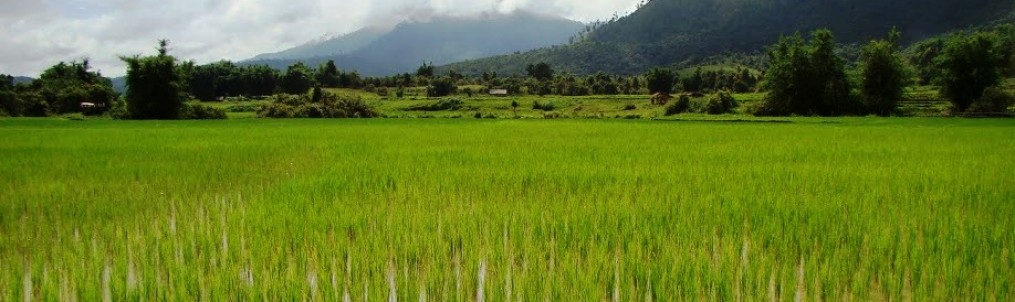
A Harvest Scene (Malinowski 1929, plate 57).

A Harvest Scene in the Trobriands (Malinowski 1929, plate 57).

A look at the ethnographic record reveals that strong and complex emotions surrounding sex are not unique to the Trobianders, or to any single culture. Some historical narratives of human sexuality have wondered whether non-Western cultures, or perhaps our distant ancestors, have had a less stressful time with this part of life, placing the blame for any modern sexual malaise at the feet of various culprits. These include (1) religion, particularly the monotheistic Abrahamic faiths (Ray 2012); or (2) capitalism and ‘the Protestant ethic,’ with its emphasis on guilt, self-control, and the frustration of delayed marriage before sufficient resources could be accumulated (Albee 1977); or (3) agriculture, with its emphasis on fixed settlements, the accumulation of private property, and a more intense guarding of paternity and property rights (Ryan and Jethá 2010). Continue reading

40 Years After the Second Indochina War

Today does not escape easily from yesterday.

Several media outlets have published stories in the last few days marking the 40th anniversary of the ‘end’ of the Vietnam War (although it is more accurately known as the Second Indochina War because it also involved the neighboring countries of Laos, Cambodia, and Thailand).  

Some of these stories are about families of American veterans still searching for the remains of lost loved ones.  Others are about the lingering divisions between northern and southern Vietnamese, even within the same family.

Perhaps Viet Thanh Nguyen, an associate professor of English and American studies at the University of Southern California, best summarized these accounts with his NYTimes essay “Our Vietnam War Never Ended”. He describes moving to the US as a young boy and then growing up in San Jose, California with a foot in two cultures, as well as the struggles and successes of Vietnamese and other refugee groups in the US. And despite the fact that his family members have achieved a lot, such as producing a professor at a prestigious university, he writes that their story is not a fairy tale: 

“our family story is a story of loss and death, for we are here only because the United States fought a war that killed three million of our countrymen (not counting over two million others who died in neighboring Laos and Cambodia).”

Those two themes, that the war never truly ended, and that even those who survived and succeeded later in life have stories of loss and death, are important reminders of the past’s ability to reach into the present, even after forty years of yesterdays. All wars are unique, but their most consistent feature of war is the creation of suffering, which can last for decades, perhaps even centuries. Continue reading

Courage and the Past

Not everything that is faced can be changed, but nothing can be changed until it is faced.”                                        

                                 ― James Baldwin (As Much Truth As One Can Bear, 1962)

File:James Baldwin 5 Allan Warren.jpg

James Baldwin on the Albert Memorial with statue of Shakespeare. (Wiki commons)

I saw the above quote by James Baldwin over the weekend on social media, and my mind started making connections as to where it might apply. It could apply to personal wrongs and failures, or to wider historical ones, which of course is what Baldwin was referring to. By coincidence, the New York Times had another relevant story a few days ago about the reluctance of the Turkish government (and most of its citizens) to acknowledge the genocide of Armenians that occurred a century ago. It makes me wonder where, exactly, that reluctance originates, and why it can be so stubborn.

Last year, the New York Times (again) ran a collection of short essays on overcoming difficult pasts (“Turning Away From Painful Chapters”). Examples included the brutal murder of a British soldier on the streets of London, domestic violence against women in the UK, the Spanish Civil War, the killings in Rwanda, the Holocaust, and the legacy of American slavery and the brutality of Jim Crow laws in the US.

Continue reading

One Life

“Ain’t it enough to live by the ways of the world,
To be part of the picture, whatever its worth.
Throw your arms round each other, and love one another.
For it’s only one life that we got, and ain’t it enough?”

Syrians in the Darkness

“The seasons are according to the sun. The people of Syria now, they don’t see any sun. They are in the darkness.”                                    

–Turkish Foreign Minister Ahmet Davutoglu, February 2014

I’ve had the quote from Ahmet Davutoglu tucked away in my notes since last year, and had forgotten about until I saw the above image in an article in The Guardian earlier this month. It shows a series of satellite images of Syria at night from 2011 to 2015. The article reveals that there has been an estimated 80% reduction in night-time illumination of Syria over the past few years, correlating with the destruction of infrastructure and the enormous loss of population from people fleeing their homes. To date, an estimated 10.8 million people have been displaced as a result from the conflict. Davutoglu was correct, literally and figuratively. I can’t help but wonder how these events will affect ordinary Syrians for decades to come. 

.

Related: Growing Up in the Two Koreas

…And They Shall Beat Their Tanks into Playgrounds

“Safety and security don’t just happen, they are the result of collective consensus and public investment. We owe our children, the most vulnerable citizens in our society, a life free of violence and fear.”  (Nelson Mandela)

“… and they shall beat their swords into plowshares, and their spears into pruninghooks: nation shall not lift up sword against nation, neither shall they learn war any more.” (Isaiah 2:4)

Or convert bombs into spoons

Confronting Human Frailty

A man carries within him the germ of his most exceptional action; and if we wise people make eminent fools of ourselves on any particular occasion, we must endure the legitimate conclusion that we carry a few grains of folly to our ounce of wisdom.”                                                                                                               

                                                                                     ― Mary Ann Evans (George Eliot), Adam Bede


In his book The Blank Slate, Steven Pinker borrowed a concept from the conservative scholar Thomas Sowell, who argued that there were two “visions” of human nature (Pinker, 2002). Pinker referred to these as the Tragic Vision and the Utopian Vision, and he spent several pages placing famous historical thinkers into one of the two camps.  

According to Pinker, the Tragic Vision suggests that “humans are inherently limited in knowledge, wisdom, and virtue, and all social arrangements must acknowledge those limits” (p. 287). On the other hand, in the Utopian Vision “psychological limitations are artifacts that come from our social arrangements, and we should not allow them to restrict our gaze from what is possible in a better world.”

These groupings are not perfect, but Pinker argues that they work better than trying to categorize people as left/right or conservative/liberal. For some examples, in the Utopian camp, Pinker placed people like Bobby Kennedy, Rousseau, and Thomas Paine. For Tragic Visionaries, he chose – among others – Friedrich Hayek, James Madison, Edmund Burke, and Hobbes.

Continue reading

Genocidal Altruists: Are We ‘Naturally’ Violent? Altruistic? Both?

“We know that we are apes, but we cannot be classified simplistically as ‘naked apes’ or ‘killer apes’ or ‘moral apes.’…Our past is complicated; so is our present, and so will be our future.” – Paul Ehrlich (2000: 331)

“When we are bad, we are worse than any primate that I know. And when we are good, we are actually better and more altruistic than any primate that I know. ” – Frans de Waal

…..

The Eagles headed back to their cabin feeling dejected after losing a tug-of-war contest to their rivals, the Rattlers. Along the way, one of the boys noticed the Rattlers had forgotten their flag on the baseball field, leaving it unprotected. Craig and Mason soon seized it, but struggled to tear it to pieces. McGraw then presented some matches and suggested they burn it instead. The group then hung the flag’s charred remains from the top of the backstop fence. Mason said, “You can tell those guys I did it. If they say anything I’ll fight ‘em.”

The above scene is from the psychologist Muzafer Sherif’s classic social psychology experiment at Robbers Cave, Oklahoma during the summer of 1954. Sherif divided twenty-two 11-year-old boys with comparable backgrounds into two even groups at nearby cabin sites, with the boys kept unaware of the other group’s existence.

After giving them a week to bond among themselves, Sherif introduced the groups to each other and announced that they would be competing for prizes in team sports and other events. Eventually the rivalry grew heated, and the boys turned to name-calling, flag-burning, and vandalizing each other’s cabins. The competition nearly escalated into serious violence, with sticks and rocks as potential weapons, before adults intervened.   

Sherif’s experiment is sometimes cited as a depressing warning of how easily people can slide into “us versus them” hostilities, even if the groups are formed rather arbitrarily, and even if we’re only talking about preadolescent boys with little at stake except ego and trivial prizes. There is truth to that warning. People can cling tightly to group identities, sometimes resulting in serious animosity toward outsiders.

Continue reading

Facing Mortality

Oliver Sacks’ essay on learning that, at age 81, he has terminal cancer is one of the most beautiful things I have read. I hope that one day I can confront my own mortality with such perspective and dignity. Life is still beautiful.

Sacks concludes: 

There will be no one like us when we are gone, but then there is no one like anyone else, ever. When people die, they cannot be replaced. They leave holes that cannot be filled, for it is the fate — the genetic and neural fate — of every human being to be a unique individual, to find his own path, to live his own life, to die his own death.

I cannot pretend I am without fear. But my predominant feeling is one of gratitude. I have loved and been loved; I have been given much and I have given something in return; I have read and traveled and thought and written. I have had an intercourse with the world, the special intercourse of writers and readers.

Above all, I have been a sentient being, a thinking animal, on this beautiful planet, and that in itself has been an enormous privilege and adventure.