Part 1. Humans are (Blank) -ogamous

(A)s our forebears adopted life on the dangerous ground, pair-bonding became imperative for females and practical for males. And monogamy – the human habit of forming a pair-bond with one individual at a time – evolved.” (Helen Fisher 2004: 131)

Several types of evidence suggest our pre-agricultural (prehistoric) ancestors lived in groups where most mature individuals would have had several ongoing sexual relationships at any given time. Though often casual, these relationships were not random or meaningless. Quite the opposite: they reinforced crucial social ties holding these highly interdependent communities together.” (Chris Ryan & Cacilda Jethá 2010: 9-10)

 “We are not a classic pair-bonded species. We are not a polygamous, tournament species either…. What we are, officially, … is a tragically confused species.” (Robert Sapolsky)

….

.

The above three quotations were selected to illustrate the range of views that exist on the evolution of human sexual and mating behavior. This is not a trivial matter. To primatologist Bernard Chapais: “The central puzzle of human social evolution… is to explain how promiscuity was replaced by the pair bond” (that is, assuming the pair-bond has gained complete ascendancy). But it’s about more than our ancestors’ mating behaviors. Lurking in the background is the notion that our ancestral behavioral patterns impact current ones, via phylogenetic inertia. Additionally, how we view the past is important because, rightly or wrongly, we have a tendency to associate what is natural with what is good (but note well the naturalistic fallacy). For both of these reasons, the past matters.
Continue reading

On Fatherhood: Proud Primate Papas

For Father’s Day, Scientific American compiled a series on the biology of fatherhood, including a list of 8 species where males are integral in raising offspring. Included were birds (rheas, emperor penguins), mammals (marmosets, red foxes, wolverines), fish (catfish, sea horses), and even insects (giant water bugs). For some of these species, male parental investment extends to carrying fertilized eggs until they hatch. In others, it entails postnatal protection and/or procurement of food for young offspring.

Two things stand out. First, although the list didn’t claim to be comprehensive, at just 8 examples, it seemed quite short (they couldn’t make it to ten?). In addition, there’s just something peculiar about highlighting species that exhibit good fathering skills to begin with. Consider how odd it would be to encounter a list of species where mothers care for offspring. In mammals, it seems almost tautological that parenting is associated with motherhood since they alone can gestate and lactate. However, there may be rare exceptions to this, such as lactation in male fruit bats (Kunz and Hosken, 2009), and possibly in Robert De Niro, though this issue remains unresolved. Are species with active fathers the exception to the rule? What good are males, then?

Continue reading

Public Outreach 2: KIPP Lynn

With classes and exams completed at UMass Boston, I finally feel like I have a little bit of breathing room.

..

Today, I visited KIPP Lynn for the second time, giving a presentation on evolution and cooperation for three 8th grade classes. It was necessarily condensed talk, but the students in all three classes were really engaged with terrific comments and questions. It’s been a while since I was in the 8th grade, and it’s hard to remember what that age was like, intellectually. Nonetheless, I thought they were really impressive kids, with bright futures ahead of them. 

..

Now to finish up some grading…

..

Related post: Public Outreach: Sharing Anthropology Outside the University (Apr 17, 2011) 

Life is Still Beautiful

I wrote this last year, as a memorial to my brother Kevin. It means as much to me today as when I first wrote it.

https://kevishere.wordpress.com/2010/05/15/life-is-beautiful/

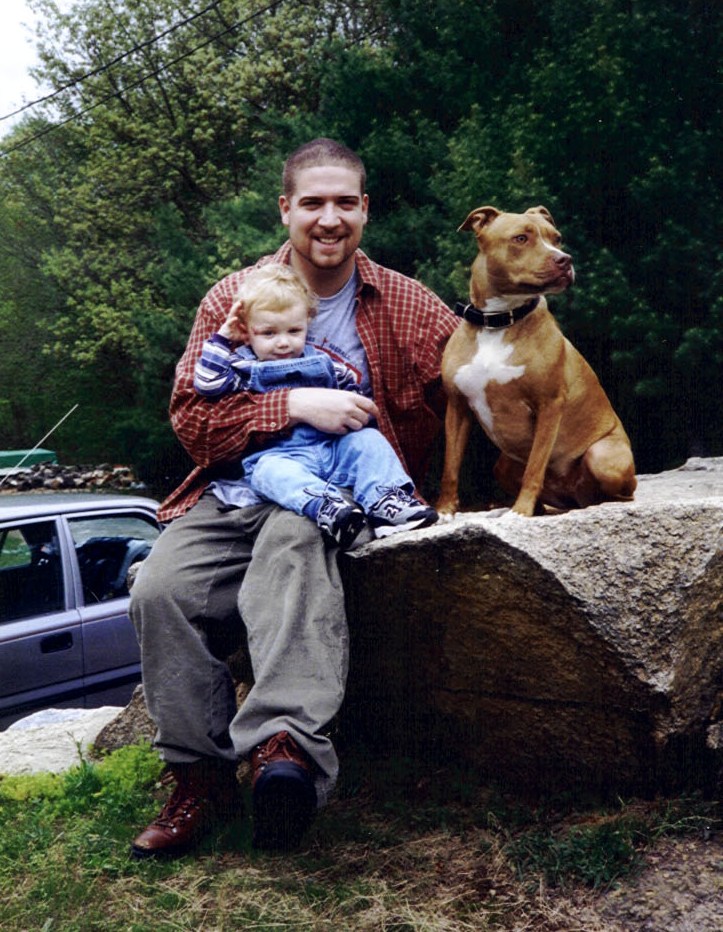
Kevin (Feb 26, 1977- May 14, 2000) with his son, Daniel

xxx

A Reverence for Life

In re-reading a few books on evolution, it occurred to me that there is a common thread running through many of them, which is the reverence that the authors hold for life itself. Unfortunately, there exists an idea out there that to explain something in nature is equivalent to “explaining it away.” The fear is that this may deflate a person’s sense of wonder. But this is far from the truth. For example, the biological anthropologist Helen Fisher commented that her career studying the biology of love (by definition, one of the most romanticized topics possible) has done nothing to diminish her appreciation of it. The same applies for those who study other aspects of science, including evolution.

Eugenie Scott, Director of the National Center for Science Education, has written that for many laypeople the notion that evolution is an unguided, mechanistic process implies that “life has no meaning.” However, contrast that view with how many scientists write about nature. The sense of awe and reverence that they exude is palpable.

Continue reading

On Optimism and ‘Human Nature’

In the last few days, I came across a couple of unrelated quotations on human nature and our internal tug-of-war between cooperation and conflict.

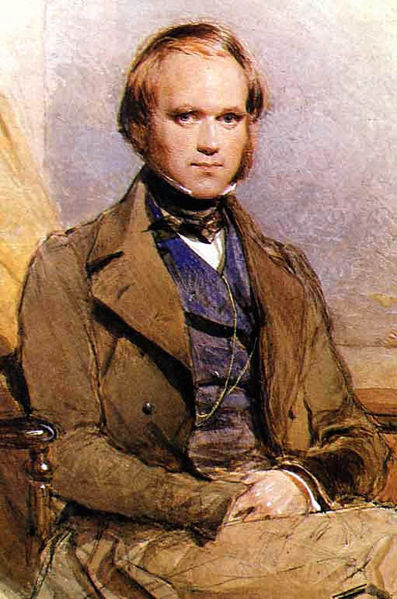
A 20 year-old Charles Darwin in an 1830 letter to his cousin, W.D. Fox:

It is quite curious, when thrown into contact with any set of men, how much they continue improving in ones good opinion, as one gets ackquainted (sic) with them. This was an argument used, in a religious point of view, by a very clever Clergyman in Shrews. to encourage sociability (he himself being very fond of society), for he said that the good always preponderates over the bad in every persons character, & he thought, the most social men were generally the most benevolent, & had the best opinion of human nature. I have heard my father mention this as a remarkably good observation, & I quite agree with him.

In “East of Eden,” John Steinbeck wrote:

Continue reading

Teaching Human Evolution at a Public University in Boston

“Evolutionary theory should be taught in public schools because it is one of the most important scientific theories ever generated, and because it is the accepted scientific explanation for the diversity of life.”

…………………………………-Statement from The Society for the Study of Evolution

The Naked Ape (the one on the right)

An article published this week in Science revealed the results of a survey of 926 U.S. high school biology teachers. The authors, Michael Berkman and Eric Plutzer of Penn State, found that only 28% of teachers “unabashedly introduce evidence that evolution has occurred and craft(ed) lesson plans… that evolution is a theme that unifies disparate topics in biology” (Berkman and Plutzer, 2011).

Shockingly, 13% of teachers advocated creationism or intelligent design in the classroom, but most (who the authors termed “the cautious 60%”) were “neither strong advocates for evolutionary biology nor explicit endorsers of nonscientific alternatives.” The authors suggested that the ambivalence of some biology teachers could be due to a lack of confidence in their knowledge of evolution, a desire to shy away from controversy, or a conviction that students should be exposed to various ideas and then allowed to make up their own minds. These numbers should make biology teachers pause and reflect on where we are as educators, 150+ years after Darwin’s publication of On the Origin of Species.

Continue reading

One Planet. One Species. Homo sapiens.

“One planet, one experiment.”
………………..— Edward O. Wilson. 1992. The Diversity of Life.

Hadzabe men (wikimedia commons)

The BBC has compiled what looks to be an absolutely visually stunning television series, titled ‘Human Planet.’  The footage is said to contain video from 80 different locations, highlighting the relationship of humans to various ecological conditions.1 The description from the website:

Uniquely in the animal kingdom, humans have managed to adapt and thrive in every environment on Earth. Each episode takes you to the extremes of our planet: the arctic, mountains, oceans, jungles, grasslands, deserts, rivers and even the urban jungle. Here you will meet people who survive by building complex, exciting and often mutually beneficial relationships with their animal neighbours and the hostile elements of the natural world.”

Have a look for yourself at the preview:

Continue reading

Evolutionary Aesthetics

‘Beauty is truth, truth beauty, – that is all Ye know on earth and all ye need to know.’ – John Keats

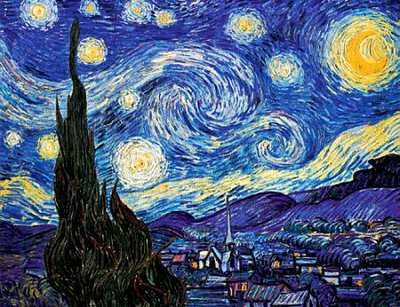
Van Gogh's Starry Night

In 2004, Kevin Kniffin (a former classmate of mine at Binghamton) and David Sloan Wilson, published an article in the journal Evolution and Human Behavior revealing their results from three different studies on perceptions of beauty. Among their findings was that, for people who knew each other, ratings of physical attractiveness were strongly influenced by the personality traits of those persons who were being rated. In other words, when rating potential mates, ‘inner beauty’ augmented perceptions of external appearance and overall attractiveness. The reason behind this likely has Darwinian roots. According to Wilson:

“The fitness value of potential social partners depends at least as much on non-physical traits — whether they are cooperative, dependable, brave, hardworking, intelligent and so on — as physical factors, such as smooth skin and symmetrical features.”

Continue reading

Choice, Obesity & the Irrational Ape (Homo insensatus)

What I see in Nature is a magnificent structure that we can comprehend only very imperfectly, and that must fill a thinking person with a feeling of humility.

……………………………………………………………………………………. – Albert Einstein

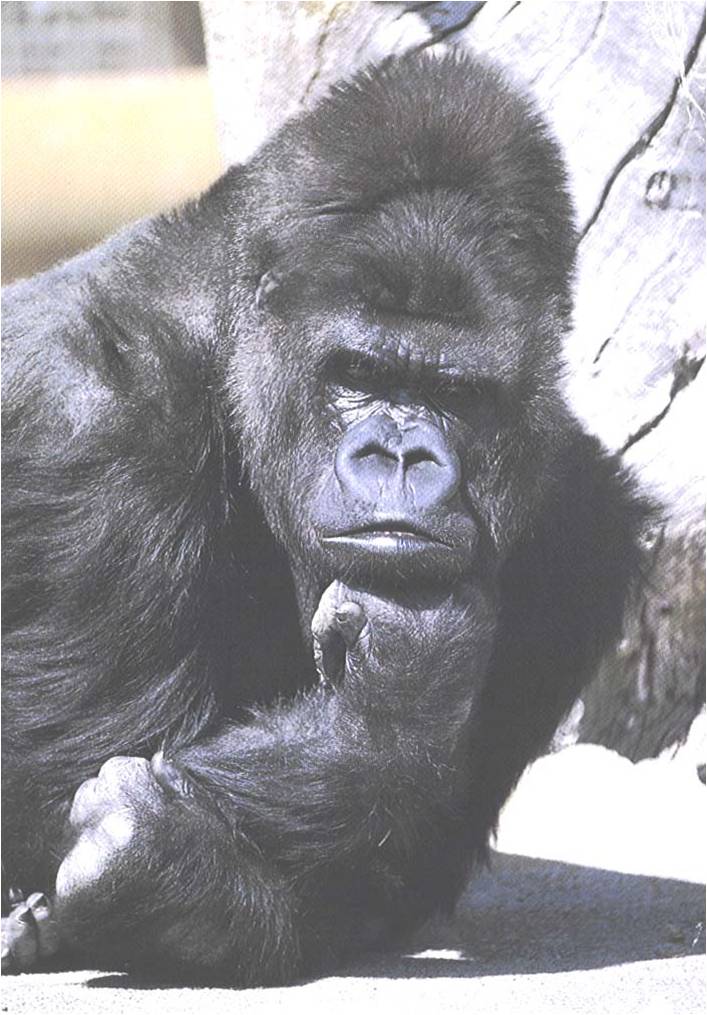
Another irrational ape (imitating Rodin’s ‘The Thinker’)

Jonah Lehrer has written another great piece about our irrationality in decision making, and our emotional responses to avoiding loss. He writes:

From the perspective of economics, there is no good reason to weight gains and losses so differently. Opportunity costs (foregone gains) should be treated just like “out-of-pocket costs” (losses). But they aren’t – losses carry a particular emotional sting.”

Others have noted the importance of emotion involved in decision making, and how it affects our ability to intuit how our choices will make us feel. When someone suffers damage to the prefrontal cortex of their brain, both their emotions and decision-making abilities are impaired (Bechara et al 1997). What this suggests is that emotions and reason are linked, rather than oppositional. They inform each other. This all fits in with Dan Ariely’s view of humans as “predictably irrational.”

Continue reading