Class Exercise: How Justifiable Is Violence?

Continue reading

An Ode to Canada, from an American

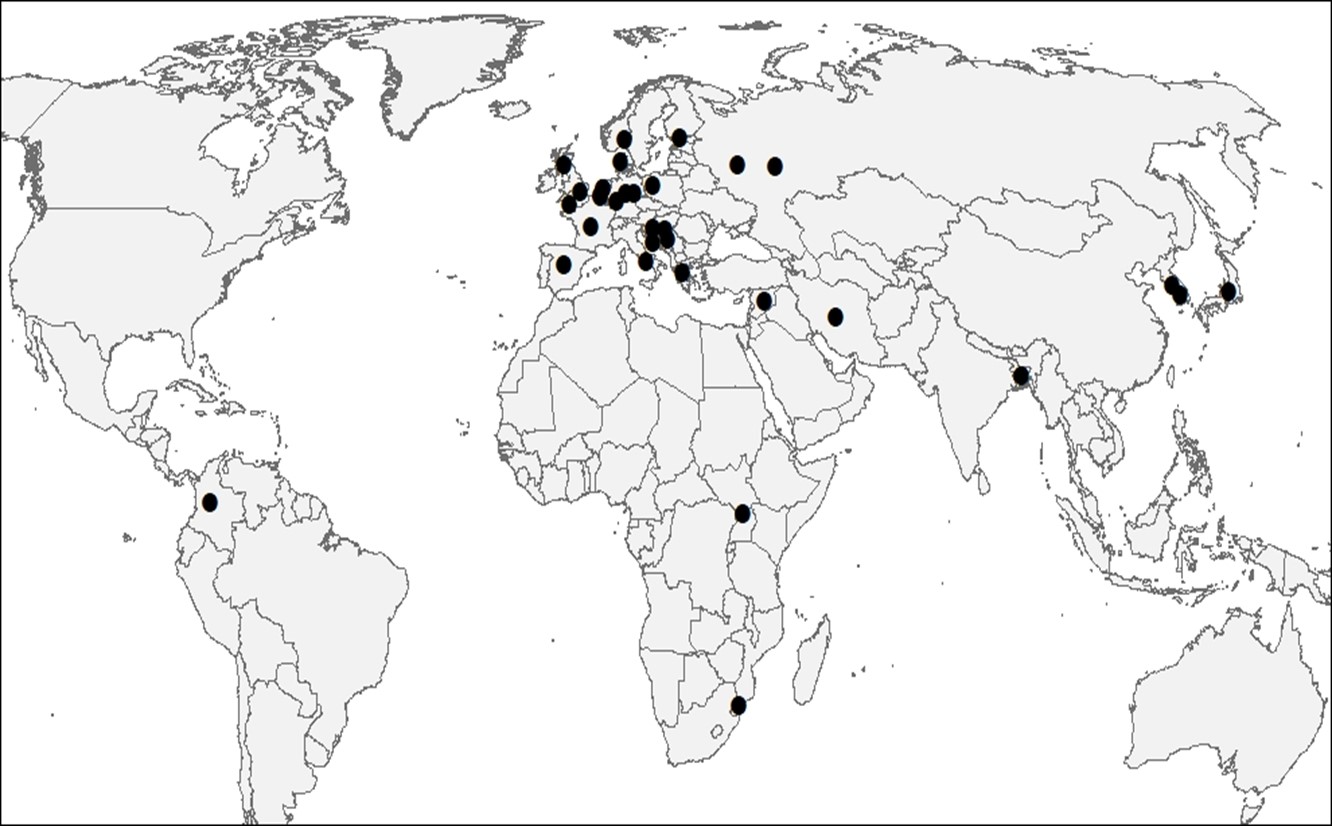
(New Publication) Coming of Age in War: Conflict & Menarche

Locations of samples on conflict and menarche we identified from the literature.
Continue reading

Civil War Counter

Who Would You Like to Kill?

Continue reading

The Most Disgusting Thing That You Could Ever Think Of

“I know what I’m talking about when I talk about war, and it’s the most disgusting thing that you could ever think of. And I’ve also noticed with every single war, it’s been declared by men who were too old to go, and it’s made me suspicious.”

-Michael Caine

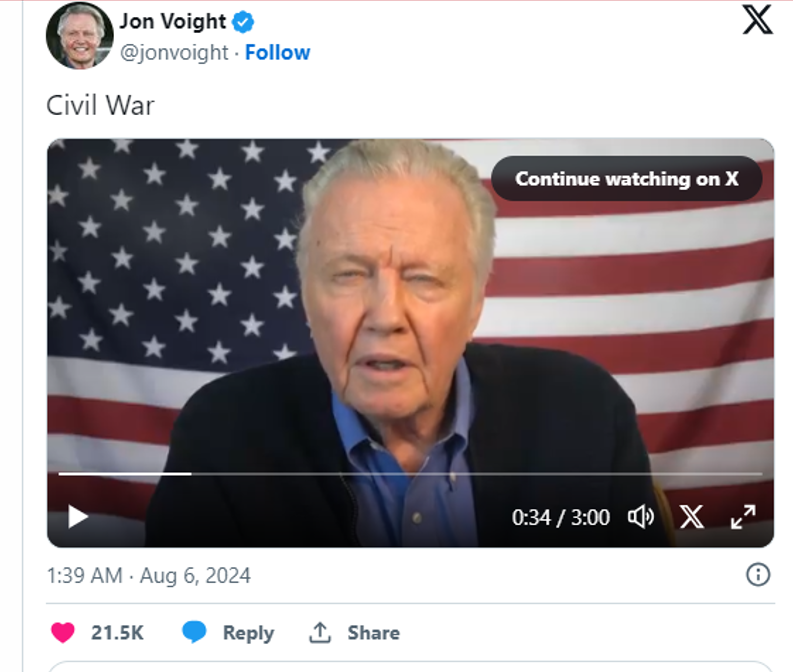
Why I Keep Thinking about a 2nd Civil War

“There never was a good war or a bad peace.”  – Ben Franklin

It is a blessing and a curse of being a social animal that we are often aware of what the other social animals around us are thinking. If online activity is any indication of what people are thinking, then things are not great. Every day for the past year, I have found that the most viewed essay on this site, by far, has been something I wrote in 2019 about who would win a second civil war in the United States.

Perhaps I am giving this too much attention. But maybe not. A significant percentage of Americans have been deeply worried and/or angry for a while. In an October 2020 poll, 61% of people agreed with the statement: “I’m concerned that the U.S. could be on the verge of another Civil War.” Another Yougov poll from the same time found that 56% felt that the country would see “an increase in violence as a result of the election.” A smaller poll from December reported that 71% of Trump voters and 40% of Biden voters believed “we are headed into a civil war or significant upheaval.” (Upheaval and civil war were not defined, however).

When I play the scenario out in my head, I think the possibility of another civil war is remote, at least not in the sense of replicating the original one. Although there has been chatter about secession in a few states (Texas, Wyoming), this has little momentum. And while there are certainly regional political differences, they do not fall along neat boundaries akin to northern and southern states. There is no Mason-Dixon line. Rather, the main divide seems to be urban-rural, within states rather than between them.

Yet even within states and within counties, there is plenty of political variation. While many counties voted overwhelmingly for either Biden or Trump in 2020, most were not very lopsided. According to one analysis, fewer than 600 out of roughly 3,000 counties (excluding Alaska, for some reason) voted over 80% for either candidate. 

Alternative ways of looking at the 2020 political divide in the US. On the left, the percentage of the vote for Biden and Trump by county. On the right, results by population size. While there are regional differences, they do not break down into simple “red and blue” states. Source.

Continue reading

The Year in Review: A Window into Darkness

You plant a demon seed. You raise a flower of fire.” – Paul Hewson


The number of views on my site have dropped off noticeably in the final three weeks of 2020, and I am relieved. Perhaps that doesn’t make much sense at first. Who doesn’t want people to read their stuff? Let me explain.

This year was not a good one – the pandemic raged across the world, and divisions in the U.S. were tense and palpable. I saw this indirectly on this blog. In 2020, the most read essays on this site, by far, pertained to the topic of another civil war in the U.S. These were the five most read posts in 2020, along with the year I wrote them, and the number of views:

Red States versus Blue States: Who Would Win a Civil War in the U.S? (2019) 9,340 views

16 Reasons We Should Have Another Civil War in the U.S. (2020) 1,394 views

Humans are (Blank) –ogamous (2011) 731 views

Dangerous Speech & a 2nd U.S. Civil War (2020) 684 views

“To Tame the Savageness of Man” (2015) 648 views


So, that’s three posts related to civil war, one about keeping our baser impulses in check, and one about sex and love. Go figure. Two were older essays, and the other three were written in the last two years. And, unlike previous years when some of my essays were shared on social media, this year the vast majority of my visitors arrived on their own via Internet search engines.

This is a small blog with a funny name, and it doesn’t get much traffic. To see a post that I wrote last year skyrocket above the others, it made me notice. In fact, the “Red States versus Blue States” post is already the fifth most read essay on this site, even though it is just a year old and I started this blog in 2010.  The graph below shows how it compared in terms of views with other popular posts in their first two years. As you can see, most started with a little flurry of activity, and then trail off. “Red States vs. Blue States” did something different. Few people read it in 2019, and then it took off a year later, mid-2020.

I noticed that the spike in views were tightly linked with current events. From the George Floyd protests in the summer, the North Carolina police officer caught on tape saying that he could not wait for another civil war and a chance to kill Black people, the killings of Aaron Danielson and Michael Reinoehl in late August, the people shot and killed by Kyle Rittenhouse, Trump’s refusal to commit to a peaceful transfer of power in September, Trump telling militia groups to “stand back and stand by,” the plot to kidnap Michigan governor Gretchen Whitmer, the actual election itself, the pushing of the false narrative that the election was stolen. The site views ebbed and flowed, almost perfectly along with the national news. Continue reading

The Chances of Violence & the U.S. Election: Lessons from Emile Bruneau and Reading Intentions

I learned a few days ago that Emile Bruneau had passed away. I did not know Dr. Bruneau personally, but I knew of his work in conflict resolution. I previously referred to some of his research in a post on dangerous speech and dehumanization. It is also clear from the tributes to him on social media that in addition to his valuable research, the world has lost a really wonderful human being.

Having lost my own brother as a young adult, premature deaths like Dr. Bruneau’s (or Chadwick Boseman’s) resonate with me. They remind me of how fragile our lives are. His wife shared something that Dr. Bruneau wrote that made me a little emotional, both for its bravery and optimism in the face of something as potentially terrifying as one’s impending mortality, and because it reminded me of something that occurred to me too when I contemplated my brother’s death: that a part of us really does live on in the minds of others. He wrote:

“I just had a thought: I learned in physics that our physical mass never actually touches another – the outer electrons of each repel, giving us the illusion of touch. As a neuroscientist, I learned that our brains don’t really see the world, they just interpret it. So losing my body is not really a loss after all! What I am to you is really a reflection of your own mind. I am, and always was, there, in you.”

I’d like to share a few more of his words, to help keep his image reflecting in my mind, and perhaps yours as well. Not just for the sake of sharing, but because he really did have some important things to say.

Continue reading

Hope & the Summer of Anger

I’ve had this quotation from primatologist Frans deWaal in my head for a long time. Sadly, I think it’s relevant now for life in the United States:

“Humans have something of the bonobo and the chimpanzee in them, which makes them bipolar in character. Most of the time, actually, we like to have a peaceful relationship with everybody around us. But at the same time we can be aroused to a point, under certain circumstances – either by political leaders, or by an invasion, or by some traumatic event – that we start killing, and not killing on a small scale like chimpanzees do, but genocide… When we are bad, we are worse than any primate that I know. And when we are good, we are better and more altruistic than any primate that I know. ” — Frans de Waal, primatologist (source)

The two pieces of this passage that mean the most to me are that: (1) peaceful relations are our default preference, and (2) mass acts of violence require being goaded or aroused by some external push factor. 

Continue reading