War, Economics, & Human Development

“Nothing is more useless in developing a nation’s economy than a gun, and nothing blocks the road to social development than the financial burden of war. War is the arch enemy of national progress and the modern scourge of civilized men.”

                                        – King Hussein, Address at Tulane University, April 1976 (Link)

I don’t know much about economics and development. As an undergraduate, I took only two economics courses (both in my freshman year), and to be honest they were forgettable. 

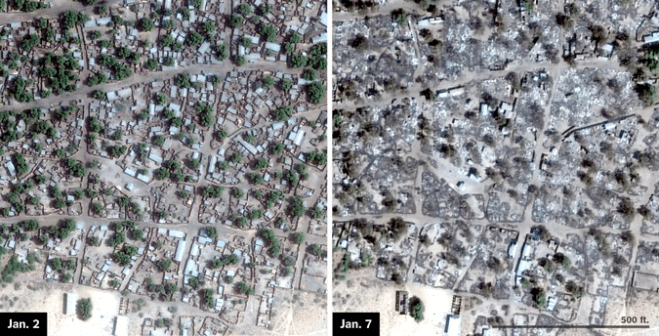
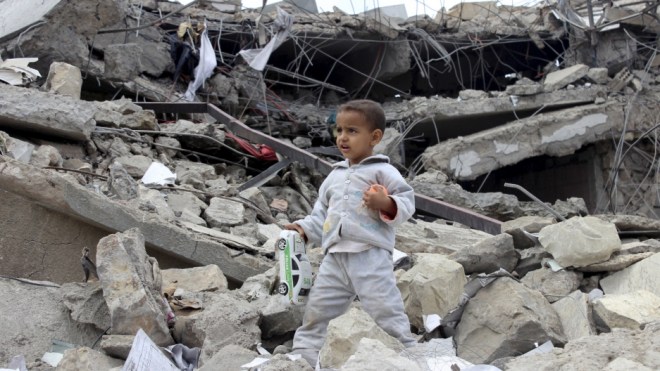
That said, I wouldn’t know where to begin to help improve any country’s economic situation. However, I can think of a surefire way to destroy one — host a war. Earlier this month, the UN secretary-general Ban Ki-Moon said that because of the ongoing war Syria had lost the equivalent of four decades of human development. Even if the war ended tomorrow, it will likely take generations to recover. I won’t belabor this point. It should be enough to say that death and destruction are part of the logic of war, whether it be in Syria, Yemen, Ukraine, Iraq, Afghanistan, Nigeria, the Central African Republic, or South Sudan. What an enormous waste.


Thoughts on PTS and “Moral Injuries”  


Over the past five years, a good percentage of this blog has been focused on the effects of war on health. Some of these topics have included:

  • Other effects of war, such as forced displacement, food shortages, and destroyed infrastructure (here, here, here, here, here, & here)


I’ve largely stayed away from one of the most recognized effects of war: psychological impacts such as post-traumatic stress (PTS), perhaps with one notable exception: “Reconciliation, Biology, and the Second Indochina War.” This remains one of my favorite posts on this site. However, it dealt not with PTS per se, but with guilt and the desire for forgiveness and reconciliation, with many examples stemming from war.

I bring this up now because a few months ago I first encountered the idea of the long-term effects of ‘moral injury.’ According to Litz et al. (2009), a moral injury stems from “events, such as perpetrating, failing to prevent, or bearing witness to acts that transgress deeply held moral beliefs and expectations may be deleterious in the long-term, emotionally, psychologically, behaviorally, spiritually, and socially.”

In other words, while both have long-term psychological effects, moral injury may be distinct from PTS. As Thomas Gibbons-Neff wrote “unlike post-traumatic stress, which is a result of a fear-conditioned response, moral injury is a feeling of existential disorientation that manifests as intense guilt.” Neither idea is new, though both may have been unintentionally intertwined in psychology (at least in my non-expert understanding of this).

The terminology has been fickle, and PTS has been called many different names over the past several decades including shell shock, soldier’s heart, or combat fatigue. More recently, there have been efforts to drop the word ‘disorder’ from PTSD to simply PTS, in an effort to minimize stigma as well as to shift how those suffering from stress see themselves. Vocabulary really matters, and re-framing the terminology helps everyone see people with PTS simply as fellow human beings undergoing a very difficult period, rather than as permanently damaged.   

According to one study, references to post traumatic stress may extend as far back to the Assyrians in Mesopotamia between 1300BC and 609BC. Some ancient soldiers reportedly described “hearing and seeing ghosts talking to them, who would be the ghosts of people they’d killed in battle.” However, to me, this seems more like moral injury and manifestations of guilt, rather than fear, so perhaps these would be better categorized as moral injuries. Though it is almost impossible to do this retrospectively.

Some, like the primatologist Frans deWaal (2012), have suggested that the frequency of PTS among soldiers indicates that committing acts of violence does not come easily to humans, and that war is not a deep part of human nature:

“If there were truly a genetic basis to our participation in lethal combat, we should willingly engage in it. Yet soldiers report a deep revulsion to killing and shoot at the enemy only under pressure. After these experiences, they often end up with substantial psychological damage. Far from being a recent phenomenon, haunting memories of combat were already known to the ancient Greeks, such as Sophocles, who described Ajax’s “divine madness,” now known as posttraumatic stress disorder (PTSD).”

I’m not so sure. There is evidence that some people are drawn to violence and enjoy participating in it. A recent powerful essay by Tage Rai argued that the key to understanding human violence is that people are most apt to engage in it when they believe they are morally justified:

“Across practices, across cultures, and throughout historical periods, when people support and engage in violence, their primary motivations are moral. By ‘moral’, I mean that people are violent because they feel they must be; because they feel that their violence is obligatory. They know that they are harming fully human beings. Nonetheless, they believe they should. Violence does not stem from a psychopathic lack of morality. Quite the reverse: it comes from the exercise of perceived moral rights and obligations.”

If there is any good news, perhaps it’s that individuals who suffer a moral injury must, almost by definition, have some deep reservations about certain acts of violence. After all, one’s sense of morality cannot be injured if it didn’t exist in the first place. Secondly, the concept of ‘injury’ implies that healing is possible. Marek Kopacz (2014) wrote that after trauma, military personnel often seek out “support in an effort to realign their existential beliefs and reaffirm the meaning and purpose of life.” My guess is that — evolutionarily speaking — because humans have such a long history as social primates, it is likely that a person’s moral sense is integral to their meaning of life. Therefore, it is also likely that attempts at moral healing/ re-alignment could go a long way in terms of psychological health and overall well-being.


References

De Waal F. 2012. The antiquity of empathy. Science 336: 874-6. Link

Litz BT, Stein N, Delaney E, Lebowitz L, Nash WP, Silva C, & Maguen S. 2009. Moral injury and moral repair in war veterans: A preliminary model and intervention strategy. Clinical Psychology Review 29: 695–706. Link

Kopacz MS. 2014. Moral injury – A war trauma affecting current and former military personnel.  International Journal of Social Psychiatry  60: 722-3. Link

Visualizing WW2 Casualties

The video below is a visually stunning account of the total casualties of the Second World War. It is really hard to comprehend such staggering numbers, but by putting them into infographics like these, they have more impact. Consider setting aside 20 minutes to watch the whole thing.

Did the Atomic Bombs in Hiroshima and Nagasaki Affect Child Growth?

In 1967, James Wood and colleagues published a study on the growth of Japanese adolescents whose pregnant mothers were exposed to the atomic bombs in Hiroshima and Nagasaki years earlier. Of course, many people were killed by the bombs, although estimates vary somewhere between one and two hundred thousand in all. By one estimate, the mortality rate of people within one kilometer of the bomb’s hypocenter in Hiroshima was 86%. This rate dropped to 27% for people who were between 1 and 2.5 km, and to 2% for those between 2.5 and 5km. Comparable numbers were reported for Nagasaki: 88%, 34%, and 11% respectively. This study was about some of the survivors.

Hiroshima blast and fire damage, U.S. Strategic Bombing Survey map. From wikicommons.

Hiroshima blast and fire damage, U.S. Strategic Bombing Survey map. From wikicommons.

In all, the Wood et al. study included 1,259 seventeen-year-olds, who had annual medical examinations since 1950. They were then compared for height, weight, and head circumference by their mother’s distance from the bombs’ hypocenters. They concluded that:

Continue reading

40 Years After the Second Indochina War

Today does not escape easily from yesterday.

Several media outlets have published stories in the last few days marking the 40th anniversary of the ‘end’ of the Vietnam War (although it is more accurately known as the Second Indochina War because it also involved the neighboring countries of Laos, Cambodia, and Thailand).  

Some of these stories are about families of American veterans still searching for the remains of lost loved ones.  Others are about the lingering divisions between northern and southern Vietnamese, even within the same family.

Perhaps Viet Thanh Nguyen, an associate professor of English and American studies at the University of Southern California, best summarized these accounts with his NYTimes essay “Our Vietnam War Never Ended”. He describes moving to the US as a young boy and then growing up in San Jose, California with a foot in two cultures, as well as the struggles and successes of Vietnamese and other refugee groups in the US. And despite the fact that his family members have achieved a lot, such as producing a professor at a prestigious university, he writes that their story is not a fairy tale: 

“our family story is a story of loss and death, for we are here only because the United States fought a war that killed three million of our countrymen (not counting over two million others who died in neighboring Laos and Cambodia).”

Those two themes, that the war never truly ended, and that even those who survived and succeeded later in life have stories of loss and death, are important reminders of the past’s ability to reach into the present, even after forty years of yesterdays. All wars are unique, but their most consistent feature of war is the creation of suffering, which can last for decades, perhaps even centuries. Continue reading

Syrians in the Darkness

“The seasons are according to the sun. The people of Syria now, they don’t see any sun. They are in the darkness.”                                    

–Turkish Foreign Minister Ahmet Davutoglu, February 2014

I’ve had the quote from Ahmet Davutoglu tucked away in my notes since last year, and had forgotten about until I saw the above image in an article in The Guardian earlier this month. It shows a series of satellite images of Syria at night from 2011 to 2015. The article reveals that there has been an estimated 80% reduction in night-time illumination of Syria over the past few years, correlating with the destruction of infrastructure and the enormous loss of population from people fleeing their homes. To date, an estimated 10.8 million people have been displaced as a result from the conflict. Davutoglu was correct, literally and figuratively. I can’t help but wonder how these events will affect ordinary Syrians for decades to come. 

.

Related: Growing Up in the Two Koreas

…And They Shall Beat Their Tanks into Playgrounds

“Safety and security don’t just happen, they are the result of collective consensus and public investment. We owe our children, the most vulnerable citizens in our society, a life free of violence and fear.”  (Nelson Mandela)

“… and they shall beat their swords into plowshares, and their spears into pruninghooks: nation shall not lift up sword against nation, neither shall they learn war any more.” (Isaiah 2:4)

Or convert bombs into spoons

Some Thoughts on Syrian Casualty Figures

The New York Times reported yesterday that in 2014 more than 76,000 people were killed in the ongoing war in Syria. This was actually the highest figure since the conflict began (with 73,447 deaths in 2013; 49,294 in 2012; and 7,841 in 2011), so things have not gotten better. 

The statistics came from the British-based organization The Syrian Observatory for Human Rights, and the newspaper admitted that the figures could not be independently verified. That is probably to be expected. Estimating casualties during a time of war is a nearly impossible task, for obvious reasons. Even demographic surveys conducted after a war give a wide range of casualty estimates, as was the case with Iraq. Still, any attempt to quantify casualties is admirable, and a reminder of the damage done by war. 

One pattern stood out to me, which was the proportion of deaths attributed to civilians. If their estimates are correct (as much as possible), then civilians comprised 23% of deaths. The rest were divided among various factions of combatants. 

Syria casualties

Continue reading

The Biology of Forced Displacement

“Seeking asylum is not illegal under international law and people have a right to be treated humanely and with dignity.”  – UNHCR

We crossed the Mekong to get to Thailand at night, so no one would see us. We had always lived in the mountains (of northern Laos), so we did not know how to swim. When we came to the river, we used anything to help us float – bamboo, bicycle tubes. But at night, it is easy to get lost. Someone in our group said: ‘Remember, if you get lost when you’re going down the river (with the current), don’t panic. Thailand is on your right.’ ”


Every refugee has a story. The one above was told to me by a Hmong man I met in French Guiana in 2001. I went to learn about the experiences of the people there and how they had adjusted to being resettled half a world away, from Southeast Asia to a French ‘overseas department’ in Amazonia. They were actually doing quite well at the time, living as independent farmers who had been given land by the government years earlier.

Hmong men in French Guiana going hunting by bike.

Hmong men in French Guiana going hunting by bike.

They also retained a good degree of cultural continuity. While most are fluent in French, the majority of the 2,000+ Hmong in the country lived in rural, semi-isolated, ethnically homogenous villages. This gave them a buffer of sorts, allowing them to acculturate on their own terms. As they often put it, they were “free to be their own boss,” free to be Hmong, and most said they were happy with life in French Guiana. This combination of traits – economically self-sufficient, culturally distinct, mostly content, living in a rural overseas department – is not the typical refugee story. In fact, because of that relative uniqueness, the French Guiana Hmong have drawn attention from media outlets such as the BBC and the NY Times.

Continue reading

Civilian Casualties Are a Feature, Not a Bug, of War

“The first pattern is that forbearance toward the helpless has always been instrumental rather than absolute.” Historians Mark Grimsley and Clifford J Rogers (2002: xii), on treatment of civilians in war over time. 


Much of the world’s attention has been focused on two recent tragedies: the Malaysia Airlines flight shot down over Ukraine and the civilian casualties in Gaza. In his Foreign Policy essay “The Slaughter of Innocents”, David Rothkopf couched these events within the concepts of ‘limited war’ and ‘collateral damage,’ writing:

From a purely political perspective, such tragedies, isolated though they may be, instantly dominate the narrative of a conflict because they speak to the heart of observers — whereas government speeches, Twitter feeds, and press releases seem too coldly rational and calculated, too soulless and self-interested. There are no arguments a political leader or a press officer can make that trump horror or anguish. There is no moral equation that offers a satisfactory calculus to enable us to accept the death of innocents as warranted.

I agree with much of this, except for one non-trivial point: tragedies involving civilian casualties are not that isolated, unfortunately. Not all incidents will be nearly as visible as the deaths of four young children playing football on a beach near a hotel filled with journalists, or a commercial airplane shot out of the sky. But they are all tragedies nonetheless. Civilian casualties are a feature of modern war, not a bug.

War deaths 2

Civilian casualties. See references below for sources.


And this is not exactly a new pattern or feature of ‘limited war.’ Instead, nearly a century of data suggests that civilians, not soldiers, have suffered the brunt of war, experiencing 67% to 90% of casualties across various conflicts since WW2. And many more civilians suffer through forced displacement, along with its short- and long-term effects on health (Bradley 2014). Perhaps we shouldn’t be surprised at these patterns, for the very simple reason that war is a sledgehammer, not a scalpel. It cannot easily excise some unwanted faction from a society without also cutting out several times more innocent lives. The real tragedy are not those ‘rare mistakes’ (which are not rare, really) that injure or kill civilians. It is the decision to go to war at all.    Continue reading