Part 6. Humans are (Blank) -ogamous: Many Intimate Relationships

This is the sixth part on the evolution of human mating behavior, comparing evidence for promiscuity and pair-bonding in our species. Please see the Introduction here.

_______________________________________________________________

So be sure when you step, Step with care and great tact. And remember that life’s A Great Balancing Act.” Dr. Seuss

…………………………………………………………………………………………………………………………………………………………………. Varieties of Intimate Relationships. Click for larger image. (from Informationisbeautiful.net)

David McCandless at “Information Is Beautiful” gave me permission to reproduce the above image. I though it fit well with the series I started months ago titled Humans are (blank)-ogamous, which looked at the evidence for pair-bonding and promiscuity in human evolution. In the first post of the series, I wrote:

To begin, let me say that I side with Sapolsky. Individuals may figure out what works best for themselves in terms of balancing sex, love, intimacy, and commitment, but collectively we are a tragically confused species. …

Across the spectrum of human cultures, we can find examples of heterogamy, endogamy, polyandry, polygyny, monogamy, non-monogamy, polyamory, and so on. However, these do not all occur in equal frequencies, so I don’t think we are truly “blank-ogamous.” There is also lots of room for variation within each culture. Being good Popperians committed to the principle of falsifiability, it is probably easier to say what we are not than what we are. One thing is clear: we are not simple.”

Continue reading

Cosmically Connected Primates

“For small creatures such as we, the vastness is bearable only through love.”                 

– Carl Sagan, Contact

Three different people have shared the inspirational video below with me in the past two days, and I thought it deserved to be disseminated as widely as possible. It’s the response of astrophysicist Neil deGrasse Tyson to the question: “what is the most astounding fact you know about the universe?” In his answer, Tyson elaborates on the majestic idea that the heavier elements crucial for organic life owe their origins to the incredible pressures created within aging stars. Those stars then exploded and released their newly forged contents into surrounding space, some of which eventually coalesced into us (to make a long story short).

By itself, that concept is sublime, and it should be enough to sustain one’s sense of awe for a long while. But Tyson also goes a bit farther, speculating on why this idea elicits such an emotional response within us. 

Continue reading

Human Nature, Humility, & Homosexuality

And, in the end, the love you take is equal to the love you make.” -Lennon/McCartney

Is that true?” – Chris Farley

….

.

Steve Silberman pointed his Twitter followers to a piece in Salon about the biography of Maggie Gallagher, the point person for fighting against same-sex marriage in the United States. Toward the end of the article, it quotes Gallagher on her views on homosexuality, same-sex marriage, and human nature, where she makes an analogy to Communism:

“One of the lessons I learned as a young woman from the collapse of Communism is this: Trying to build a society around a fundamental lie about human nature can be done, for a while, with intense energy (and often at great cost); but it cannot hold.”

The author of the article, Mark Oppenheimer, then writes this about Gallagher:

Same-sex marriage is just a big lie, she believes, like Communism.  It is weak at its foundations, like the Iron Curtain. It may get built, she seems to concede — in 10 years, or 20, there may be more states that recognize same-sex marriage, more shiny, happy couples raising rosy-cheeked, well-adjusted children, children who play with dogs and go to school and fall from jungle gyms and break their arms, children often adopted after being abandoned by the heterosexuals who did not want them or could not care for them — but in time (big time, geological time, God time) the curtain will be pulled back, or it will fall. Because it has to. It cannot be otherwise.” 

. Continue reading

On Life, Death, and Shaking Hands with Your Ancestors

Appropriately, I’m writing this in the middle of Hurricane Irene.

.A couple of days ago, NPR posted this quote on death by Steve Jobs. 

No one wants to die. Even people who want to go to heaven don’t want to die to get there. And yet death is the destination we all share. No one has ever escaped it. And that is as it should be, because Death is very likely the single best invention of Life. It is Life’s change agent. It clears out the old to make way for the new. Right now the new is you, but someday not too long from now, you will gradually become the old and be cleared away. Sorry to be so dramatic, but it is quite true.”

Direct ancestor/ descendants holding hands (my sons and I)

Digging a bit deeper, I was able to find that the quote came from a commencement speech Jobs gave at Stanford University in 2005, about a year after he was diagnosed with pancreatic cancer. By now, most people probably know that Mr. Jobs stepped down as CEO of Apple last week, and there has been speculation that this may tie into his past health issues. Such a close encounter with mortality would likely make any person pause and reflect on the big picture, and why it is that we ultimately share the same destination. I empathize deeply with Mr. Jobs, Christopher Hitchens, the people of Somalia and, well, everyone, since we must all one day confront the fact that our time here is finite. Death is the ultimate equalizer.

Continue reading

Part 5. Humans are (Blank) -ogamous: Pair-Bonding and Romantic Love

This is the fifth part on the evolution of human mating behavior, comparing evidence for promiscuity and pair-bonding in our species. Please see the introduction here.

____________________________________________________________________

One of these days I will wake up – which I think I have done already – and realize to myself that I really do love. I find it very difficult to allow my whole life to rest on the existence of another creature. I find it equally difficult, because of my innate arrogance, to believe in the idea of love. There is no such thing, I say to myself. There is lust, of course, and usage, and jealousy, and desire and spent powers, but no such thing as the idiocy of love. Who invented that concept? I have wracked my shabby brains and can find no answer. (Letter from Richard Burton to Elizabeth Taylor)

“Emotions and motivations (are) hierarchically ordered in the brain. Fear can overcome joy, for example. Jealousy can stifle tenderness…But in this pecking order of basic and complex emotions, background feelings and powerful drives, romantic love holds a special place: close to the zenith, the pinnacle, the top. Romantic love can dominate the drive to eat and sleep. It can stifle fear, anger, or disgust. It can override one’s sense of duty to family or friends. It can even triumph over the will to live. As Keats said, ‘I could die for you.’ ” (Helen Fisher 2004: 97-8)

“Only love can leave such a mark / But only love can heal such a scar.” (Paul Hewson)

Attempting to summarize the evolution of romantic love and pair-bonding in humans is an enormous task. This is exacerbated by many complications: the literature on these topics is vast; the term ‘pair-bond’ has been used in different ways by different primatologists in the past and is often erroneously confused with ‘monogamy’; the neurobiology of romantic love – which is not a prerequisite of pair-bonding – is complex; the question of when/if humans became pair-bonded in our evolutionary history is highly speculative; and then there is the complicating factor of culture. Furthermore, parts two through four in this series addressed ten biological traits indicating that humans have promiscuity built into us to some degree, and that monogamy, or at least lifelong monogamy, does not come easily.

Gibbons (Hylobates lar). From Wikipedia.

Continue reading

Part 1. Humans are (Blank) -ogamous

(A)s our forebears adopted life on the dangerous ground, pair-bonding became imperative for females and practical for males. And monogamy – the human habit of forming a pair-bond with one individual at a time – evolved.” (Helen Fisher 2004: 131)

Several types of evidence suggest our pre-agricultural (prehistoric) ancestors lived in groups where most mature individuals would have had several ongoing sexual relationships at any given time. Though often casual, these relationships were not random or meaningless. Quite the opposite: they reinforced crucial social ties holding these highly interdependent communities together.” (Chris Ryan & Cacilda Jethá 2010: 9-10)

 “We are not a classic pair-bonded species. We are not a polygamous, tournament species either…. What we are, officially, … is a tragically confused species.” (Robert Sapolsky)

….

.

The above three quotations were selected to illustrate the range of views that exist on the evolution of human sexual and mating behavior. This is not a trivial matter. To primatologist Bernard Chapais: “The central puzzle of human social evolution… is to explain how promiscuity was replaced by the pair bond” (that is, assuming the pair-bond has gained complete ascendancy). But it’s about more than our ancestors’ mating behaviors. Lurking in the background is the notion that our ancestral behavioral patterns impact current ones, via phylogenetic inertia. Additionally, how we view the past is important because, rightly or wrongly, we have a tendency to associate what is natural with what is good (but note well the naturalistic fallacy). For both of these reasons, the past matters.

Continue reading

On Fatherhood: Proud Primate Papas

For Father’s Day, Scientific American compiled a series on the biology of fatherhood, including a list of 8 species where males are integral in raising offspring. Included were birds (rheas, emperor penguins), mammals (marmosets, red foxes, wolverines), fish (catfish, sea horses), and even insects (giant water bugs). For some of these species, male parental investment extends to carrying fertilized eggs until they hatch. In others, it entails postnatal protection and/or procurement of food for young offspring.

Two things stand out. First, although the list didn’t claim to be comprehensive, at just 8 examples, it seemed quite short (they couldn’t make it to ten?). In addition, there’s just something peculiar about highlighting species that exhibit good fathering skills to begin with. Consider how odd it would be to encounter a list of species where mothers care for offspring. In mammals, it seems almost tautological that parenting is associated with motherhood since they alone can gestate and lactate. However, there may be rare exceptions to this, such as lactation in male fruit bats (Kunz and Hosken, 2009), and possibly in Robert De Niro, though this issue remains unresolved. Are species with active fathers the exception to the rule? What good are males, then?

Continue reading

On Parenthood

It’s hard to believe that my older son was born almost eight years ago. Sometimes I remind him that at one point he was only a little longer than my forearm, and that I could hold him in one hand. He’s a little taller than that now.

A duet

Continue reading

In the Final Analysis

A couple of reminders from John F. Kennedy and Carl Sagan that we are, all of us, in this together. We are all connected, share commonalities, and come from one big family, after all.

XXX

“For in the final analysis, our most basic common link is that we all inhabit this small planet. We all breathe the same air. We all cherish our children’s future. And we are all mortal.”         – John F. Kennedy (June 10, 1963)

Continue reading

Evolutionary Aesthetics

‘Beauty is truth, truth beauty, – that is all Ye know on earth and all ye need to know.’ – John Keats

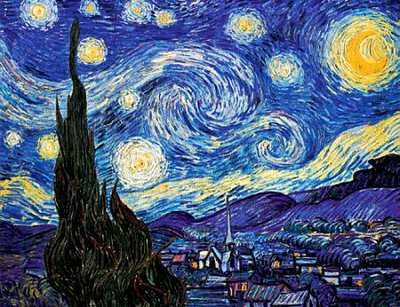
Van Gogh's Starry Night

In 2004, Kevin Kniffin (a former classmate of mine at Binghamton) and David Sloan Wilson, published an article in the journal Evolution and Human Behavior revealing their results from three different studies on perceptions of beauty. Among their findings was that, for people who knew each other, ratings of physical attractiveness were strongly influenced by the personality traits of those persons who were being rated. In other words, when rating potential mates, ‘inner beauty’ augmented perceptions of external appearance and overall attractiveness. The reason behind this likely has Darwinian roots. According to Wilson:

“The fitness value of potential social partners depends at least as much on non-physical traits — whether they are cooperative, dependable, brave, hardworking, intelligent and so on — as physical factors, such as smooth skin and symmetrical features.”

Continue reading