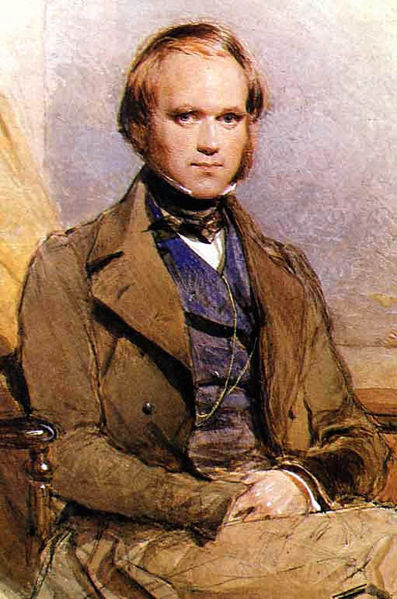
Part 3. Humans are (Blank) -ogamous: More on Promiscuity, & Genetics

This is the third part on the evolution of human mating behavior, comparing evidence for promiscuity and pair-bonding in our species. Please see the introduction here.

____________________________________________________________________

Part 2 pertained to human behaviors that suggested a human propensity for promiscuity (primate sexuality, the excessive sexual capacity of humans, infidelity rates, cultural variation in marriage practices, number of lifetime sex partners, etc.). This post and the next are concerned more with clues from our genes, anatomy, and physiology suggesting promiscuity. I realize these things are not clearly demarcated. My advisor at Binghamton, Mike Little, liked to say that “biology is behavior, and behavior is biology.” But I think in general most people would agree that while behavior has a genetic component, it is more plastic than are anatomical structures.

We left off with a list of six traits hinting at promiscuity. I don’t want to simply rehash what Ryan and Jethá address, so this post addresses some additional points on genetics before returning to their book in the next submission. Continuing with that list…
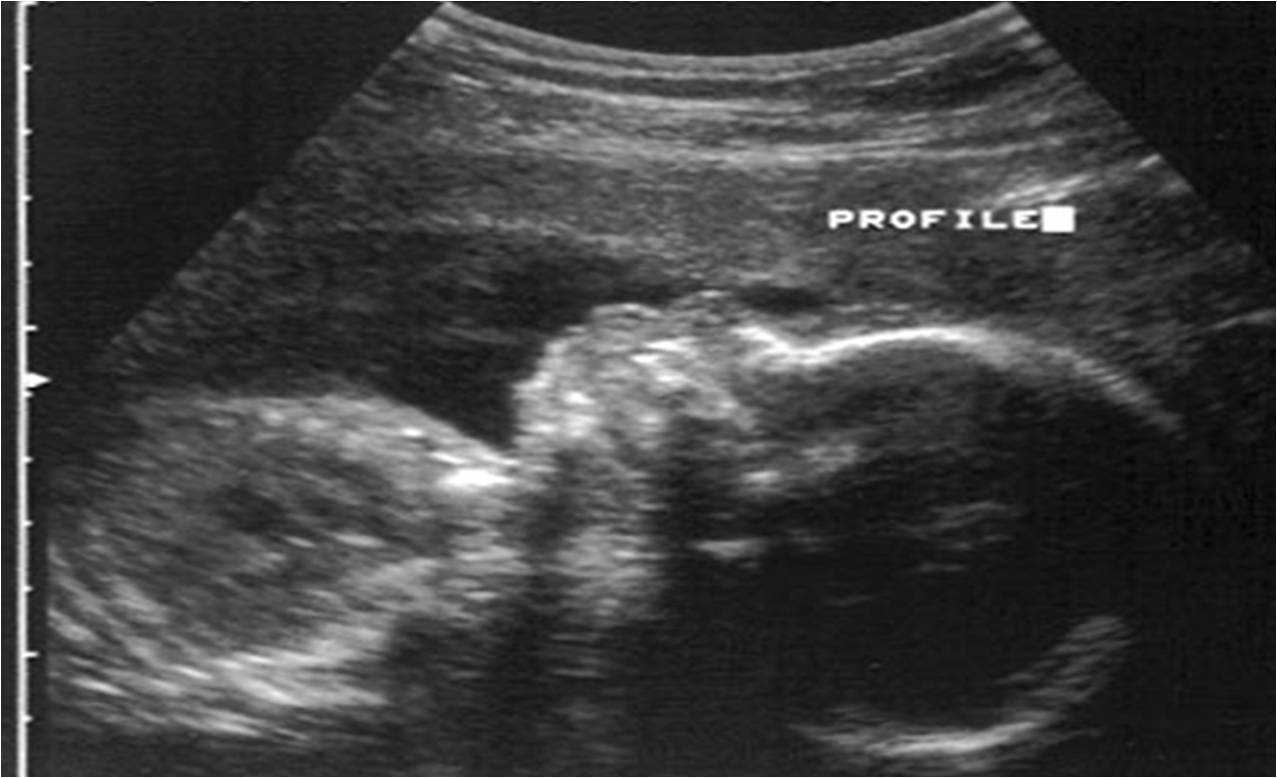
Fetal ultrasound at 4.5 months, profile view

Continue reading

Part 2. Humans are (Blank) -ogamous: Promiscuity

This is the second part on the evolution of human mating behavior, comparing evidence for promiscuity and pair-bonding in our species. Please see the Introduction here.

_______________________________________________________________

I’ll be frank. True monogamy is rare. So rare that it is one of the most deviant behaviors in biology.” (Olivia Judson 2002: 153)

.

In their best-selling book, Sex at Dawn, Chris Ryan and Cacilda Jethá suggest that there is a good amount of direct and circumstantial evidence that extended monogamy does not come easily for humans, and that this derives at least in part from our fairly promiscuous evolutionary history. (To clarify, they use the term ‘promiscuous’ not in a judgmental way, but merely to convey having multiple sex partners). Their main premise is that rigid monogamy became common only after our ancestors made the shift from hunting and gathering to agriculture. With agriculture came an emphasis on fixed settlements, private property that could be inherited, genetic paternity, and female sexual fidelity. They argue that this stands in contrast to our hunting-gathering past, when sexual relationships were more open and not confined to an exclusive pair-bond.

Bonobo sex. From Lola ya Bonobo

Bonobo sex. From Lola ya Bonobo


Continue reading

Part 1. Humans are (Blank) -ogamous

(A)s our forebears adopted life on the dangerous ground, pair-bonding became imperative for females and practical for males. And monogamy – the human habit of forming a pair-bond with one individual at a time – evolved.” (Helen Fisher 2004: 131)

Several types of evidence suggest our pre-agricultural (prehistoric) ancestors lived in groups where most mature individuals would have had several ongoing sexual relationships at any given time. Though often casual, these relationships were not random or meaningless. Quite the opposite: they reinforced crucial social ties holding these highly interdependent communities together.” (Chris Ryan & Cacilda Jethá 2010: 9-10)

 “We are not a classic pair-bonded species. We are not a polygamous, tournament species either…. What we are, officially, … is a tragically confused species.” (Robert Sapolsky)

….

.

The above three quotations were selected to illustrate the range of views that exist on the evolution of human sexual and mating behavior. This is not a trivial matter. To primatologist Bernard Chapais: “The central puzzle of human social evolution… is to explain how promiscuity was replaced by the pair bond” (that is, assuming the pair-bond has gained complete ascendancy). But it’s about more than our ancestors’ mating behaviors. Lurking in the background is the notion that our ancestral behavioral patterns impact current ones, via phylogenetic inertia. Additionally, how we view the past is important because, rightly or wrongly, we have a tendency to associate what is natural with what is good (but note well the naturalistic fallacy). For both of these reasons, the past matters.

Continue reading

On Fatherhood: Proud Primate Papas

For Father’s Day, Scientific American compiled a series on the biology of fatherhood, including a list of 8 species where males are integral in raising offspring. Included were birds (rheas, emperor penguins), mammals (marmosets, red foxes, wolverines), fish (catfish, sea horses), and even insects (giant water bugs). For some of these species, male parental investment extends to carrying fertilized eggs until they hatch. In others, it entails postnatal protection and/or procurement of food for young offspring.

Two things stand out. First, although the list didn’t claim to be comprehensive, at just 8 examples, it seemed quite short (they couldn’t make it to ten?). In addition, there’s just something peculiar about highlighting species that exhibit good fathering skills to begin with. Consider how odd it would be to encounter a list of species where mothers care for offspring. In mammals, it seems almost tautological that parenting is associated with motherhood since they alone can gestate and lactate. However, there may be rare exceptions to this, such as lactation in male fruit bats (Kunz and Hosken, 2009), and possibly in Robert De Niro, though this issue remains unresolved. Are species with active fathers the exception to the rule? What good are males, then?

Continue reading

Student Research on War, Health, and Biology

With grades submitted earlier this week, the Spring 2011 semester is officially in the books. In my ANTH 324 class, “A Biocultural Approach to War,” students were required to write a literature review paper on the ways that war impacts human biology and health.

In my opinion, research papers are valuable in upper level undergraduate classes because they give students the freedom to pick a topic of their choice, within the boundaries of class goals. While it seems self-evident that war’s effects on biology are negative, this relationship is not always straightforward for every possible outcome variable. Thus, it is necessary to explore the evidence thoroughly.   

Continue reading

Public Outreach 2: KIPP Lynn

With classes and exams completed at UMass Boston, I finally feel like I have a little bit of breathing room.

..

Today, I visited KIPP Lynn for the second time, giving a presentation on evolution and cooperation for three 8th grade classes. It was necessarily condensed talk, but the students in all three classes were really engaged with terrific comments and questions. It’s been a while since I was in the 8th grade, and it’s hard to remember what that age was like, intellectually. Nonetheless, I thought they were really impressive kids, with bright futures ahead of them. 

..

Now to finish up some grading…

..

Related post: Public Outreach: Sharing Anthropology Outside the University (Apr 17, 2011) 

Conduct Your Triumph as a Funeral

With the news of Osama bin Laden fresh, I’m reminded of a passage (#31) from the Tao Te Ching on humility and military victory:

Continue reading

Public Outreach: Sharing Anthropology Outside the University

Work Hard. Be Nice.” – motto at the KIPP school in Lynn, Massachusetts

Over the past few months, I’ve done more voluntary outreach teaching than at any point in my past. In sum, I’ve spoken to four separate 4th grade classes in Cranston Rhode Island, three separate 8th grade classes at KIPP Lynn, and given five lectures to 50 year-old+ adults at the Osher Lifelong Learning Institute in Boston. All of these presentations/ discussions were 40 to 90 minutes each, and pertained to primate biology/behavior, human biological variation, or the human fossil record. Why now?

Continue reading

On Optimism and ‘Human Nature’

In the last few days, I came across a couple of unrelated quotations on human nature and our internal tug-of-war between cooperation and conflict.

A 20 year-old Charles Darwin in an 1830 letter to his cousin, W.D. Fox:

It is quite curious, when thrown into contact with any set of men, how much they continue improving in ones good opinion, as one gets ackquainted (sic) with them. This was an argument used, in a religious point of view, by a very clever Clergyman in Shrews. to encourage sociability (he himself being very fond of society), for he said that the good always preponderates over the bad in every persons character, & he thought, the most social men were generally the most benevolent, & had the best opinion of human nature. I have heard my father mention this as a remarkably good observation, & I quite agree with him.

In “East of Eden,” John Steinbeck wrote:

Continue reading

Teaching Human Evolution at a Public University in Boston

“Evolutionary theory should be taught in public schools because it is one of the most important scientific theories ever generated, and because it is the accepted scientific explanation for the diversity of life.”

…………………………………-Statement from The Society for the Study of Evolution

The Naked Ape (the one on the right)

An article published this week in Science revealed the results of a survey of 926 U.S. high school biology teachers. The authors, Michael Berkman and Eric Plutzer of Penn State, found that only 28% of teachers “unabashedly introduce evidence that evolution has occurred and craft(ed) lesson plans… that evolution is a theme that unifies disparate topics in biology” (Berkman and Plutzer, 2011).

Shockingly, 13% of teachers advocated creationism or intelligent design in the classroom, but most (who the authors termed “the cautious 60%”) were “neither strong advocates for evolutionary biology nor explicit endorsers of nonscientific alternatives.” The authors suggested that the ambivalence of some biology teachers could be due to a lack of confidence in their knowledge of evolution, a desire to shy away from controversy, or a conviction that students should be exposed to various ideas and then allowed to make up their own minds. These numbers should make biology teachers pause and reflect on where we are as educators, 150+ years after Darwin’s publication of On the Origin of Species.

Continue reading