Peace with the Past: The Arrest of Mladic

Thursday’s arrest of Ratko Mladic, who had avoided capture for 15 years, acts as a reminder that the need for justice has a long reach. The Serbian General is believed to be responsible for being the architect of, among other things, the siege of Sarajevo and the massacre at Srebrenica. Tellingly, Mladic will be handed over for trial for war crimes to The Hague by the Serbian government, a sign that times can change and that nationalism does not always precede doing the right thing. President Boris Tadic stated: “I think today we finished a difficult period in our recent history.” 

A woman visits the grave of her son, killed in Srebrenica (NY Times)

Continue reading

Public Outreach 2: KIPP Lynn

With classes and exams completed at UMass Boston, I finally feel like I have a little bit of breathing room.

..

Today, I visited KIPP Lynn for the second time, giving a presentation on evolution and cooperation for three 8th grade classes. It was necessarily condensed talk, but the students in all three classes were really engaged with terrific comments and questions. It’s been a while since I was in the 8th grade, and it’s hard to remember what that age was like, intellectually. Nonetheless, I thought they were really impressive kids, with bright futures ahead of them. 

..

Now to finish up some grading…

..

Related post: Public Outreach: Sharing Anthropology Outside the University (Apr 17, 2011) 

Life is Still Beautiful

I wrote this last year, as a memorial to my brother Kevin. It means as much to me today as when I first wrote it.

https://kevishere.wordpress.com/2010/05/15/life-is-beautiful/

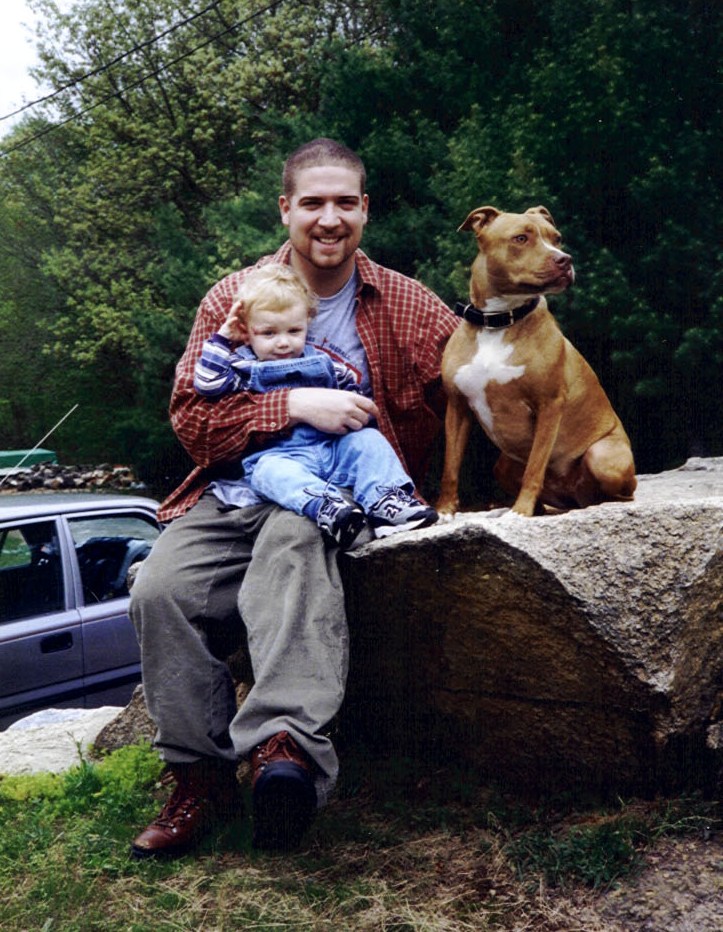
Kevin (Feb 26, 1977- May 14, 2000) with his son, Daniel

xxx

A Reverence for Life

In re-reading a few books on evolution, it occurred to me that there is a common thread running through many of them, which is the reverence that the authors hold for life itself. Unfortunately, there exists an idea out there that to explain something in nature is equivalent to “explaining it away.” The fear is that this may deflate a person’s sense of wonder. But this is far from the truth. For example, the biological anthropologist Helen Fisher commented that her career studying the biology of love (by definition, one of the most romanticized topics possible) has done nothing to diminish her appreciation of it. The same applies for those who study other aspects of science, including evolution.

Eugenie Scott, Director of the National Center for Science Education, has written that for many laypeople the notion that evolution is an unguided, mechanistic process implies that “life has no meaning.” However, contrast that view with how many scientists write about nature. The sense of awe and reverence that they exude is palpable.

Continue reading

Conduct Your Triumph as a Funeral

With the news of Osama bin Laden fresh, I’m reminded of a passage (#31) from the Tao Te Ching on humility and military victory:

Continue reading

Public Outreach: Sharing Anthropology Outside the University

Work Hard. Be Nice.” – motto at the KIPP school in Lynn, Massachusetts

Over the past few months, I’ve done more voluntary outreach teaching than at any point in my past. In sum, I’ve spoken to four separate 4th grade classes in Cranston Rhode Island, three separate 8th grade classes at KIPP Lynn, and given five lectures to 50 year-old+ adults at the Osher Lifelong Learning Institute in Boston. All of these presentations/ discussions were 40 to 90 minutes each, and pertained to primate biology/behavior, human biological variation, or the human fossil record. Why now?

Continue reading

Demography and the Possible

Living in New England, we have older cemeteries than most other areas of the country (though Eastern hemisphere readers might scoff at what Americans consider ‘old’). I frequently walk with my sons and nephew through a cemetery near my home, as it is a tranquil place away from traffic, where we can go through the woods and throw rocks in the pond. We do this so often that the headstones sometimes become little more than a forgotten backdrop.

However, I do make an effort to remind myself that these headstones are markers of actual human lives. One recently caught my attention, the story of Henry and Susan Battey. I have no knowledge who these individuals were what they looked like, where they lived — other than their names, vital statistics, and the names of their children. It is their children on the backside of the headstone that struck me. The Batteys had three children, losing all of them as infants. That occurs to me as nature (or poverty, or whatever the cause) at its most cruel and indifferent.

Continue reading

On Optimism and ‘Human Nature’

In the last few days, I came across a couple of unrelated quotations on human nature and our internal tug-of-war between cooperation and conflict.

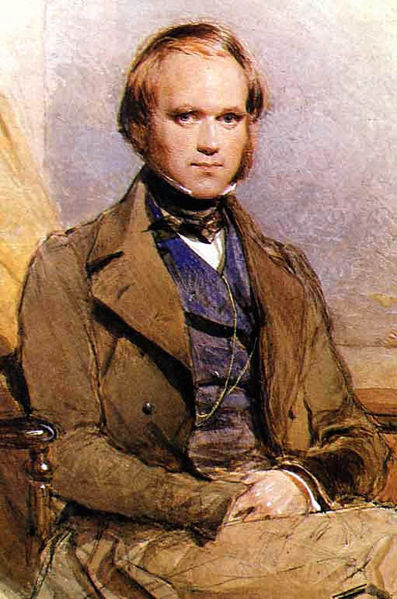
A 20 year-old Charles Darwin in an 1830 letter to his cousin, W.D. Fox:

It is quite curious, when thrown into contact with any set of men, how much they continue improving in ones good opinion, as one gets ackquainted (sic) with them. This was an argument used, in a religious point of view, by a very clever Clergyman in Shrews. to encourage sociability (he himself being very fond of society), for he said that the good always preponderates over the bad in every persons character, & he thought, the most social men were generally the most benevolent, & had the best opinion of human nature. I have heard my father mention this as a remarkably good observation, & I quite agree with him.

In “East of Eden,” John Steinbeck wrote:

Continue reading

Reconciliation, Biology, and the Second Indochina War

Of all the things I’ve written on this site, this remains one of the most meaningful to me. (May 29, 2017)

The weak can never forgive. Forgiveness is the attribute of the strong.” …………………………………………………………………………– Mohandas K. Gandhi

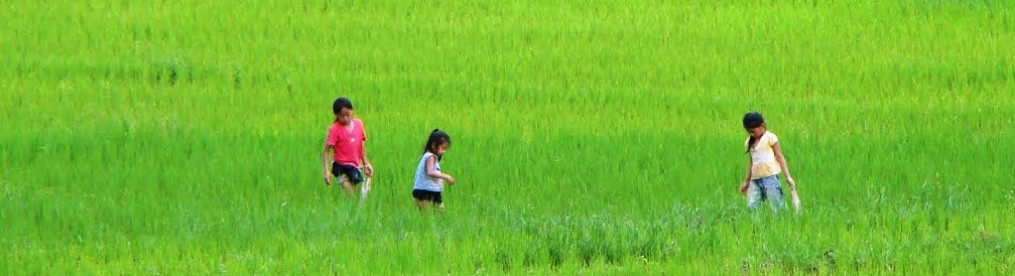
On my desk sits a spoon I bought in a restaurant in northern Laos. It’s lightweight, bigger than a tablespoon, and full of tiny dents that some unknown metalsmith hammered into it. The owner was bemused that in addition to the bowl of pho noodle soup, I also wanted to buy one of her utensils. But I had my reasons.

Earlier on my trip, my guide1 informed me that people in the town of Phonsavanh half-jokingly called these ‘B-52 spoons,’ as they were made of metal recovered from bombs dropped decades ago by U.S. planes during  ‘the Secret War. To me, the spoon was more than a quirky souvenir. Instead, it represented an attempt by Laotians to take the physical remnants of a tragic period in history and forge them into something more positive, in effect turning swords into plowshares (or bombs into spoons). Continue reading

Teaching Human Evolution at a Public University in Boston

“Evolutionary theory should be taught in public schools because it is one of the most important scientific theories ever generated, and because it is the accepted scientific explanation for the diversity of life.”

…………………………………-Statement from The Society for the Study of Evolution

The Naked Ape (the one on the right)

An article published this week in Science revealed the results of a survey of 926 U.S. high school biology teachers. The authors, Michael Berkman and Eric Plutzer of Penn State, found that only 28% of teachers “unabashedly introduce evidence that evolution has occurred and craft(ed) lesson plans… that evolution is a theme that unifies disparate topics in biology” (Berkman and Plutzer, 2011).

Shockingly, 13% of teachers advocated creationism or intelligent design in the classroom, but most (who the authors termed “the cautious 60%”) were “neither strong advocates for evolutionary biology nor explicit endorsers of nonscientific alternatives.” The authors suggested that the ambivalence of some biology teachers could be due to a lack of confidence in their knowledge of evolution, a desire to shy away from controversy, or a conviction that students should be exposed to various ideas and then allowed to make up their own minds. These numbers should make biology teachers pause and reflect on where we are as educators, 150+ years after Darwin’s publication of On the Origin of Species.

Continue reading