
Some choices or moments have disproportionate effects on our lives. We tend to return to something like baseline, eventually, but those effects reverberate. Some people advise living in the present, putting the past behind us. I choose to remember.
Author: Patrick Clarkin
New Publication on the Effects of the Vietnam War
Delaney Glass, a graduate student in biological anthropology at the University of Washington, kindly invited me to be part of a project on the effects of the Vietnam War (or Second Indochina War or the American war, depending on your perspective) on the health of older Vietnamese adults. The article is now in press in the Journal of Psychosomatic Research and titled: “Weathering within war: Somatic health complaints among Vietnamese older adults exposed to bombing and violence as adolescents in the American war.”
There’s a lot in here, but to me the main takeaway is that proximity to intense US bombing in adolescence, particularly early adolescence, was associated with health complaints decades later in older Vietnamese adults. I think it speaks to the long reach of war, and it adds to what we know about the many ways war can become embodied, lasting for a very long time in the health of survivors. It also provides another example of how the Second Indochina War disrupted health, as was the case in Laos and Cambodia.
The Next Holodomor
“They suffer because they have lost all hope. They walk like the blind, and they fall wherever death strikes them. No one pays attention to the corpses lying on the streets. People either step over or sidestep them and keep on walking. From time to time they are collected and buried in common pits. Seventy and more people are buried together.”
-Ukrainian woman, describing the Holodomor in 1933 (source)
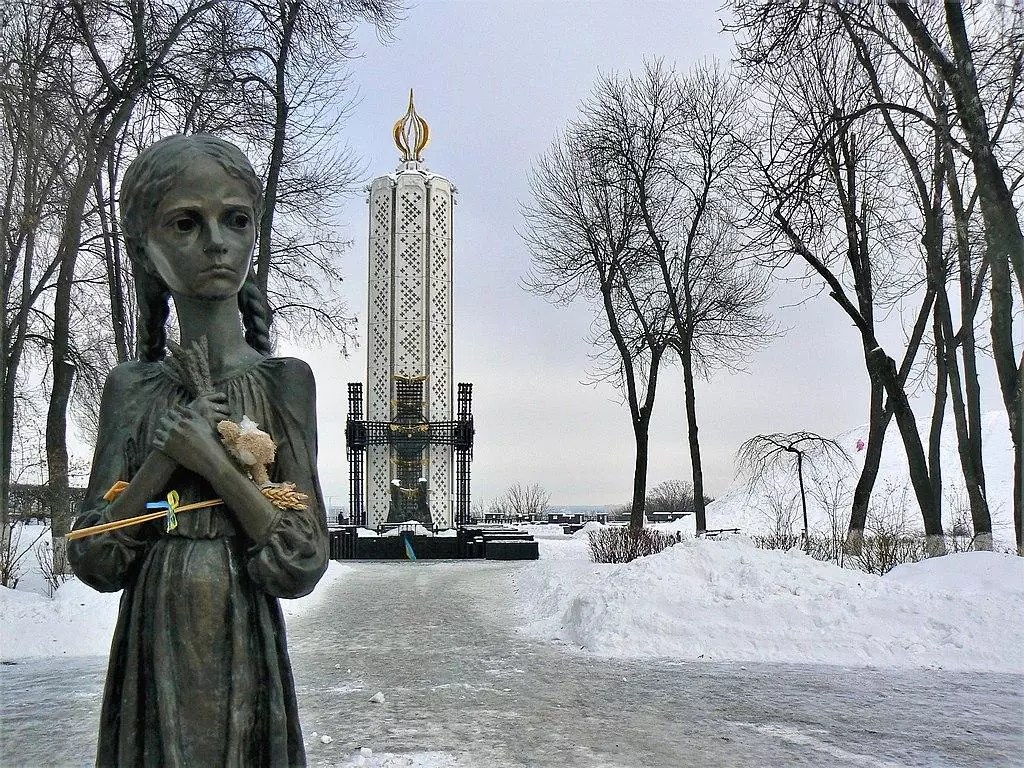
In 2008, the European Parliament formally recognized that the 1932-33 famine in Ukraine was “artificial,” and “an appalling crime against the Ukrainian people, and against humanity.” While the real number will never be known, estimates are that between 3.5 to 7 million Ukrainians died from starvation during this period, known as “the Holodomor” (“death inflicted by starvation”).
The famine resulted from a combination of factors, among these being the Soviet policy of collective farming imposed on the population. Resistance to collectivization was brutally repressed, quotas of grain and other foods demanded from farms were increased and ultimately exported, Ukrainians were prohibited from leaving the republic in search of food or even to travel from the countryside to cities in Ukraine, and police were tasked with confiscating hidden food from homes. Altogether, these decisions to weaponize food led to massive amounts of human suffering and death, the echoes of which reverberate to today.
In 2015, Columbia epidemiologist L.H. Lumey and colleagues tested whether there was a correlation between prenatal exposure to the Holdomor and subsequent development of type 2 diabetes in adulthood (Lumey et al. 2015). Per a robust body of research known as the DOHaD hypothesis (developmental origins of health and disease), various stressors early in life can increase the risk for a compromised physiology, predisposing people to an array of health conditions. Perhaps the best-known example of this is the Dutch “Hunger winter” during the Second World War. Adults who were exposed prenatally to a Nazi-imposed famine in the Netherlands consistently show elevated risk for diabetes and schizophrenia, as well as other conditions and effects on body size. To be clear, the extreme levels of hunger during famine are not required to see the effects of prenatal deprivation on later health. Rather, such a relationship appears to exist along a continuum in a “dose response” fashion. Yet the pattern becomes more predictable at the extreme end, such as during wars and famine.
To determine whether a similar pattern existed in Ukraine, Lumey et al. obtained government data from nine oblasts (regions), with a sample of 1.4 million adults born between 1930-38, including 43,150 cases of diabetes diagnosed after age 40 years. The study design allowed the researchers to look at temporal and geographic effects, as these birth cohorts straddled the famine years, and were exposed to extreme famine (Luhansk, Kharkiv, Cerkasy, and Kherson oblasts), severe famine (Chernihiv, Khmelnytskyi, and Vinnytsia oblasts), or no famine at all (Volyn and Rivne oblasts, which were under Polish control at the time).

After adjusting for confounding variables including seasonality, the researchers found that people born in early 1934 in oblasts with extreme famine had a 1.5 times increase in the odds of having type 2 diabetes, while those born in severe famine areas had a 1.3 times increase. People born in non-famine oblasts showed no increase. Lumey et al. added that the study suggested that early gestation was “a critical timing window for determining risk of type 2 diabetes.”
The Holodomor and the Dutch famine are far from isolated cases. Though there are methodological differences and some inconsistencies in results, for the most part prenatal exposure to conflict and famine has been linked with compromised adult health throughout the world. Examples include the siege of Leningrad, the Spanish Civil War, the Biafran famine in its war for independence, France during WW2, the European Holocaust, the wars in the DRC, the Korean War, and the civil wars in Laos (for a review, see Clarkin 2019).
Could History Repeat Itself?
Could something similar happen today? Russia’s current invasion of Ukraine has been widely condemned as an unprovoked “act of aggression and human rights catastrophe” (Amnesty International) and “a clear violation of international law” and “a violation of the United Nations Charter” (UN Secretary-General António Guterres). It is telling that the oblasts exposed to extreme famine in the early 1930s are some of the same places in the news today, with massive destruction, forcibly displaced civilians, and/or likely war crimes committed by Russian troops in Luhansk, Kharkiv, Cerkasy, and Kherson oblasts. To a certain degree, history may be repeating itself.
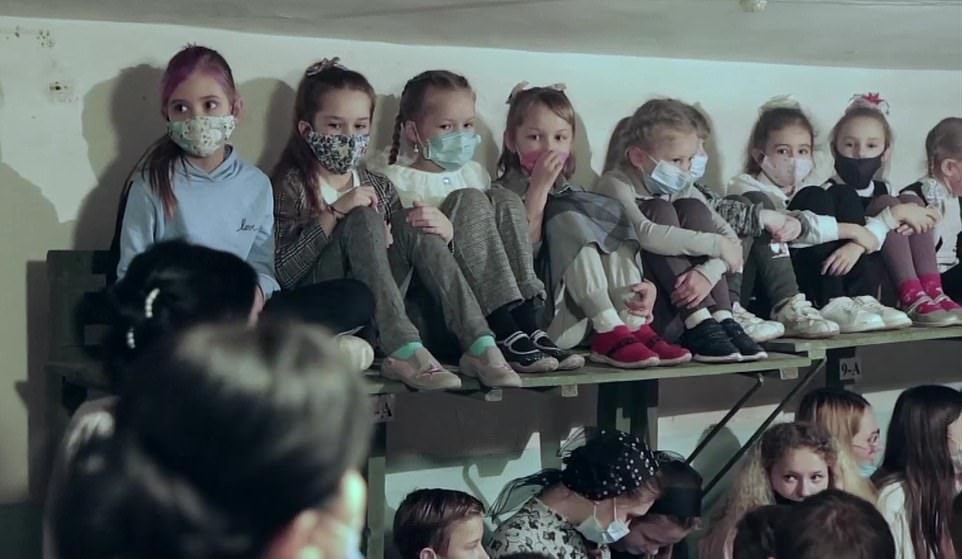
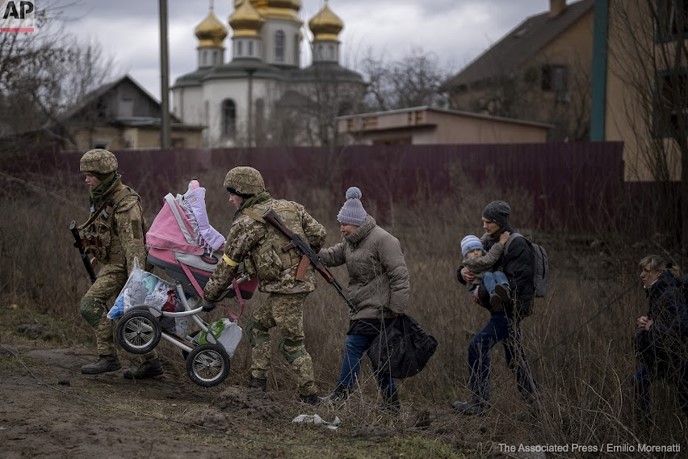


At present, there are no reports of widespread famine within Ukraine. Most of the concern about the effects of Russia’s invasion on food has focused on the regional or global supply, as the conflict exacerbates fuel prices and hinders Ukraine’s ability to export agricultural products such as wheat, corn, and sunflower oil.
However, it is exceedingly obvious that it is Ukrainians themselves who bear the brunt of the war, with 7.1 million people displaced, millions forcibly deported to Russia, at least thousands killed, with those who remained behind facing food insecurity. A May 2022 survey of 4,700 Ukrainians conducted by the World Food Programme found that one-third of households were food insecure and had to forgo meals, decrease portion sizes, and eat lesser quality foods. In the highly affected eastern and southern oblasts, with about half of households being food insecure (see map below). Worst of all were internally displaced people in the east, with a rate of 62% (including 14% being severely insecure).

The food situation has likely deteriorated since then. There are signs that Russia has deliberately targeted the food and water supply in Ukraine, blockading ports, burning wheat fields, exporting grain from occupied Kherson’s farms to Russia, bombing fields outside of Sloviansk, stealing farming equipment, shutting off water in Mariupol, destroying hundreds of small farms and slaughtering livestock, targeting food storage sites (including grain silos, railways, and warehouses), even killing the grain tycoon Oleksiy Vadaturskyi and his wife Raisa in their home in Mykolaiv. Much like the original Holodomor, the current food shortage is an “artificial” one and an appalling crime against humanity.

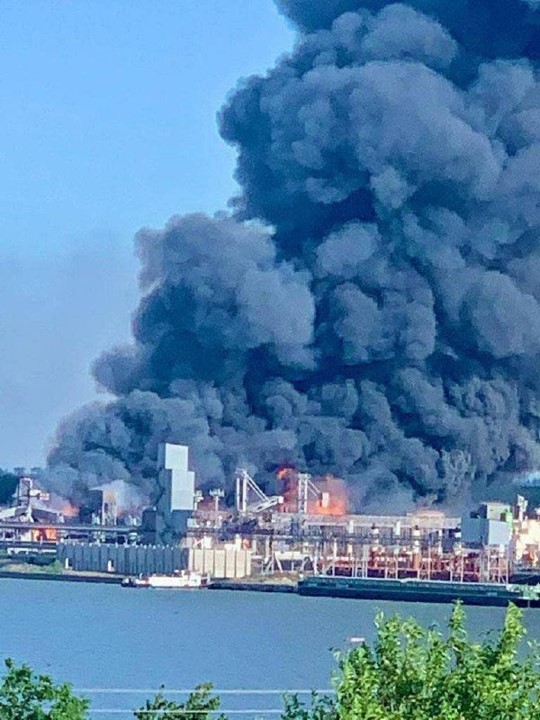

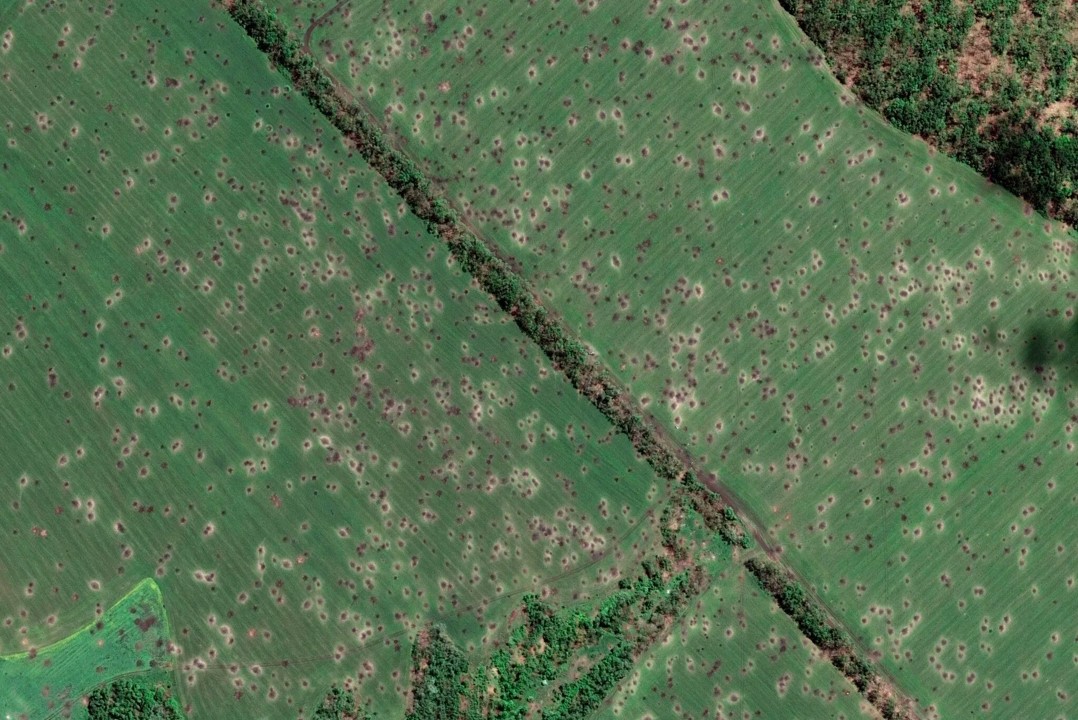
Yale historian Timothy Snyder has written that such actions indicate that Russian troops are implementing a “hunger plan” concocted by Putin. According to Snyder, such a plan has three main objectives: cutting off Ukraine’s exports in an attempt to destroy its statehood, creating instability in Europe by producing refugees from areas that rely on Ukraine’s food exports sch as North Africa and the Middle East, and to be able to blame Ukraine in a propaganda war should starvation spread abroad and food riots begin.
Accusations of alleged Russian war crimes in Ukraine are extensive and heinous. The weaponization of starvation should not be overlooked among these. Article 54(1) of the Geneva Conventions succinctly states that “Starvation of civilians as a method of warfare is prohibited.” Likewise, Article 8(2)(b)(xxv) of the 1998 ICC Statute notes that “intentionally using starvation of civilians as a method of warfare by depriving them of objects indispensable to their survival, including willfully impeding relief supplies as provided for under the Geneva Conventions” constitutes a war crime in international armed conflicts.
Throughout history, war and hunger have been paired together with regularity and Ukraine is no exception. Yet it seems apparent that there is a deliberate strategy on the part of Russian leadership to exacerbate the situation and punish civilians within and outside of Ukraine by targeting the food supply. As mentioned above, there are multiple examples of such war-related food shortages having costs to health not only in the immediate term, but reverberating decades later. When tallying up all of the costs of the war in Ukraine, the main focus should be on the loss of life, the physical and mental scars, the broken relationships and families, the damaged homes and property. Yet it shouldn’t be forgotten that there will likely be other costs, including to a generation of Ukrainians who have yet to be born.
References
Clarkin PF. 2019. The embodiment of war: growth, development, and armed conflict. Annual Review of Anthropology 48(1): 423-442. Link
Lumey LH, Khalangot MD, Vaiserman AM. 2015. Association between type 2 diabetes and prenatal exposure to the Ukraine famine of 1932–33: a retrospective cohort study. Lancet Diabetes Endocrinol. 3(10):787–94 Link
The Most Disgusting Thing That You Could Ever Think Of
“I know what I’m talking about when I talk about war, and it’s the most disgusting thing that you could ever think of. And I’ve also noticed with every single war, it’s been declared by men who were too old to go, and it’s made me suspicious.”
-Michael Caine
Sunisa Lee, the Hmong, & the Dignity of Refugees

After Sunisa Lee won the Olympic gold medal in gymnastics, a reporter (Perry Russom) from NBC10 in Boston found me online and emailed to ask if I would give a little background about Hmong people, given her importance to Hmong-Americans in Massachusetts and around the country. It was a pleasant conversation and he asked good questions about Hmong history. We spoke for maybe 15 minutes. The video below was the result [update Aug 1 2024: unfortunately, the video has been taken down].
The clip is fine. Obviously, not everything we talked about would make it into the final edited version. That’s not how television works. And the focus was where it should be — on Suni Lee’s remarkable achievement and what she means to Hmong people, who have long been overlooked in this country.
Continue readingWhy I Keep Thinking about a 2nd Civil War
“There never was a good war or a bad peace.” – Ben Franklin
It is a blessing and a curse of being a social animal that we are often aware of what the other social animals around us are thinking. If online activity is any indication of what people are thinking, then things are not great. Every day for the past year, I have found that the most viewed essay on this site, by far, has been something I wrote in 2019 about who would win a second civil war in the United States.
Perhaps I am giving this too much attention. But maybe not. A significant percentage of Americans have been deeply worried and/or angry for a while. In an October 2020 poll, 61% of people agreed with the statement: “I’m concerned that the U.S. could be on the verge of another Civil War.” Another Yougov poll from the same time found that 56% felt that the country would see “an increase in violence as a result of the election.” A smaller poll from December reported that 71% of Trump voters and 40% of Biden voters believed “we are headed into a civil war or significant upheaval.” (Upheaval and civil war were not defined, however).
When I play the scenario out in my head, I think the possibility of another civil war is remote, at least not in the sense of replicating the original one. Although there has been chatter about secession in a few states (Texas, Wyoming), this has little momentum. And while there are certainly regional political differences, they do not fall along neat boundaries akin to northern and southern states. There is no Mason-Dixon line. Rather, the main divide seems to be urban-rural, within states rather than between them.
Yet even within states and within counties, there is plenty of political variation. While many counties voted overwhelmingly for either Biden or Trump in 2020, most were not very lopsided. According to one analysis, fewer than 600 out of roughly 3,000 counties (excluding Alaska, for some reason) voted over 80% for either candidate.

Alternative ways of looking at the 2020 political divide in the US. On the left, the percentage of the vote for Biden and Trump by county. On the right, results by population size. While there are regional differences, they do not break down into simple “red and blue” states. Source.
The Children of This Earth
And still they teach you in your school
About those glorious days of rule
And how it’s your destiny to be
Superior to me
But if you’ve any kind of mind
You’ll see that all human kind
Are the children of this earth
And your hate for them will chew you up and spit you out
-Damien Dempsey, “Colony”
The Year in Review: A Window into Darkness
“You plant a demon seed. You raise a flower of fire.” – Paul Hewson
The number of views on my site have dropped off noticeably in the final three weeks of 2020, and I am relieved. Perhaps that doesn’t make much sense at first. Who doesn’t want people to read their stuff? Let me explain.
This year was not a good one – the pandemic raged across the world, and divisions in the U.S. were tense and palpable. I saw this indirectly on this blog. In 2020, the most read essays on this site, by far, pertained to the topic of another civil war in the U.S. These were the five most read posts in 2020, along with the year I wrote them, and the number of views:
Red States versus Blue States: Who Would Win a Civil War in the U.S? (2019) 9,340 views
16 Reasons We Should Have Another Civil War in the U.S. (2020) 1,394 views
Humans are (Blank) –ogamous (2011) 731 views
Dangerous Speech & a 2nd U.S. Civil War (2020) 684 views
“To Tame the Savageness of Man” (2015) 648 views
So, that’s three posts related to civil war, one about keeping our baser impulses in check, and one about sex and love. Go figure. Two were older essays, and the other three were written in the last two years. And, unlike previous years when some of my essays were shared on social media, this year the vast majority of my visitors arrived on their own via Internet search engines.
This is a small blog with a funny name, and it doesn’t get much traffic. To see a post that I wrote last year skyrocket above the others, it made me notice. In fact, the “Red States versus Blue States” post is already the fifth most read essay on this site, even though it is just a year old and I started this blog in 2010. The graph below shows how it compared in terms of views with other popular posts in their first two years. As you can see, most started with a little flurry of activity, and then trail off. “Red States vs. Blue States” did something different. Few people read it in 2019, and then it took off a year later, mid-2020.

I noticed that the spike in views were tightly linked with current events. From the George Floyd protests in the summer, the North Carolina police officer caught on tape saying that he could not wait for another civil war and a chance to kill Black people, the killings of Aaron Danielson and Michael Reinoehl in late August, the people shot and killed by Kyle Rittenhouse, Trump’s refusal to commit to a peaceful transfer of power in September, Trump telling militia groups to “stand back and stand by,” the plot to kidnap Michigan governor Gretchen Whitmer, the actual election itself, the pushing of the false narrative that the election was stolen. The site views ebbed and flowed, almost perfectly along with the national news. Continue reading
Revisiting the Hmong of French Guiana
I recently saw this France 24 video on the Hmong of French Guiana. I haven’t written about this much here on this blog, but I actually did some of my Ph.D. research with the Hmong in French Guiana years ago (here’s an article I published in the Hmong Studies Journal). It made me nostalgic to see the village again, as well as some familiar faces. My research assistant, KaLy Yang, and I were treated very well by the people in the two main Hmong villages (Cacao and Javouhey), and I think of the people there often.
French Guiana (or Guyane) is certainly one of the more unusual endpoints for the Hmong diaspora. As refugees from Laos, many Hmong resettled in the U.S., Australia, and France, after the Vietnam War, with lesser numbers in Canada, Germany, and Argentina (in fact, I met one Hmong man who originally resettled in Argentina before moving on to Javouhey). When people first learn there are refugees from Southeast Asia in the Amazon rainforest, it usually elicits a powerful reaction, either confusion or amazement. But then you learn the history, and it makes as much sense as any diasporic endpoint in a small, interconnected world where migration (voluntary or not) is common.
Continue readingA Poem on Refugees & Forced Displacement
“Home,” by Warsan Shire.
you have to understand,
that no one puts their children in a boat
unless the water is safer than the land
You can find more information on Warsan Shire, as well as the full text of her poem, here.
 Patrick F. Clarkin, Ph.D.