
In graduate school, my advisor Mike Little recommended I take a class outside of the Anthropology Department, since our class offerings were slim that semester. He suggested I go over to Biology and sign up for David Murrish’s class “The Biology of Extreme Environments,” which explored how different species adapted to their worlds. Dr. Murrish kindly accepted me. On the first day of class, before getting into any subject matter, he asked the students for examples of extreme environments.
People suggested some of the ones you’re probably thinking of—deserts because of their heat, polar regions, the deep oceans, etc. I recall one student suggested outer space. I raised my hand and asked, “What about war?” Dr. Murrish smiled and said with a chuckle, “You anthropologists… always looking at the social side of things!”
Of course, biological anthropologists recognize that there is a natural world to which species adapt, which existed long before humans ever evolved roughly 300,000 years ago (Hublin et al 2017). Not everything about human biology can be attributed solely to “the social side of things.” In Mike Little’s classes we learned about his research with Quechua people in highland Peru and Turkana pastoralists in northwestern Kenya, and they how they adapted biologically to stressors in their respective environments: hypoxia, cold, aridity, seasonal rainfall (Leslie and Little, 1999; Little et al., 2013). But Dr. Murrish’s question that day made me think about other types of extreme environments that we create for ourselves, and war certainly applies.
I didn’t get to explore war much further that semester, but the idea percolated. A couple of years later for my dissertation, I eventually explored how the Second Indochina War impacted the growth and body composition of Hmong refugees living in the US and French Guiana (Clarkin 2008). From there I thought about war as an environment in a general sense, including the various stressors they can create and the ways these things leave a mark on human biology and get “under the skin,” particularly among the very young who are still growing.

.
In one article in the Annual Reivew of Anthropology, I tried to summarize things in a single graphic, shown above (Clarkin 2019). I emphasized that all conflicts are unique, and some may feature certain stressors more than others. In specific conflicts, some of these stressors may not apply at all. However, regardless of the motives, ideology, and causes of those who are fighting, civilians suffer during armed conflict, often severely. Whether the parties involved are monarchists, anarchists, communists, religious, ethnonationalists, capitalists, fascists, or nihilists, the effects of war become embodied in ordinary people, often lasting for the rest of their lives and even beyond, via intergenerational trauma.
Looking at Gaza from afar, however, it is rather stunning that all the variables in the graphic seem to apply. Given the small size of the territory, the population density, and the relentless intensity of the destruction, perhaps this shouldn’t be surprising. AS UNICEF spokesperson James Elder said: “If we define safety – as international humanitarian law says we must – as freedom from bombardment, as well as access to safe water, sufficient food, shelter and medicine – then there is nowhere safe on the Gaza Strip to go to.“
.
●Physical trauma. Many images and videos of injured, mutilated, and killed people in Gaza are available on social media. To me, the image that comes to mind is an amputated girl —not much older than my daughter— bawling that she just wanted her leg back. Forty-five U.S. physicians who volunteered in Gaza signed a letter that argued injuries were pervasive and in some cases appear to have been deliberately inflicted:
“Children are universally considered innocents in armed conflict. However, every single signatory to this letter treated children in Gaza who suffered violence that must have been deliberately directed at them. Specifically, every one of us on a daily basis treated pre-teen children who were shot in the head and chest.” (emphasis in original).
Deaths and injury through physical trauma (“kinetic” causes) are probably the first and most obvious stressor of war that people think of. However, indirect deaths caused by a breakdown of infrastructure often surpass direct ones. According to one estimate, the number of deaths attributable to the destruction of Gaza could be 186,000, much higher than the commonly cited figures caused by direct physical trauma (Khatib 2024).
.
●Lost resources. The UN estimated that unemployment in Gaza, already high prior to October 7 at 45%, skyrocketed to 79% by Dec 2023. GDP per capita had also contracted significantly by 26% (and 54% since 2007) to $929.
●Broken crop cycles. Reports indicate that agricultural lands in Gaza have been deliberately targeted by the Israeli military to curtail the ability of people to grow food. In June 2024,NGOs such as Save the Children estimated that 96% of people in Gaza faced acute food insecurity.
●Ecological destruction. The UN Environmental Programme said in June that the conflict had created “unprecedented soil, water and air pollution in the region, destroying sanitation systems and leaving tons of debris from explosive devices.”
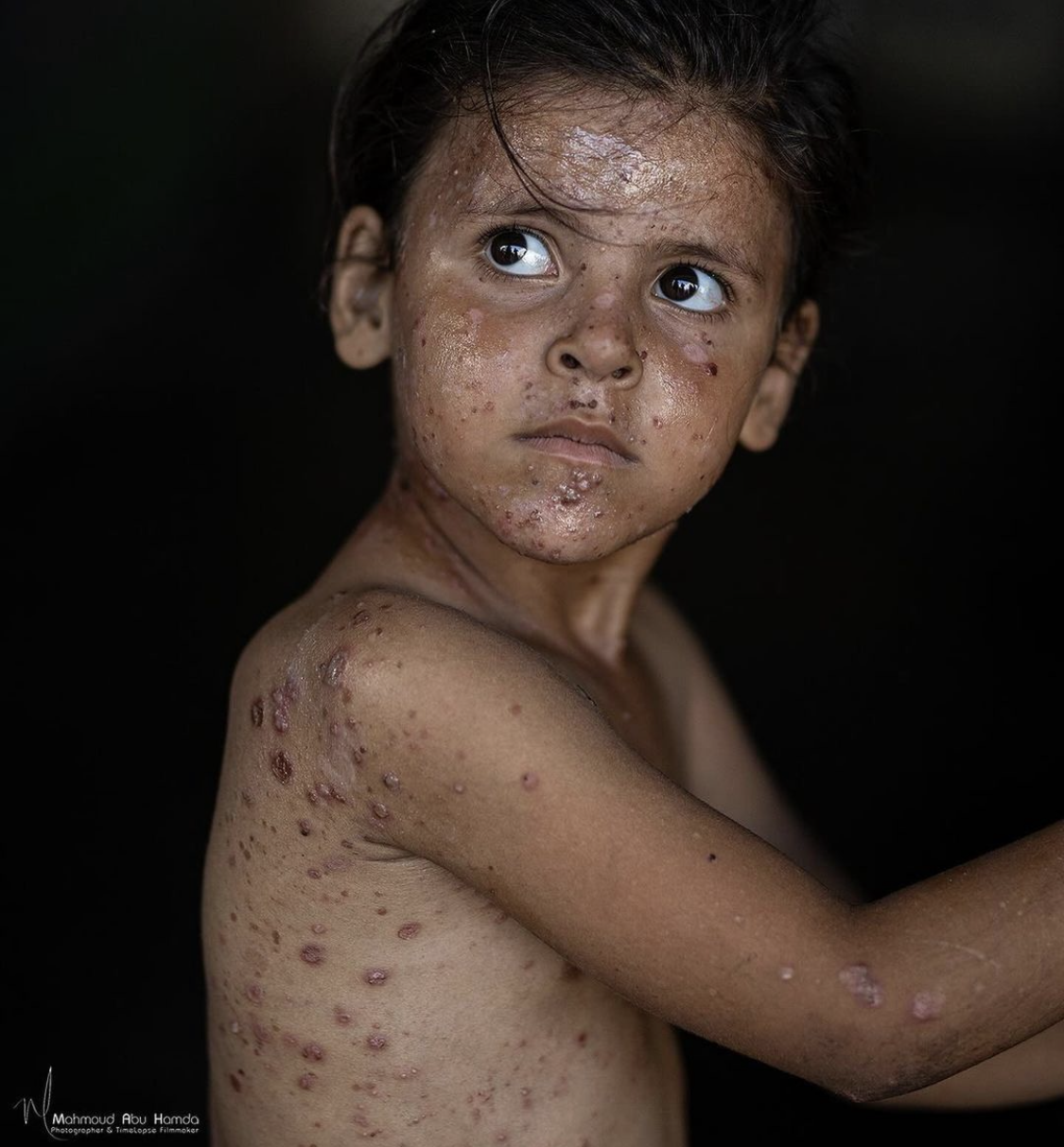
●Infection. There have been reports of multiple infectious disease outbreaks in Gaza since Oct 7. One was a rapid increase in diarrhea with more than 485,000 cases by June, with rates among children being 25 times higher than before the conflict. By late July, there had been 103,000 cases of lice and scabies and 65,000 cases of skin rashes, likely attributable to a lack of soap and clean water, crowded living conditions, and exposure to raw sewage.
.
●Limited humanitarian aid. In late June, UNICEF’s James Elder said that aid was limited, as was the capacity to distribute it, or even the ability to find stable areas for distribution: “it’s not just about getting it in, and there’s far too little coming in. That’s why we have an unprecedented nutrition crisis for the youngest children in Gaza. It’s about a safe place and enabling a way to deliver that aid.”
●Psychological stress and sexual trauma. The International Rescue Committee’s Ulrike Julia Wendt said in July that “There are about 1.2 million children who are in need of mental health and psychosocial support. This basically means nearly all Gaza’s children.”
●Broken social networks. In July, one MSF median team leader, Javid Abdelomoneim, said “the scale of loss is staggering. Almost every family we encounter has lost a parent, a child, a spouse… For nine months, we’ve witnessed near constant death and trauma. No place in Gaza is spared from this bloodshed.”
●Destroyed infrastructure. This video should suffice here.
.
●Malnutrition, destroyed water supply. Satellite images in May revealed that roughly half of water sites in Gaza were damaged or destroyed. The IPC (Integrated Food Security Phase Classification) estimated in late June that 22%, over 495,000 people, faced catastrophic levels of acute food insecurity (IPC Phase 5).
●Forced displacement and long, draining journeys. The UN reported in July that an astonishing 9 out of 10 people in Gaza have been displaced at least once, with some displaced up to ten times. the head of OCHA Andrea De Domenico, said: “People, in the last nine months, have been moved around like ‘pawns in a board game’ – forced from one location to the next, to the next [and] to the next, irrespective of our ability of support[ing] them and irrespective of the availability of services wherever they land.” As an example of how war gets under the skin, I know that for Hmong refugees, the more times someone was displaced by the war in Laos, the shorter they tended to be as adults. This was likely due to the food insecurity and physical exhaustion created by being constantly on the move.
●Refugees seen as threats or burdens. Just a week after Oct 7, several prominent Republicans in the United States said they would reject any Palestinian refugees from Gaza, painting them as threats and/or anti-Semitic. Egypt and Jordan have also pushed back against accepting displaced people in part because of a fear that this could bring more conflict to their doorstep and in part because this would quash Palestinian demands for statehood.
.
Summary
All conflicts yield atrocity and suffering. It is the scale and breadth of suffering among Gaza’s civilian population that has captured the world’s attention. And from prior wars, we know that the impacts of this suffering will echo for decades. Child malnutrition is correlated with increases in illness, mortality, impaired cognitive development, higher health care expenses, and lower adult productivity. Prenatal and infant malnutrition are also associated with elevated risk for chronic metabolic diseases in adulthood. As Alma Igra wrote in June in an essay in the LA Review of Books:
“Hunger, however, which is often a corollary of war, distorts time in ways that make a mockery of dayafterism. Studies of famine teach us that hunger operates on its own timescale, regardless of political or diplomatic units of time. It does not disappear on the day a peace agreement is signed, nor when a siege is lifted. Hunger has a different temporality: it leaves scars on the body, mind, and social fabric of a community that survived starvation.”
The most famous case study involves the survivors of the Dutch “Hunger Winter” of 1944–45, who struggled with various metabolic issues and heart diseases throughout their lives. Their children, born after the war, lived with elevated rates of eating disorders, schizophrenia, and kidney failure.
Perhaps we should stop indulging in easy chitchat about dayafterism as if it will be a new moment in time. There will be no postwar for Gaza. The children of Gaza will forever be marked by the duration of time they spent in “hunger-time,” when their growth was arrested by starvation, their minds marred by trauma. Their lifespans will most likely be foreshortened.”
Hunger is one variable in war that leaps out at us. It is visceral to see lethargic, emaciated children and their parents’ dejected faces. But hunger is not acting alone. Mike Little would remind us that all organisms exist in a matrix of environmental variables, which interact with each other. Children in war face a wide array of stressors, and even one by itself is challenging enough. In the current conflict, the children of Gaza are facing a flood of them simultaneously, by virtue of an extreme environment created by choices that other human beings imposed on them.
.
Citations
Clarkin PF (2008) Adiposity and height of adult Hmong refugees: Relationship with war-related early malnutrition and later migration. American Journal of Human Biology 20(2): 174-84. Link
Clarkin PF (2019) The Embodiment of War: Growth, Development, and Armed Conflict. Annual Review of Anthropology 48(1): 423-442. Link
Hublin JJ, Ben-Ncer A, Bailey SE, Freidline SE, Neubauer S, Skinner MM, Bergmann I, Le Cabec A, Benazzi S, Harvati K, Gunz P. 2017. New fossils from Jebel Irhoud, Morocco and the pan-African origin of Homo sapiens. Nature. 2017 Jun 8;546(7657):289-92. Link
Igra A. 2024. Hunger-Time. Los Angeles Review of Books, June 16. Link
Khatib R, McKee M, Yusuf S. 2024. Counting the dead in Gaza: difficult but essential. The Lancet. Jul 20;404(10449):237-8. Link
Leslie PW, Little MA. 1999. Turkana Herders of the Dry Savanna : Ecology and Biobehavioral Response of Nomads to an Uncertain Environment. Oxford Univ Press. Link
Little MA, Thomas RB, Garruto RM. 2013. A half century of high‐altitude studies in anthropology: Introduction to the plenary session. American Journal of Human Biology. 2013 Mar;25(2):148-50. Link


you OK, Patrick?
This is great stuff and you’re the only one speaks my language, about how all this crap is an environment.
.
I’ve just finished a thing, do you know The Chalice and the Blade? I’ve just done a rewrite of it making Eisler’s “social models,” into Neurotypes. It’s long and weird, of course, and I don’t expect you to read it – but this is where I live now, on Mastodon, an Autistic corner of Mastodon, in case you wind up there.
.
https://neurodifferent.me/@punishmenthurts/112922800908089747
Hi Jeff. I am doing well, thank you. And I hope you are too. I once had a Mastodon account, but haven’t used it in a few years. I’m not really familiar with the Chalice and the Blade, but I’ll try to look at your essay this weekend.
Oh, it’s awfully long, more like a book. A book report/corollary that is half the length of the book. Probably better you just investigoogle The Chalice, and then consider that I think the rougher of her social models, the patriarchy sort of, is “normal people,” like the Allistic or typical neurological type.
.
It’s all about your line of work, warrior sorts, the Chalice, so mine is too, it won’t be a rest, so don’t do it for me. You know me, never normal, It’s my Neurodiversity theory, where normal people are the new thing in the world.
.
You might like, but it’s 32,000 words and my prose doesn’t exactly flow, so no pressure.
I may soon make a series of blogs of it on here as well.
.
If I were trying to sell it to you, Id call it a whole new definition and history of humankind, and proof, a chain of proof of why spanking has destroyed the world, but you know, true for about one of me on the planet. 😉