
If you ever get close to a human
And human behavior
Be ready, be ready to get confused
…
They’re terribly, terribly, terribly moody
…
And there is no map
And a compass wouldn’t help at all
(Bjork, Human Behaviour , 1993)
.
This semester I tried something new in my undergraduate class on anthropology and war. Briefly, the class has two parts: in the first half of the semester we explore cooperation, conflict, and war from an anthropological perspective. In the second half, we look at various ways that wars affect health and become embodied, or get “under the skin.”
When writing the syllabus back in early January, I thought about delving deeper into what’s going on in people’s minds when they feel violence is warranted, a topic I’ve written about before:
determining when violence (lethal and non-lethal) is morally justifiable can be a gray zone, with people positioning themselves on a continuum between completely nonviolent “doves” to hyper-aggressive “hawks.” While many people hold nonviolence as an ideal; living up to that ideal perfectly has proven difficult to almost impossible. The question is where people draw their line.




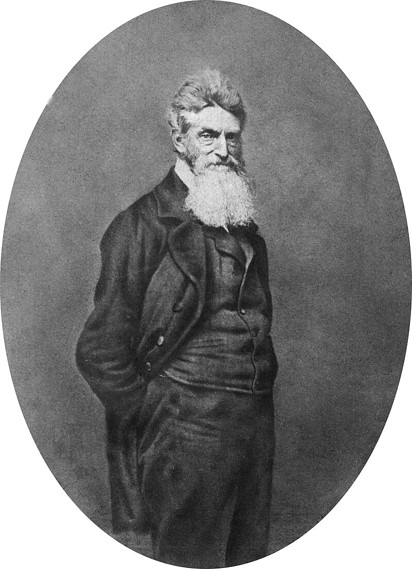
.
For the class exercise, I gave students a survey. On a scale of 0 to 100, I asked them to rate how justifiable it would be to use violence under 28 different scenarios. For a bit more background, I picked some scenarios that were hypothetical (ex. Gandhi’s famous example of using violence to “dispatch” a man in the act of committing mass murder with a sword), while others were based on real-world events. I did not tell students which scenarios were hypothetical or not ahead of time, but did so after compiling results, which they then discussed in groups. A few scenarios involved variations on a theme to find where people drew their lines. Some scenarios were about the behavior of other people, while others were about how students themselves might respond. And some involved lethal violence, others sub-lethal, and still others pertained to threats of violence (therefore, the numeric results aren’t all directly comparable).
Continue reading Patrick F. Clarkin, Ph.D.