Part 11. Humans Are Blank-ogamous. Sexaptation: The Many Functions of Sex

This is part 11 of a series on the evolution of human mating behavior. Please see the introduction here. P.s. Does anybody actually read of all this?

____________________________________________________________________

“When the gods gave people sex, say the !Kung, they gave us a wonderful thing. Sex is often referred to as food: just as people cannot survive without eating… hunger for sex can cause people to die.” (Shostak 2000: 237) 

“sex can be many things to many people, including but not limited to a blend of personalities, social rules, desire, intimacy and performance, moral order and national image that speak to processes of sexual embodiment, varieties of sexual practice and the dynamics of culture.” (Donnan and Magowan, 2010: 175)

E unum, pluribus. (Out of one, many).


Penis Festival

Genital-themed ashtrays from the Komaki Penis Festival in Japan. For humans, sex is more complex than just getting genitals together. (globalpost.com).

Last month, representatives in Montana debated whether to repeal an old law that made homosexual sex illegal in that state (the law was in fact overturned). Apart from the fact that private, consensual sexual behavior is still considered a matter to be legislated, there were other interesting developments from the discussion. A representative named Dave Hagstrom raised a deep question when he asked: “What is the purpose of sex?” I appreciate Hagstrom’s line of inquiry, as we could probably use more reflection on human sexuality. Unfortunately his own answer did not live up to the profundity of the question: 

“To me, sex is primarily purposed to produce people. That’s why we’re all here. Sex that doesn’t produce people is deviate. That doesn’t mean it’s a problem, it just means it’s not doing its primary purpose.”

Continue reading

Part 10: Humans are (Blank)-ogamous: Wondrously Complex Paleo-Sex

This is the tenth(!) part on the evolution of human mating behavior, comparing evidence for promiscuity and pair-bonding in our species. Please see the Introduction here.

_______________________________________________________________


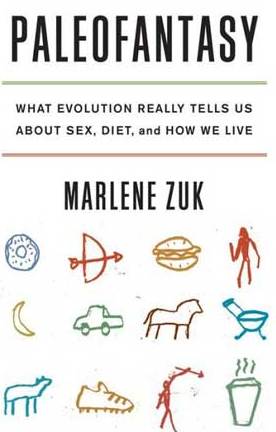
In her new book “Paleofantasy,” Marlene Zuk (2013) takes on the notion that our diet, exercise, and mating Zuk Paleofantasypatterns are out of synch with our evolutionary biology. Some have argued that we have modified our environments too quickly for our own good, leading to the position that we would be better off if we could return to the days of old, before the modern world messed things up. There is probably some truth to this argument (an example I use in classes is that in only a few seconds, inserting $1.00 into a vending machine could return you over 400 empty calories bereft of other nutrients, a scenario our ancestors never encountered). But Zuk counters that the idea that we are stuck with hunter-gatherer bodies and minds in a modern world is overly simplistic.

Zuk notes that attempts to find health and happiness by returning to our idyllic, ancestral past (i.e., paleofantasies) face a few challenges. Among these are:

1. The methodological difficulties in determining exactly how our ancestors lived.
2. The variation among human groups across time and geography.
3. The idea that we were ever fully (perfectly?) adapted to our environment.
4. The fact that evolution does not stop; we are not ‘stuck’ evolutionarily in time.


 In sum, she writes:

Continue reading

Tradeoffs, Happiness, & the Biology of Our Cacophonous Selves

You can’t have everything. Where would you put it?” – Steven Wright  (comedian)

 It seemed like a good idea at the time.” – S.A. (neuroscientist, friend)

 .

 .

Lately, I keep seeing a recurrent theme in a number of widely different sources. It’s a concept taught in Economics 101, that of tradeoff and opportunity costs – money or time invested in one object or activity cannot be spent on another. A related concept, foundational to biology, is life history theory (LHT). In his book “Patterns of Human Growth,” the biological anthropologist Barry Bogin defined LHT as:

the study of the strategy an organism uses to allocate its energy toward growth, maintenance, reproduction, raising offspring to independence, and avoiding death. For a mammal, it is the strategy of when to be born, when to be weaned, how many and what types of pre-reproductive stages to pass through, when to reproduce, and when to die.” (1999: 154)

life

you could be a winner at the game of life

Continue reading

Survival, Reproduction, and Play

This is a stirring video of a young gorilla in an Atlanta zoo, having a blast in a pile of leaves. After all, evolution is about survival and reproduction. And play.

Chris Lynn and Daniel Lende left me some comments on post a while back (Nature, Not Always Red in Tooth and Claw) that made me think about something similar — the ‘living’ part of life. So much of biology focuses (rightly) on survival, adaptation, and passing along genes to offspring.  

But for long-living species like ourselves, there is a LOT of time to spend responding to life’s challenges, before, during, and after making it to the age of reproduction. All those moments surely count for something, and they’re probably better spent when they are pleasurable, when we can find meaning and happiness, and when our relationships with those around us are cooperative rather than antagonistic.

It seems that evolution has gotten us to the point where we can, as Daniel put it, “grow and prosper” in whatever ways are significant or pleasurable to us, so that we can enjoy the living part of life.

.

Part 9. Humans are (Blank)-ogamous: Love Is an Evolutionary Compromise

This is part 9 of a series on the evolution of human mating behavior, comparing evidence for promiscuity and pair-bonding in our species. Please see the introduction here.

____________________________________________________________________

I want love to roll me over slowly,
Stick a knife inside me, and twist it all around.
I want love to grab my fingers gently,
Slam them in a doorway, put my face into the ground. – Jack White (Love Interruption[1]  

“Everything is a double-edged sword… Even single-edged swords are a double-edged sword. Because you can cut something with it, but the other edge is kind of flat and it doesn’t cut very well.” – Louis CK (comedian)

.

.

Yesterday’s post looked at the neurobiology of romantic love, asking whether evolutionary perspectives are sufficient to explain this highly significant part of what it means to be human. It also raised the question as to why love seems to be a painful experience for so many people.

Before going further, it’s important to remember that while humans are undoubtedly evolved, biological organisms, we are also animals with complex behavior, language, and culture. Others have said this better than I can. To Jon Marks (2010), we are “biocultural ex-apes,” while Agustin Fuentes wrote that “human behavior is almost always ‘naturenurtural’ ” (2012:16). Just as human modification of the environment can affect natural selection (Hawks et al 2007; Laland et al. 2010), so can culture profoundly influence the way we interpret powerful emotional impulses, including those related to desire and love.

Continue reading

Part 8. Humans are (Blank)-ogamous: Evolution, Love, & Suffering

This is part 8 of a series on the evolution of human mating behavior, comparing evidence for promiscuity and pair-bonding in our species. Please see the introduction here.


____________________________________________________________________

we are never so defenceless against suffering as when we love, never so helplessly unhappy as when we have lost our loved object or our love.” – Sigmund Freud (Civilization and Its Discontents)

.

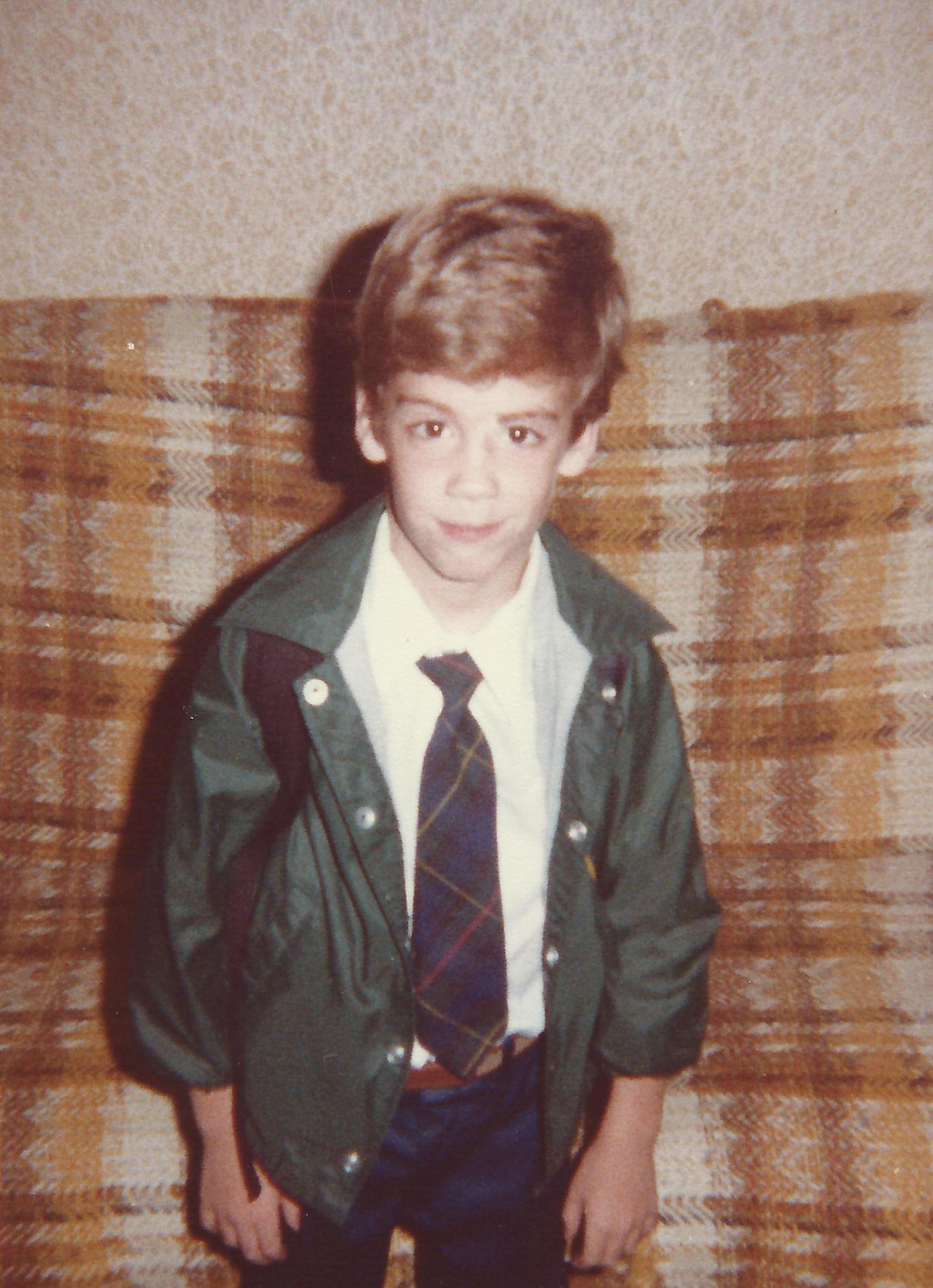
One of my more vivid memories from early childhood is of Tammy and her two friends. I was about 6 years old, and in the first grade. They were third graders, a couple of years older. By coincidence, our two classes had arrived simultaneously at the hallway outside the girls’ lavatory. In those days, teachers took their entire class to ‘the lav’ for efficiency’s sake, and every day the boys finished our business promptly then lined up in front of the teacher as we waited for the girls to finish theirs. On that day, our schedule happened to align with grade three.
1st grade

1st grade

I can still remember Tammy looking at the note I had written her, passed along by a friend earlier in the day, with her friends on either side. Exactly what I wrote is lost to time, but I recall the romantic sentiment behind it and drawing a picture of a boy and a girl kissing. Today, such behavior (or going even further) could actually get a young child suspended from school.

What compelled me to write the note, I don’t know. I do remember that Tammy seemed kind and pleasant to look at, and that it felt right – even at that age – to try to express it. However, that feeling quickly turned to embarrassment, when she and her friends waved, laughed in unison, and –in sing-song fashion – said “Hi, Patrick.” We were all just kids and no harm was intended, but at that point, I wanted to hide. And, though I can’t remember this part very well, I probably wondered why the third grade teacher was so slow in taking her students back to class.

It wasn’t clear where I went wrong, but my interpretation of Tammy’s behavior was that my private feelings of attraction, which came pretty easily, somehow violated the rules. Early experiences carry a lot of weight, and that incident taught me that revealing private emotions was a risky endeavor. It’s tempting to want to hide them away[1]

With Valentine’s Day just behind us, I wanted to develop on some of the elements in this innocent story in a couple of posts (update: part 9 here), such as where attraction and its hypertrophic cousin, romantic love, originate, and even why they might show up in early childhood.

The other element is the more negative aspects of romantic pursuits, which extend well beyond the embarrassment of childhood puppy love and into profound despair and suffering. Perhaps the cynics have good reasons to feel that it is somewhat myopic to give love its own day to be celebrated while glossing over the countless people it has wounded over the millennia. Homer Simpson, in his toast to inebriation, once referred to alcohol as “the cause of, and solution to, all of life’s problems.” I don’t think too many people would object if we replaced the word ‘alcohol’ with love.

So, what is this thing that nature has given us?

Continue reading

A Darwin Day Dose of Inspiration

Today is Charles Darwin Day, in honor of the person whose insights on evolution helped us make sense of the biological world. Evolution remains the backbone of biology, 200+ years after Darwin’s birth. In addition to evolution being a scientifically robust theory, many also find it to be an inspirational idea. At the end of  “On the Origin of Species,” Darwin wrote what is one of the most cited passages in science:

“There is grandeur in this view of life, with its several powers, having been originally breathed into a few forms or into one; and that, whilst this planet has gone cycling on according to the fixed law of gravity, from so simple a beginning endless forms most beautiful and most wonderful have been, and are being, evolved.”

..

It is a wonderful world, and Darwin’s ideas help make nature’s diversity comprehensible to us. Like many others, I definitely have found inspiration in his ideas, which I’ve tried to put into words in various posts on this site (below are a few examples). Happy Darwin Day, everyone.

Continue reading

Nature, Not Always “Red in Tooth and Claw”

In “River Out of Eden,” Richard Dawkins wrote this passage on the cruelties of nature:

 “The total amount of suffering per year in the natural world is beyond all decent contemplation. During the minute that it takes me to compose this sentence, thousands of animals are being eaten alive, many others are running for their lives, whimpering with fear, others are slowly being devoured from within by rasping parasites, thousands of all kinds are dying of starvation, thirst, and disease. It must be so. If there ever is a time of plenty, this very fact will automatically lead to an increase in the population until the natural state of starvation and misery is restored. In a universe of electrons and selfish genes, blind physical forces and genetic replication, some people are going to get hurt, other people are going to get lucky, and you won’t find any rhyme or reason in it, nor any justice. The universe that we observe has precisely the properties we should expect if there is, at bottom, no design, no purpose, no evil, no good, nothing but pitiless indifference.” (Dawkins 2008: 131-2)


I think this view of nature is one of the primary reasons that many people run away from the idea of evolution.  For some, the notion of an indifferent nature, where organisms can be reduced merely to genetic ‘copy me’ programs  with the goals of survival and reproduction, is too bleak. Eugenie Scott, Director of the National Center for Science Education, has written that for many non-biologists the notion that evolution is an unguided, mechanistic process implies that “life has no meaning.” Microbiologist Kenneth Miller, a staunch defender of evolution, has relayed that in his experience one of the main concerns of many anti-evolutionists is not with the science, but with the implications of evolution, which is perceived as threatening to moral order. For example, Miller referred to this statement from Rick Santorum, the former Presidential candidate and Senator from Pennsylvania:

Continue reading

Review 2012

Below is a quick look at the most-read posts that were written in 2012, with a brief summary, in case you’re interested.* Thanks very much to everyone for visiting, and to those who have shared these writings and commented on them.

..

1) Part 6. Humans are (Blank)- ogamous: Many Intimate Relationships. May 17

This was the most viewed post written this year. It looked at the variety of intimate romantic relationships that humans have negotiated into various socially recognized structures. I tried to go beyond looking at humans as naturally monogamous or promiscuous, which I think are overly simplistic arguments, taking a look at how this complexity may have arisen. There’s also a nice graphic, borrowed from David McCandless.

We obviously have a lot of cultural diversity in humanity with substantive differences in worldviews and which behaviors are deemed acceptable, but cultures – and individuals – are tasked with how to balance sex, love, intimacy, and commitment, as well as reproduction and parenting. I think this interplay between individual drives and cultures provides an alternate model of looking at things rather than trying to discern what humans ‘are’ in terms of our sexuality.”   

2) Human Nature, Humility, & Homosexuality. Feb 10

A pointed response to one conservative’s argument about homosexuality being against human nature, and the need for tolerance and the need to avoid making overly confident claims about human behavior. “I would recommend that if we have a choice, then choose humility. Choose tolerance. Choose love.”

Continue reading

The Christmas Truce (Yet Again)

A couple of years ago around this time, I wrote a post titled Lessons from the Christmas Truce of 1914,” which is by far the most read thing on on this site.  Last year I had a lesser viewed follow-up about a man named Julio Diaz, a New Yorker who responded to a teenage mugger with compassion, which led to a conversation at a diner and the teen voluntarily handing over his weapon. 

..

Together, the two posts address some attributes we have as a species that facilitate cooperation,  even in times that are enormously challenging. These include, but are not limited to: empathy, the benefits of mutualism, and trust. We can find certainly find many counterexamples lately, with people inflicting great pain and suffering on each other. In recent memory, these include the horrific shooting deaths in Newtown, Connecticut  or the use of cluster bombs against civilians in Syria. This makes examples of cooperation all the more necessary.

..

To continue with this late December tradition, here is the story of a German fighter pilot from World War II named Franz Stigler and an American bomber pilot named Charles Brown:

On Dec. 20, 1943, a young American fighter pilot named Charlie Brown was on his first World War II mission. Flying in the German skies, Brown’s B-17 bomber was shot and badly damaged. As Brown and his men desperately tried to escape enemy territory back to England, a German fighter plane pulled up to their tail. It seemed certain death. Instead of shooting the plane down, however, the German pilot, Franz Stigler, escorted the Americans to safety.  (source)

Continue reading