
Part 4. Humans are (Blank) -ogamous: Promiscuity & Physiology

This is the fourth part on the evolution of human mating behavior, comparing evidence for promiscuity and pair-bonding in our species. Please see the introduction here.

____________________________________________________________________


We left off with a list of eight traits in humans suggesting promiscuity in humans. Admittedly, the previous post was a little thick, as it dealt with imprinted genes and population genetics. The current one concerns human reproductive physiological and anatomical traits consistent with a multiple-partner mating structure, building on a couple of points addressed by Ryan and Jethá in their book. If you’re paying attention, that’s three posts concerning promiscuity and one (yet-to-be-written) on pair-bonding. Perhaps it seems I’m stacking the deck, but please reserve judgment. One reason more space is needed to make the case for the evolution of promiscuity is that the biology is less well known, and more effort is needed to bring it into the light. That single post on pair-bonding will be an important one, and quality matters just as much as quantity.

Continuing on with our list of traits hinting at promiscuity…

9. Sexual dimorphism in body size. This point remains somewhat contentious. In the majority of anthropoid species (monkeys, apes, and humans), males are the larger sex, with the degree of dimorphism ranging from slight to extreme (Plavcan 2001). This pattern correlates strongly with mating structure and male-male competition (Plavcan and van Schaik 1997). For monogamous species like gibbons, males and females tend to be roughly the same size. In species where females prefer larger males or where males compete for access to females, bigger males will leave behind more descendants. This is true for polygynous gorillas and dispersed, territorial orangutans, where males are physically about twice as large as females. A good non-primate example is elephant seals. On the other hand are horseshoe crabs, where smaller males cling to the backs of larger females and wait for the release of her eggs. This ‘reverse dimorphism’ is found in a few primates, but is slight and only in some prosimians such as lorises and lemurs.

Former sumo wrestler Konishiki and his wife Chie Iijima, an obviously cherry-picked example of extreme dimorphism. (From smh.com.au).
Continue reading

Part 3. Humans are (Blank) -ogamous: More on Promiscuity, & Genetics

This is the third part on the evolution of human mating behavior, comparing evidence for promiscuity and pair-bonding in our species. Please see the introduction here.

____________________________________________________________________

Part 2 pertained to human behaviors that suggested a human propensity for promiscuity (primate sexuality, the excessive sexual capacity of humans, infidelity rates, cultural variation in marriage practices, number of lifetime sex partners, etc.). This post and the next are concerned more with clues from our genes, anatomy, and physiology suggesting promiscuity. I realize these things are not clearly demarcated. My advisor at Binghamton, Mike Little, liked to say that “biology is behavior, and behavior is biology.” But I think in general most people would agree that while behavior has a genetic component, it is more plastic than are anatomical structures.

We left off with a list of six traits hinting at promiscuity. I don’t want to simply rehash what Ryan and Jethá address, so this post addresses some additional points on genetics before returning to their book in the next submission. Continuing with that list…

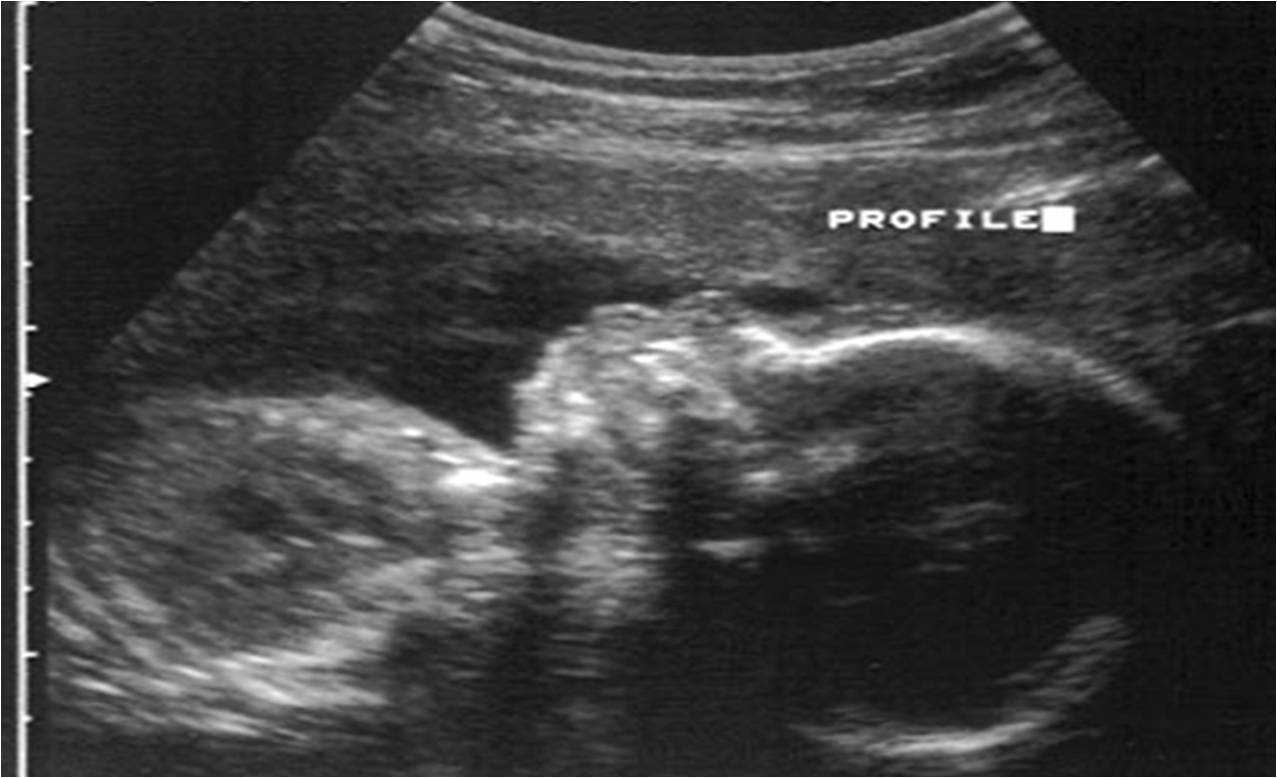
Fetal ultrasound at 4.5 months, profile view

Continue reading

Part 2. Humans are (Blank) -ogamous: Promiscuity

This is the second part on the evolution of human mating behavior, comparing evidence for promiscuity and pair-bonding in our species. Please see the Introduction here.

_______________________________________________________________

I’ll be frank. True monogamy is rare. So rare that it is one of the most deviant behaviors in biology.” (Olivia Judson 2002: 153)

.

In their best-selling book, Sex at Dawn, Chris Ryan and Cacilda Jethá suggest that there is a good amount of direct and circumstantial evidence that extended monogamy does not come easily for humans, and that this derives at least in part from our fairly promiscuous evolutionary history. (To clarify, they use the term ‘promiscuous’ not in a judgmental way, but merely to convey having multiple sex partners). Their main premise is that rigid monogamy became common only after our ancestors made the shift from hunting and gathering to agriculture. With agriculture came an emphasis on fixed settlements, private property that could be inherited, genetic paternity, and female sexual fidelity. They argue that this stands in contrast to our hunting-gathering past, when sexual relationships were more open and not confined to an exclusive pair-bond.

Bonobo sex. From Lola ya Bonobo

Bonobo sex. From Lola ya Bonobo


Continue reading

My University

My university, UMass Boston, has released a new promotional video on youtube (featuring a couple of prominent visits by Barack Obama). I’m not really a rah-rah type of person, but I thought it worth sharing because I am proud to be affiliated with my school. Boston once sought to be known as the Athens of America in part because of its commitment to progressive cultural, intellectual, and humanitarian ideals (O’Connor, 2005). The high cluster of many well-known universities certainly helped that perception, even if it never quite reached that goal in reality. As the only public university in the city, I like to think that UMass Boston carries on that tradition by making education more accessible than it would otherwise be (despite the fact that higher education, even public education, is getting more and more expensive).

I like it here. The faculty are committed and the students are diverse. And the location provides a great spot to go for an afternoon walk after teaching all day, where one can look out at the bay and the city skyline and just think.

Rah-rah.

Reference

O’Connor TH. 2005. The Athens of America: Boston, 1825-1845. University of Massachusetts Press. (Link)

Part 1. Humans are (Blank) -ogamous

(A)s our forebears adopted life on the dangerous ground, pair-bonding became imperative for females and practical for males. And monogamy – the human habit of forming a pair-bond with one individual at a time – evolved.” (Helen Fisher 2004: 131)

Several types of evidence suggest our pre-agricultural (prehistoric) ancestors lived in groups where most mature individuals would have had several ongoing sexual relationships at any given time. Though often casual, these relationships were not random or meaningless. Quite the opposite: they reinforced crucial social ties holding these highly interdependent communities together.” (Chris Ryan & Cacilda Jethá 2010: 9-10)

 “We are not a classic pair-bonded species. We are not a polygamous, tournament species either…. What we are, officially, … is a tragically confused species.” (Robert Sapolsky)

….

.

The above three quotations were selected to illustrate the range of views that exist on the evolution of human sexual and mating behavior. This is not a trivial matter. To primatologist Bernard Chapais: “The central puzzle of human social evolution… is to explain how promiscuity was replaced by the pair bond” (that is, assuming the pair-bond has gained complete ascendancy). But it’s about more than our ancestors’ mating behaviors. Lurking in the background is the notion that our ancestral behavioral patterns impact current ones, via phylogenetic inertia. Additionally, how we view the past is important because, rightly or wrongly, we have a tendency to associate what is natural with what is good (but note well the naturalistic fallacy). For both of these reasons, the past matters.

Continue reading

On Fatherhood: Proud Primate Papas

For Father’s Day, Scientific American compiled a series on the biology of fatherhood, including a list of 8 species where males are integral in raising offspring. Included were birds (rheas, emperor penguins), mammals (marmosets, red foxes, wolverines), fish (catfish, sea horses), and even insects (giant water bugs). For some of these species, male parental investment extends to carrying fertilized eggs until they hatch. In others, it entails postnatal protection and/or procurement of food for young offspring.

Two things stand out. First, although the list didn’t claim to be comprehensive, at just 8 examples, it seemed quite short (they couldn’t make it to ten?). In addition, there’s just something peculiar about highlighting species that exhibit good fathering skills to begin with. Consider how odd it would be to encounter a list of species where mothers care for offspring. In mammals, it seems almost tautological that parenting is associated with motherhood since they alone can gestate and lactate. However, there may be rare exceptions to this, such as lactation in male fruit bats (Kunz and Hosken, 2009), and possibly in Robert De Niro, though this issue remains unresolved. Are species with active fathers the exception to the rule? What good are males, then?

Continue reading

Peace with the ‘Enemy’

NBC News has been running a compelling series on the return of American Col. Jack Jacobs to Vietnam, where he was wounded forty years ago. I recommend this insightful essay by Col. Jacobs, a Medal of Honor recipient and former West Point faculty. It describes his meeting with the former commander that ambushed his battalion, as well as his general reflections on the ‘enemy.’

But the enemy is an amoebic mass, a single-minded monolithic inhuman force. Killed in action, they are only a logistical problem, and you get a feeling of them as individuals only when you capture them, scared, wounded and shivering. They are no longer part of the enemy organism, and it is only then they come to life as people.”

Continue reading

On Parenthood

It’s hard to believe that my older son was born almost eight years ago. Sometimes I remind him that at one point he was only a little longer than my forearm, and that I could hold him in one hand. He’s a little taller than that now.

A duet

Continue reading

Student Research on War, Health, and Biology

With grades submitted earlier this week, the Spring 2011 semester is officially in the books. In my ANTH 324 class, “A Biocultural Approach to War,” students were required to write a literature review paper on the ways that war impacts human biology and health.

In my opinion, research papers are valuable in upper level undergraduate classes because they give students the freedom to pick a topic of their choice, within the boundaries of class goals. While it seems self-evident that war’s effects on biology are negative, this relationship is not always straightforward for every possible outcome variable. Thus, it is necessary to explore the evidence thoroughly.   

Continue reading

The Sex Ratio at Birth Following Periods of Conflict

Note: this paper was written by UMass Boston undergraduate student Johnny Xu for my Spring 2011 class ANTH 324: “A Biocultural Approach to War.” I asked his permission to post it here. 

..

Birth Sex Ratio and Infant Mortality: Adaptations or By-products?

..

1. Introduction

            The purpose of this paper is to provide manifold reasons attempting to explain why the birth sex ratio following war periods tend to rise in favor of males and what this implies in correlation with infant mortality; and, most of all, to answer the following question: is the combination of these findings proposing that this is an adaptive response of the parent to produce the sex with higher survival prospects in the given environment, or is this simply the by-product of environmental forces?


Continue reading