KIPP Students Rock!

…as does their teacher, Ms. Bertrand. 

I just got a nice package in the mail today, full of seventy or so “thank you” notes for my visit to the three 8th grade classes at KIPP Lynn last week. I appreciate it, guys.

What really makes me smile are the notes that mention how students had their curiosity piqued or that they explored some idea further on their own.  That alone is worth the visit. Learning isn’t limited to school. It never stops, and the world is yours to explore.

Continue reading

On Marriage Equality

I wrote this about a year ago: Human Nature, Humility, and Homosexuality, and thought it was worth putting it up again today, given the Supreme Court cases on Marriage Equality being heard today and tomorrow.    

Earlier this month, Lech Walesa, former President of Poland and a Nobel Peace Prize winner, said that: “They (homosexuals) have to know that they are a minority and adjust to smaller things, and not rise to the greatest heights. A minority should not impose itself on the majority.” Walesa is not American and his ideas are not relevant to the Supreme Court hearings. But his words elicit two thoughts: first, a Nobel Peace Prize does not confer immunity against illogical bigotry (who knew?). Second,  it exposes the fallacy in the argument that human rights are dependent on numbers, and that those in the minority should ‘stay in their place.’ 

I have an old, dog-eared and annotated book of quotations from M.K. Gandhi that my wife gave me about 17 years ago. I still look through it from time to time. Among the quotes, one seems appropriate here: 

“I do not believe in the doctrine of the greatest good of the greatest number. It means in its nakedness that in order to achieve the supposed good of 51 per cent the interest of 49 per cent may be, or rather, should be sacrificed. It is a heartless doctrine and has done harm to humanity. The only real, dignified, human doctrine is the greatest good of all.”
.
.

More Public Outreach

For the third consecutive year, I went back to the Knowledge is Power Program (KIPP) school in Lynn, Massachusetts to share a little biological anthropology with some 8th graders again. They have a beautiful new building, and I’m even more impressed by their students. The first class starts at 7:25am, and they were really bright young minds who asked lots of questions.  I was a little burnt out by the third class, but the students really kept me on my toes. The three hours actually flew by.

Their teacher, Ms. Bertrand, even had the class present me with an Honor Roll t-shirt. Do I have any ganas? Yup.

Related: Public Outreach 3: Sharing Anthropology with 8th Graders.

Tradeoffs, Happiness, & the Biology of Our Cacophonous Selves

You can’t have everything. Where would you put it?” – Steven Wright  (comedian)

 It seemed like a good idea at the time.” – S.A. (neuroscientist, friend)

 .

 .

Lately, I keep seeing a recurrent theme in a number of widely different sources. It’s a concept taught in Economics 101, that of tradeoff and opportunity costs – money or time invested in one object or activity cannot be spent on another. A related concept, foundational to biology, is life history theory (LHT). In his book “Patterns of Human Growth,” the biological anthropologist Barry Bogin defined LHT as:

the study of the strategy an organism uses to allocate its energy toward growth, maintenance, reproduction, raising offspring to independence, and avoiding death. For a mammal, it is the strategy of when to be born, when to be weaned, how many and what types of pre-reproductive stages to pass through, when to reproduce, and when to die.” (1999: 154)

life

you could be a winner at the game of life

Continue reading

Survival, Reproduction, and Play

This is a stirring video of a young gorilla in an Atlanta zoo, having a blast in a pile of leaves. After all, evolution is about survival and reproduction. And play.

Chris Lynn and Daniel Lende left me some comments on post a while back (Nature, Not Always Red in Tooth and Claw) that made me think about something similar — the ‘living’ part of life. So much of biology focuses (rightly) on survival, adaptation, and passing along genes to offspring.  

But for long-living species like ourselves, there is a LOT of time to spend responding to life’s challenges, before, during, and after making it to the age of reproduction. All those moments surely count for something, and they’re probably better spent when they are pleasurable, when we can find meaning and happiness, and when our relationships with those around us are cooperative rather than antagonistic.

It seems that evolution has gotten us to the point where we can, as Daniel put it, “grow and prosper” in whatever ways are significant or pleasurable to us, so that we can enjoy the living part of life.

.

Meta Mike Little

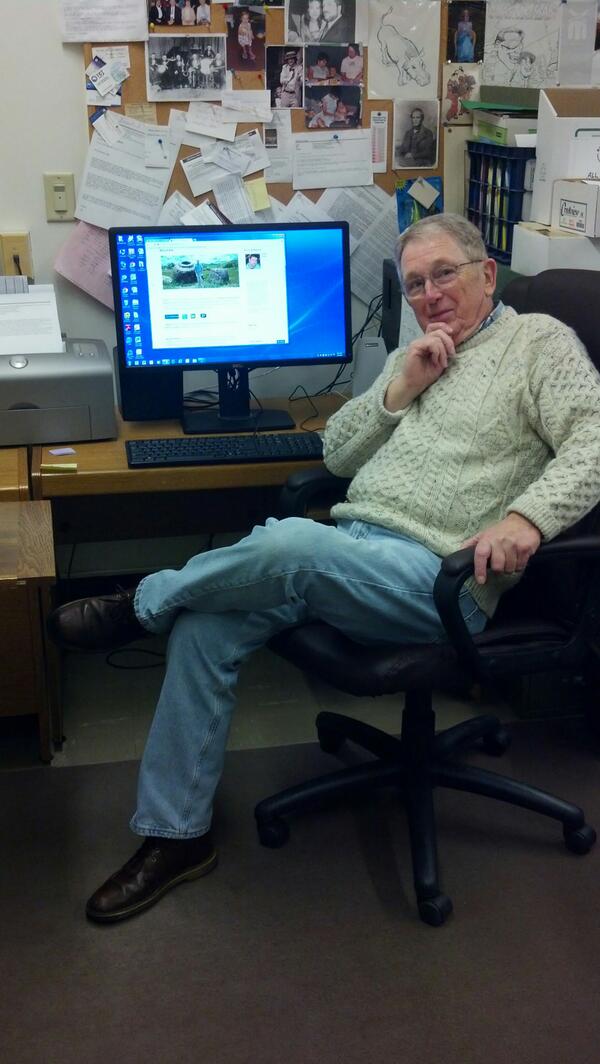
Someone at Binghamton sent me this photo today. It’s my advisor from graduate school, Mike Little, reading this blog. This made me smile.

Mike, if you’re reading this, thanks for everything. I hope seeing this isn’t too meta.

Mike and me.

.


How War Gets Under Our Skin

beinghuman.org front page

I wrote this piece on BeingHuman.org about how war (and the world in general) gets under our skin. It looks at the Hmong example, as well as examples from a few other wars around the world (the Dutch Hunger Winter, the Biafran famine, and the Khmer Rouge period), and how these experiences get into our bodies. 


http://www.beinghuman.org/article/how-world-gets-under-our-skin

.

Unbending rigor is the mate of death,
And wielding softness the company of life:
Unbending soldiers get no victories;
The stiffest tree is readiest for the axe.

Tao Te Ching: 76


Early in life, our bodies are like unmolded clay, ready to be shaped by our experiences. For some of us, that matching process can create problems. If circumstances change, we could end up poorly adapted to our adult environment. A child born into harsh conditions, though, may have to take that risk in order to make it to adulthood at all.

Part 9. Humans are (Blank)-ogamous: Love Is an Evolutionary Compromise

This is part 9 of a series on the evolution of human mating behavior, comparing evidence for promiscuity and pair-bonding in our species. Please see the introduction here.

____________________________________________________________________

I want love to roll me over slowly,
Stick a knife inside me, and twist it all around.
I want love to grab my fingers gently,
Slam them in a doorway, put my face into the ground. – Jack White (Love Interruption[1]  

“Everything is a double-edged sword… Even single-edged swords are a double-edged sword. Because you can cut something with it, but the other edge is kind of flat and it doesn’t cut very well.” – Louis CK (comedian)

.

.

Yesterday’s post looked at the neurobiology of romantic love, asking whether evolutionary perspectives are sufficient to explain this highly significant part of what it means to be human. It also raised the question as to why love seems to be a painful experience for so many people.

Before going further, it’s important to remember that while humans are undoubtedly evolved, biological organisms, we are also animals with complex behavior, language, and culture. Others have said this better than I can. To Jon Marks (2010), we are “biocultural ex-apes,” while Agustin Fuentes wrote that “human behavior is almost always ‘naturenurtural’ ” (2012:16). Just as human modification of the environment can affect natural selection (Hawks et al 2007; Laland et al. 2010), so can culture profoundly influence the way we interpret powerful emotional impulses, including those related to desire and love.

Continue reading

Part 8. Humans are (Blank)-ogamous: Evolution, Love, & Suffering

This is part 8 of a series on the evolution of human mating behavior, comparing evidence for promiscuity and pair-bonding in our species. Please see the introduction here.


____________________________________________________________________

we are never so defenceless against suffering as when we love, never so helplessly unhappy as when we have lost our loved object or our love.” – Sigmund Freud (Civilization and Its Discontents)

.

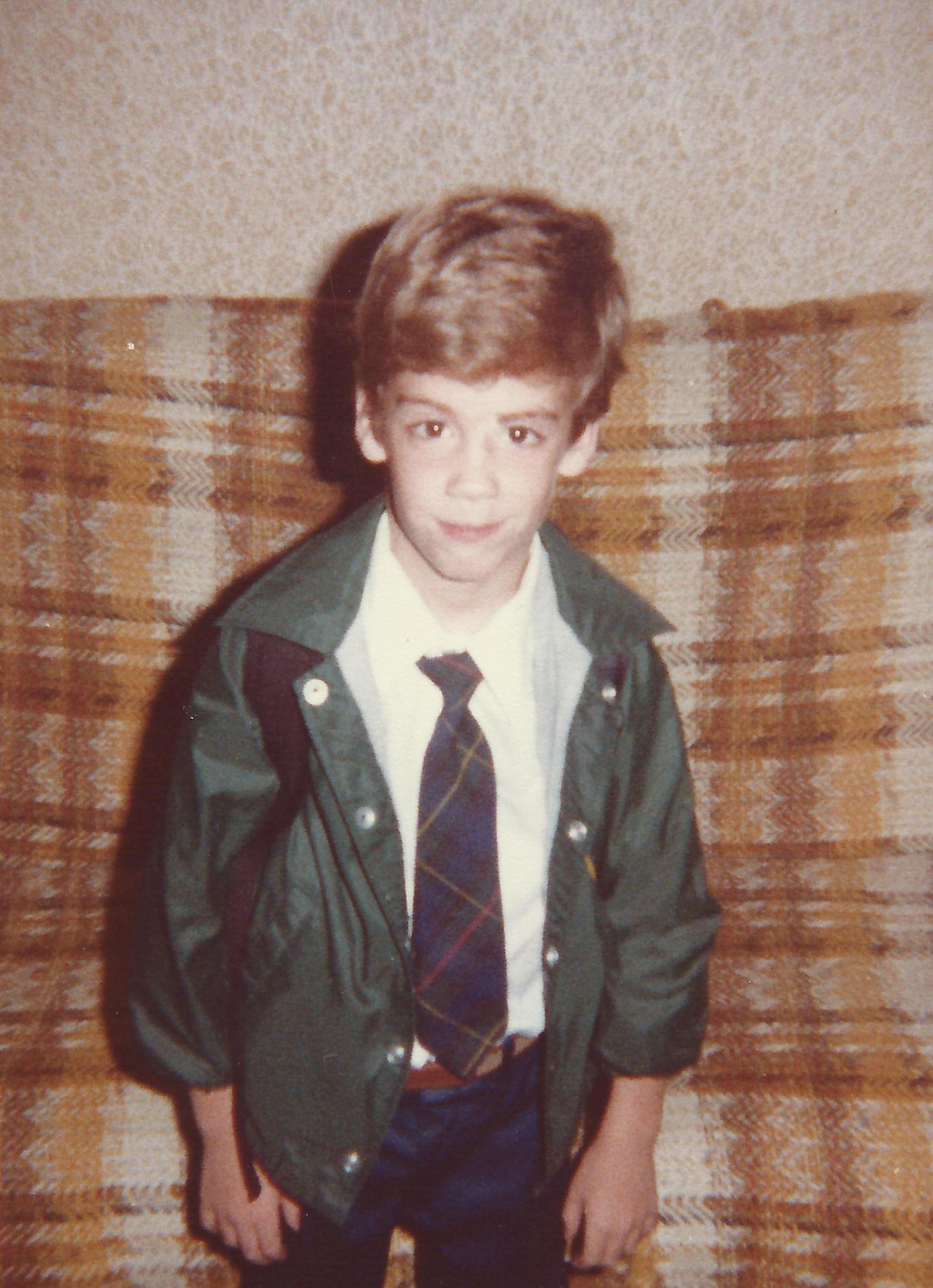
One of my more vivid memories from early childhood is of Tammy and her two friends. I was about 6 years old, and in the first grade. They were third graders, a couple of years older. By coincidence, our two classes had arrived simultaneously at the hallway outside the girls’ lavatory. In those days, teachers took their entire class to ‘the lav’ for efficiency’s sake, and every day the boys finished our business promptly then lined up in front of the teacher as we waited for the girls to finish theirs. On that day, our schedule happened to align with grade three.
1st grade

1st grade

I can still remember Tammy looking at the note I had written her, passed along by a friend earlier in the day, with her friends on either side. Exactly what I wrote is lost to time, but I recall the romantic sentiment behind it and drawing a picture of a boy and a girl kissing. Today, such behavior (or going even further) could actually get a young child suspended from school.

What compelled me to write the note, I don’t know. I do remember that Tammy seemed kind and pleasant to look at, and that it felt right – even at that age – to try to express it. However, that feeling quickly turned to embarrassment, when she and her friends waved, laughed in unison, and –in sing-song fashion – said “Hi, Patrick.” We were all just kids and no harm was intended, but at that point, I wanted to hide. And, though I can’t remember this part very well, I probably wondered why the third grade teacher was so slow in taking her students back to class.

It wasn’t clear where I went wrong, but my interpretation of Tammy’s behavior was that my private feelings of attraction, which came pretty easily, somehow violated the rules. Early experiences carry a lot of weight, and that incident taught me that revealing private emotions was a risky endeavor. It’s tempting to want to hide them away[1]

With Valentine’s Day just behind us, I wanted to develop on some of the elements in this innocent story in a couple of posts (update: part 9 here), such as where attraction and its hypertrophic cousin, romantic love, originate, and even why they might show up in early childhood.

The other element is the more negative aspects of romantic pursuits, which extend well beyond the embarrassment of childhood puppy love and into profound despair and suffering. Perhaps the cynics have good reasons to feel that it is somewhat myopic to give love its own day to be celebrated while glossing over the countless people it has wounded over the millennia. Homer Simpson, in his toast to inebriation, once referred to alcohol as “the cause of, and solution to, all of life’s problems.” I don’t think too many people would object if we replaced the word ‘alcohol’ with love.

So, what is this thing that nature has given us?

Continue reading

A Darwin Day Dose of Inspiration

Today is Charles Darwin Day, in honor of the person whose insights on evolution helped us make sense of the biological world. Evolution remains the backbone of biology, 200+ years after Darwin’s birth. In addition to evolution being a scientifically robust theory, many also find it to be an inspirational idea. At the end of  “On the Origin of Species,” Darwin wrote what is one of the most cited passages in science:

“There is grandeur in this view of life, with its several powers, having been originally breathed into a few forms or into one; and that, whilst this planet has gone cycling on according to the fixed law of gravity, from so simple a beginning endless forms most beautiful and most wonderful have been, and are being, evolved.”

..

It is a wonderful world, and Darwin’s ideas help make nature’s diversity comprehensible to us. Like many others, I definitely have found inspiration in his ideas, which I’ve tried to put into words in various posts on this site (below are a few examples). Happy Darwin Day, everyone.

Continue reading