Human Biology of Poverty Symposium

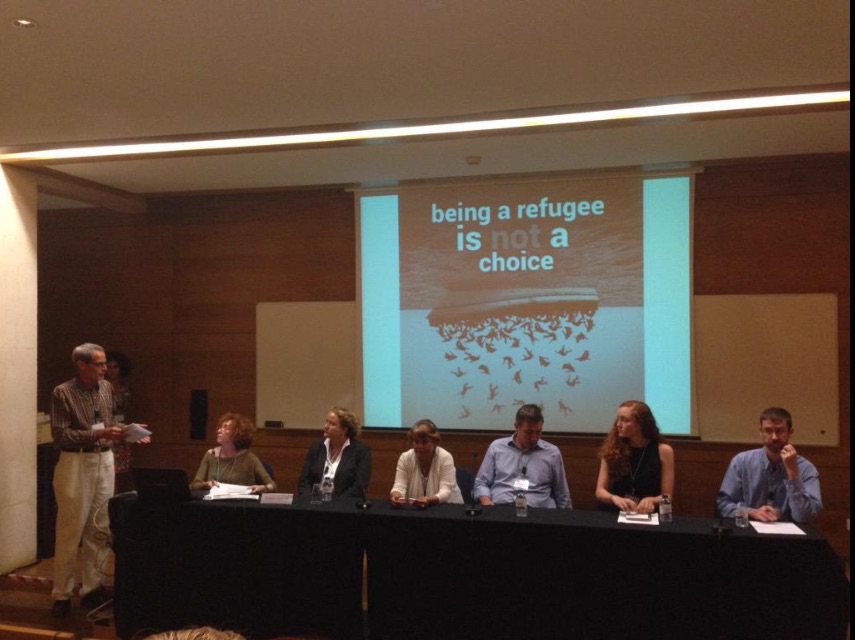
We just finished a symposium on “the human biology of poverty,” held at ISCTE-IUL in Lisbon, and sponsored by the The Society for the Study of Human Biology. It really was a great meeting, full of important research on the effects of various forms of deprivation on biology and health in different populations. The complete program can be found here.

image image image


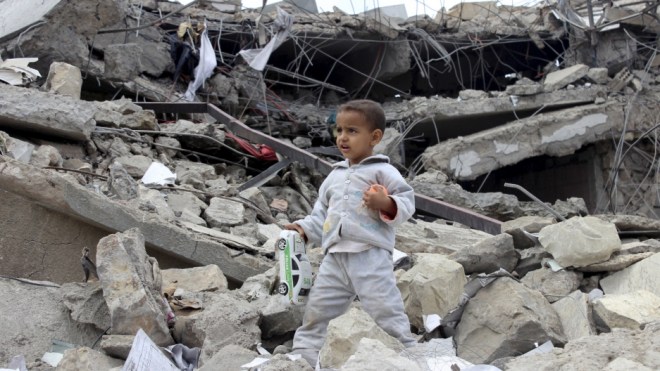
“We Are People, Human Beings” (The War in Yemen)

photo-essay of the of how war is affecting people in Yemen. Doctors Without Borders has called it a “war on civilians.”

And here is a statement from one man:

“Our nation was a poor nation even before this crisis and before this war. Can you imagine now after 14 countries in a coalition surprisingly declared war and huge airstrikes against us while we were safe in our homes? We did not expect such an action to take place, and were not prepared. We cannot prepare for that. We immediately fled to fields, to mountains, and to deserted old villages and buildings. We lived there for a while with wild animals and monkeys! We were terrified, fighting with the animals, suffering diseases and lack of food, lack of everything, lack of safety and protection.

My boy is 18 months old. Whenever he hears warplanes he shouts “Papa, Papa!” Terrified. He is traumatized. He was fat, and now…

We are human beings. We are people, human beings.”

The Sex Lives of Others

“Although anthropologists have identified few, if any, true human universals, taboos are widespread against exposure of the genitals, public displays of sexual behavior, and multiple consecutive partners. Having sex willingly in the presence of observers or with multiple participants crosses a line of social propriety in many societies. Where these lines are drawn is, of course, highly variable.”          

– Katherine Frank, Plays Well in Groups: A Journey Through the World of Group Sex (2013: 3)

“Humans aren’t the only sex deviants in the animal kingdom. But we are the only ones to stigmatize each other as disgusting perverts.”

– Jesse Bering, Perv: The Sexual Deviant in All of Us: (2013: 216).


Apes don’t have bedrooms.

This is relevant because privacy is sometimes hard to come by in the life of an ape, including for intimate sexual behavior. But for humans it’s different. Sexual privacy is important, yet privacy is never really absolute.

One of the more puzzling questions around human sexuality is why we invest so much energy into influencing the sexual and romantic lives of other people. Why does it matter to us whether celebrities get divorced, or gay people marry, or whether the sexual behavior of strangers somehow falls outside specific social norms?

This isn’t necessarily the case for our primate cousins. Certainly, monkeys and apes compete for mates and they keep track of each others’ social relationships. What they do not do is moralize about proper sexual practices. For chimpanzees and bonobos (outside of the occasional private tryst away from the group to avoid interference from a dominant male), sex usually takes place in view of fellow group members, with little fanfare. Among bonobos, sex is so common that it is almost mundane.

In one study, Zanna Clay and colleagues observed a group of fifty adult bonobos for about a thousand hours in a year (Clay et al 2011). In that time, they recorded 1,100 female–male copulations and 674 female–female genital contacts. Notably, females often made ‘copulation calls’ when they were with a partner of higher rank, regardless of whether their partner was male or female. Clay suggested that these calls were part of a female’s social strategy, announcing to other group members that they had powerful friends (“Hey, see who likes me!?”).

However, while apes jockey for social position when it comes to relationships, we can take this to another level. Not only do we try to improve our own prospects by climbing the social ladder, but we can also get quite judgmental about others’ erotic lives.

Continue reading

Developmental Plasticity and the “Hard-Wired” Problem

From last summer, this quickly became one of the most-read posts on this site.

Patrick Clarkin's avatarPatrick F. Clarkin, Ph.D.

“Development is the missing link between genotype and phenotype, a place too often occupied by metaphors in the past … But a strong emphasis on the genome means that environmental influence is systematically ignored. If you begin with DNA and view development as “hard-wired,” you overlook the flexible phenotype and the causes of its variation that are the mainsprings of adaptive evolution.” (Mary Jane West-Eberhard, 2003: 89-90)

“Genes, unlike gods, are conditional. They are exquisitely good at simple if-then logic: if in a certain environment, then develop in a certain way… So here is the first moral of the tale: Don’t be frightened of genes. They are not gods; they are cogs. (Matt Ridley, 2003: 250)

Plasticity: actor Christian Bale at two points in time. Same genes, different phenotypes.Plasticity: actor Christian Bale at two points in time. Same genes, different phenotypes.

In his book The Triple Helix, Richard Lewontin told the story of the molecular biologist and Nobel laureate Sydney…

View original post 4,197 more words

“To Tame the Savageness of Man”

Let us dedicate ourselves to what the Greeks wrote so many years ago: to tame the savageness of man and make gentle the life of this world.”

–Robert F. Kennedy, on the night of Martin Luther King’s assassination (1968)

“Have I sinned?”

— Anwar Congo, The Act of Killing  (2012)

“They are souls, like us.”

— Greek fisherman Babis Manias, after saving a refugee child from the ocean (2015)

Robert Kennedy Memorial (Source)

Robert Kennedy Memorial (Source)

The inherent dilemma of all social animals is the tension between balancing two obligations — the ones we we have to ourselves, and those we have to others. One cannot be completely selfless, sacrificing everything for others. Nor can we be totally self-absorbed, ignoring the rights of others. Somewhere in that tangled mess of sometimes overlapping, sometimes competing, interests we get a sloshing mixture of cooperation and conflict.

Sloshing fluid, here representing the shifting dynamics of cooperation and conflict (Source).

As primates, humans have a deep history as social beings, probably going back tens of millions of years. According to Shultz et al. (2011), primates began their path as intensely social animals around 52 million years ago, probably as a means of protection from predators as our ancestors made the shift from nocturnal to diurnal living. One benefit of living in groups was strength in numbers, but a reliance on the group also had drawbacks, such as the need for at least some modicum of self-restraint to maintain group cohesion. After all, one cannot just do whatever they feel like whenever they want, particularly if those wants conflict with the wants of others. 

Continue reading

“The Fundamental Connection That We All Share”

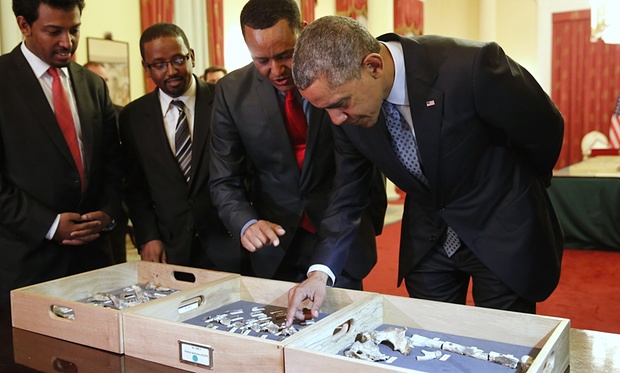
On his visit to Ethiopia, U.S. President Barack Obama viewed the fossil remains of three famous human ancestors. These included two belonging to the 3 to 3.8 million-year old hominin species Australopithecus afarensis, “Lucy” and “Selam”), as well as “Ardi” from an older species Ardipithecus ramidus. (Click here for a nice overview of our hominin family tree). Later, he said this

“When you see our ancestor, 3.5 million years old, we are reminded that Ethiopians, Americans, all the people of the world are part of the same human family, the same chain… And as one of the professors (Zeresenay Alemseged) who was describing the artifacts correctly pointed out, so much of the hardship and conflict and sadness and violence that occurs around the world is because we forget that fact.  We look at superficial differences as opposed to seeing the fundamental connection that we all share.

I think Obama got it right, which isn’t surprising, since his mother was an anthropologist. Humans everywhere belong to the same species and share common ancestry. We have our differences — some trivial, some significant to us — but our bedrock should be that shared connection. That may be an ideological approach, but the nice thing is that it’s also scientifically accurate. 

Pesident Obama touches the fossilized vertebra of Lucy, an early human ancestor in Ethiopia on Monday. Photograph: Jonathan Ernst/Reuters

President Obama touches the fossilized vertebra of Lucy, an early human ancestor in Ethiopia on Monday. Photograph: Jonathan Ernst/Reuters

I Am Very Poorly Today

Darwin, circa 1859 or 1860. (Wiki Commons.)

Darwin, circa 1859 or 1860. (Wiki Commons.)

“But I am very poorly today & very stupid & hate everybody & everything. One lives only to make blunders.”

— Charles Darwin, letter to Charles Lyell, Oct 1, 1861


Everyone has their bad days.


Apologies Are in the Air

Hopeful news comes in threes (I think that’s how the saying goes). I just happened to come across three stories today related to apology and forgiveness.

1. In Bolivia, Pope Francis apologized for the role of the Catholic Church in the harm done to Native Americans:

“Some may rightly say, ‘When the pope speaks of colonialism, he overlooks certain actions of the church. I say this to you with regret: Many grave sins were committed against the native people of America in the name of God.”

He added: “I humbly ask forgiveness, not only for the offense of the church herself, but also for crimes committed against the native peoples during the so-called conquest of America.”

Continue reading

War, Economics, & Human Development

“Nothing is more useless in developing a nation’s economy than a gun, and nothing blocks the road to social development than the financial burden of war. War is the arch enemy of national progress and the modern scourge of civilized men.”

                                        – King Hussein, Address at Tulane University, April 1976 (Link)

I don’t know much about economics and development. As an undergraduate, I took only two economics courses (both in my freshman year), and to be honest they were forgettable. 

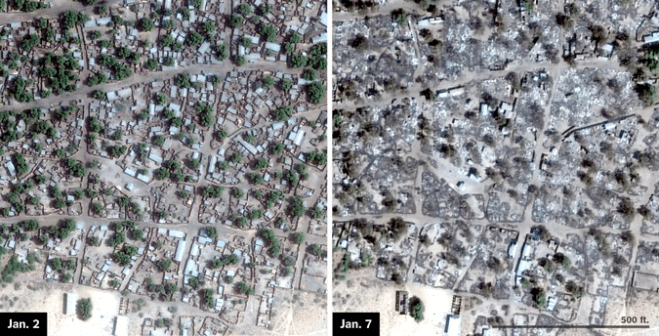
That said, I wouldn’t know where to begin to help improve any country’s economic situation. However, I can think of a surefire way to destroy one — host a war. Earlier this month, the UN secretary-general Ban Ki-Moon said that because of the ongoing war Syria had lost the equivalent of four decades of human development. Even if the war ended tomorrow, it will likely take generations to recover. I won’t belabor this point. It should be enough to say that death and destruction are part of the logic of war, whether it be in Syria, Yemen, Ukraine, Iraq, Afghanistan, Nigeria, the Central African Republic, or South Sudan. What an enormous waste.


Reconciliation, Biology, and the Second Indochina War

CNN had a story on Kim Phuc today, and she had this to say:

“I still have the pain. I still have the scars. I still have the memory, but my heart is healed.”

This reminded me of this post I wrote from 2011, which remains one of the most meaningful things I’ve written here.

http://www.cnn.com/2015/06/22/world/kim-phuc-where-is-she-now/

Patrick Clarkin's avatarPatrick F. Clarkin, Ph.D.

Of all the things I’ve written on this site, this remains one of the most meaningful to me. (June 25, 2015)

The weak can never forgive. Forgiveness is the attribute of the strong.” …………………………………………………………………………– Mohandas K. Gandhi

On my desk sits a spoon I bought in a restaurant in northern Laos. It’s lightweight, bigger than a tablespoon, and full of tiny dents that some unknown metalsmith hammered into it. The owner was bemused that in addition to the bowl of pho noodle soup, I also wanted to buy one of her utensils. But I had my reasons.

Earlier on my trip, my guide1 informed me that people in the town of Phonsavanh half-jokingly called these ‘B-52 spoons,’ as they were made of metal recovered from bombs dropped decades ago by U.S. planes during  ‘the Secret War. To me, the spoon was more than a…

View original post 4,447 more words